Ear cuffs and clip-ons: a no-piercing guide built around comfort
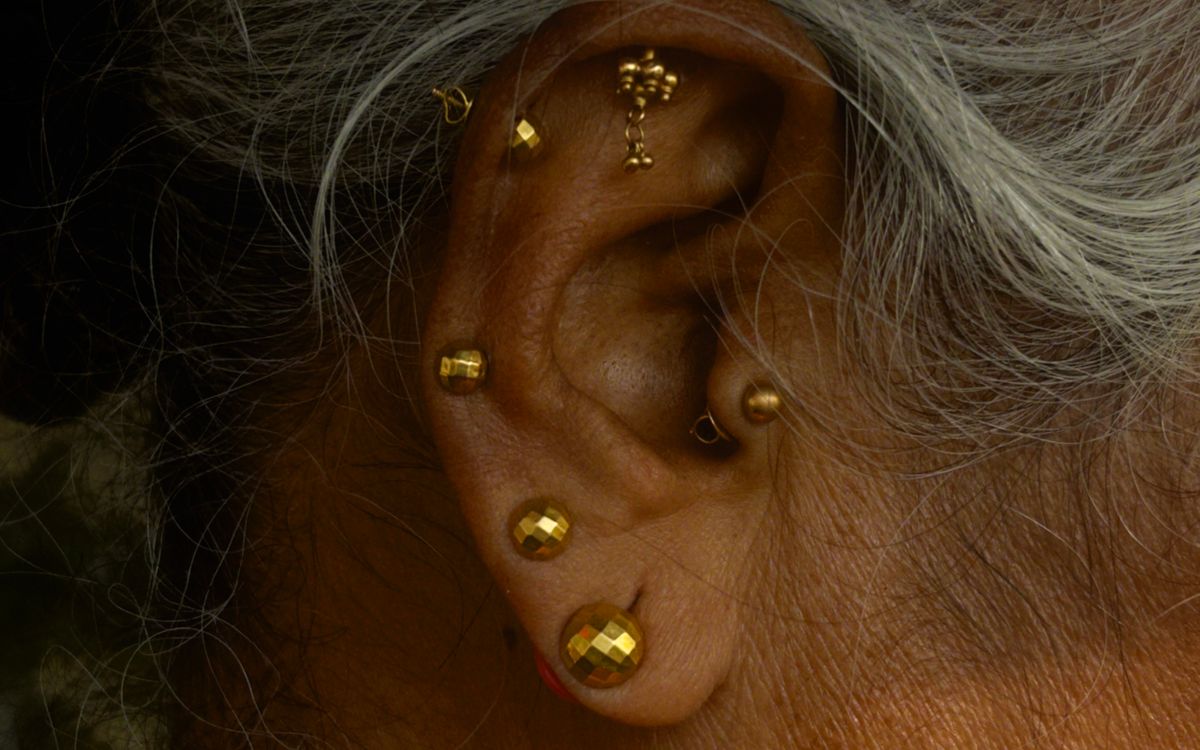
Skipping pierced ears does not mean skipping earrings — it means choosing between three gripping designs instead of one, and the differences between them decide whether you wear the piece for an evening or all year. Ear cuffs clamp the cartilage rim, clip-ons grip the lobe between a front face and a hinged back, and magnetic styles hold by surface pull alone. Each design has a comfort limit set by two forces: how hard it squeezes and how much it weighs. This page works through how each style holds, what those forces do over a long day, and how to combine cuffs with the pierced earrings you may already wear on the other ear.
The three no-piercing options, and what each one is for
Ear cuffs are the most versatile of the three: a curved band of metal that slides over the cartilage rim at the top or middle of the ear and holds by spring pressure alone. No hinge, no back, no pierced hole — the rim’s natural curve does the work. They suit ears of most shapes, read as multiple piercings from a distance, and can be stacked several per ear.
Clip-ons replace the pierced stud or drop earring: a hinged mechanism grips the lobe between a decorated face and an adjustable back. They carry the designs cuffs cannot — full drops, statement faces, pearls — because the lobe has more grip area than the rim.
Magnetic styles hold a front face against a magnetic back through the lobe. Their promise is invisible hardware, and their limitation is physics: magnet pull falls off quickly with thickness, so they suit thin lobes and light faces, and they are the design most likely to end an evening early. Treat claims of strong hold on heavy faces skeptically.
How ear cuffs actually grip
The rim-riding cuff
The standard cuff is an open band worn on the helix, the outer rim of the ear. Fitting is the whole game: the band slides over the rim from the front or back, rotates to sit flat, and grips by the springiness of its own curve. A cuff sized correctly stays put through a full day without awareness; a cuff even slightly too open slides down the rim and needs constant repositioning, and one too closed becomes an ache you stop noticing only when you take it off. Thinner, more malleable metal cuffs can be adjusted gently by hand to close the gap — thick cast pieces cannot, which makes sizing them correctly at purchase the only option.
The conch and inner-ear cuff
Larger cuffs seat inside the ear’s curve — against the conch, the bowl of cartilage above the lobe — and hold by wedging between the rim and the inner fold. These carry bigger faces than rim cuffs because they have two contact points instead of one, but they are also the design most sensitive to ear shape. An inner-ear cuff that fits one person’s ear may not fit the next person’s at all, which makes them a design to try on rather than buy sight unseen.
Weight: the number that decides comfort
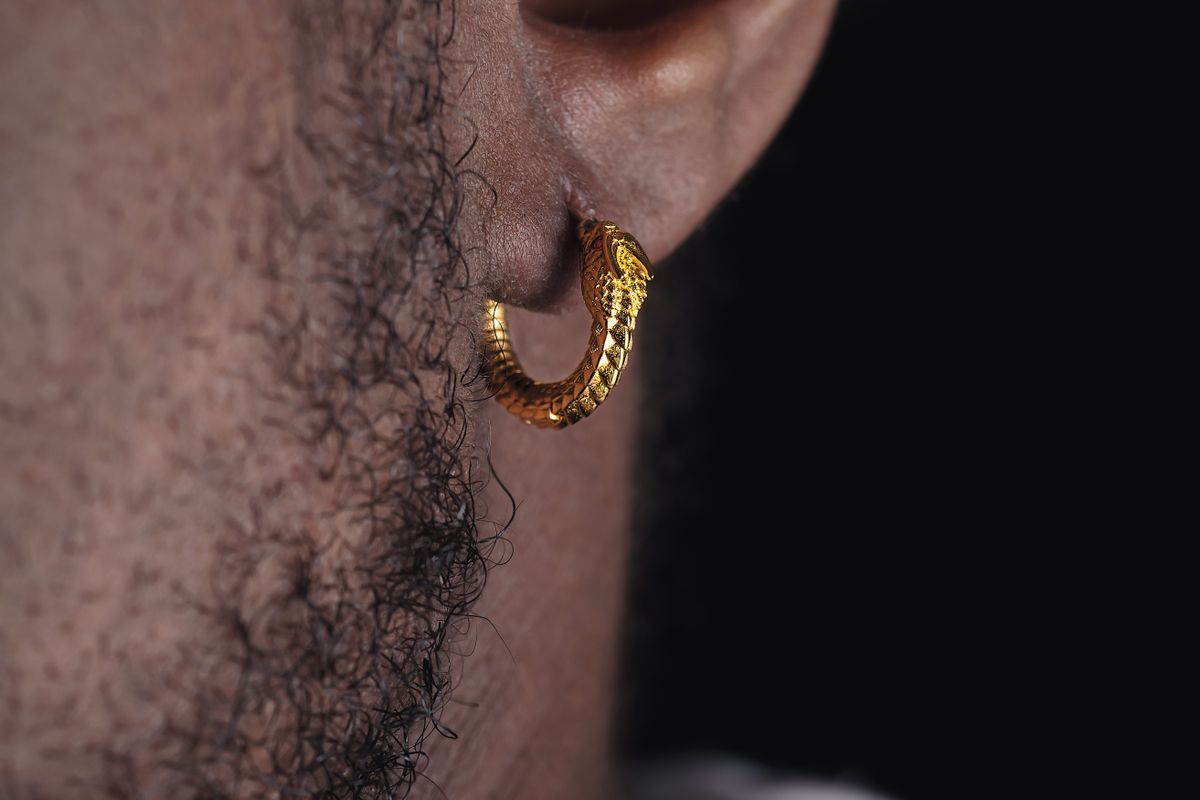
Weight behaves differently on each of the three designs. On a clip-on, weight is a direct pull on the lobe for as long as the piece is worn; over hours, that sustained tug relaxes the soft tissue, which is why a heavy clip-on feels fine for an evening and worse by the end of a long day. Front-heavy designs amplify this, because the decorated face sits away from the pivot and multiplies the torque on the grip.
On cuffs, weight matters less at the grip and more at the fit: a heavy conch cuff that is correctly sized distributes its mass over the ear’s curve and is barely felt, while the same weight on a rim cuff pulls the band downward and starts the slide.
The practical rule, absent a scale: if an unpierced piece feels like a presence on your ear after thirty minutes, it will feel like a problem after five hours. Comfort designs — hollow-backed faces, thin bands, light stones — exist precisely because long-wear ear jewelry is won by subtracting grams, not adding grip force.
Clamp force and how long you can wear a piece
Clamp force is the other half of the comfort equation, and it works in the opposite direction from intuition: harder gripping does not extend wearing time, it shortens it. Cartilage and lobe skin protest sustained pressure the way skin protests a tight headband — not immediately, but on a delay of a few hours. A clip-on whose hinge can be loosened a turn, or whose adjustable back can be relaxed, converts that pressure into a comfortable all-day hold. A cuff that grips only because it clamps hard is the wrong size for the rim, and no adjustment fixes a wrong size.
Wearing time has one firm boundary regardless of design: unpierced styles come off before sleep. Both cuff and clip-on pressures act on skin that recovers overnight, and wearing them through the night turns a comfortable design into a sore one by morning. Removing them also protects the mechanism — a hinge slept on sideways takes bends it was not built for.
Materials matter more without a piercing
Unpierced styles grip skin directly at two points instead of passing through it, so the metal at the contact surfaces matters at least as much as it does for pierced earrings. Nickel is the sensitivity to check for; makers of unpierced jewelry that use sterling silver, gold, or gold vermeil generally state it, because it is their selling point. Plated finishes deserve the same scrutiny they get anywhere else — the coating wears first at exactly the two points where the piece grips, and the base metal that emerges is the part touching your skin for the rest of the day. The breakdown of vermeil, gold-filled, and plated terms covers how to read those listings before buying.
Combining cuffs with pierced earrings
The strongest argument for cuffs is that they stack with what you already own. On a single ear, a rim cuff plus one or two lobe studs reads as a curated set of piercings, and because cuffs sit above the lobe they never interfere with the pieces already there. The pairing logic runs top to bottom: lightest and smallest at the rim, the anchor piece at the lobe. On asymmetry — one pierced ear, one not — a cuff on the unpierced side balances the picture without anyone registering why.
Match metals across the two styles rather than matching designs: a vermeil cuff and a vermeil stud read as a set even when their shapes are unrelated. Cuffs also solve the second-hole question — someone with one piercing can add a rim cuff above the stud and skip the second piercing entirely.
Care and the limits of adjustment
Cuffs and clip-ons fail through their moving parts and their grip surfaces, in that order. Clip-on hinges collect the same grit as any hinged mechanism and stiffen over time; a rinse at the joint and a thorough dry keeps them moving. Cuff grip surfaces — the two inner contact points — are where plating wears first, for the same reason tooth tips wear first on a hair clip: constant localized pressure. Store cuffs as they were sold, with their opening roughly at the fitting gap; a cuff stored closed or forced wide permanently alters its spring, and a cuff’s spring is its entire function. Gentle adjustment of malleable metal is safe; bending any cuff back and forth to test it is how plated contact points wear through early. For more on matching unpierced styles to the rest of a collection, the accessories guides cover the neighboring territory.
Frequently asked
Do ear cuffs hurt to wear all day?
A correctly sized cuff should not. Pain comes from clamp force: a cuff gripping the cartilage rim too tightly aches after a few hours, the same way a too-tight headband does. The cuff should rest on the rim with light spring pressure and slide off with a gentle pull.
Can heavy clip-ons stretch your earlobes?
They can over long wear. The lobe is soft tissue, and hours of sustained pull from a heavy clip-on gradually relaxes the piercing-free lobe the same way heavy pierced earrings do. Lighter front-weighted designs and shorter sessions are the practical answer.
Are clip-ons safe for people with nickel sensitivity?
Only if the contact surfaces are known metals. Unpierced styles grip the skin directly at the lobe and cartilage rim, so the metal touching skin matters as much as it does for pierced earrings. Sterling silver, gold, and pieces that name their base metal are the safer bets; unnamed gold-tone finishes are the ones to question.