Eyewear frames, material by material: titanium, Monel, and acetate

The frame material is the least photographed thing about eyewear and the most consequential. It sets the weight on the nose bridge, the corrosion behavior in a gym bag, the color the frame will hold in year three, and — for a meaningful share of wearers — whether the skin behind the ears stays calm. Frame makers know this, which is why the material line on the inside of a temple is one of the few eyewear specs that is almost always honest: it is too easy to check against the weight in hand to fake.
This guide walks the four materials that cover nearly the whole market — titanium, Monel, stainless steel, and acetate — and then deals with the sensitivity question that drives most material searches.
Titanium: the strength-to-weight benchmark
Titanium is the premium metal in eyewear for structural reasons, not just marketing ones. It weighs roughly half what steel weighs for the same frame, resists corrosion better than almost any metal in daily use — sweat, rain, salt air, none of it phases it — and holds strength at the thin temple and bridge widths that modern wire frames require. Pure titanium frames are the usual recommendation for sensitive skin, because the metal contains no nickel. A variant called beta-titanium trades a little of that for flexibility: it bends and returns, which is why it shows up in the temples of frames designed to be put on and pulled off all day.
The honest costs are price and repairability. Titanium is harder to solder than conventional alloys, so a clean repair usually means ordering a part rather than a quick bench weld. And titanium’s matte, slightly grey cast does not take the deep mirror polish that Monel does — a look some buyers read as understated and others as flat.
Beta-titanium, and the bend test
Beta-titanium alloys are worth separating from pure titanium, because they solve a different problem. The beta formulations trade a measure of pure titanium’s rigidity for spring: temples that flex wide and return, frames that tolerate being pulled off and pushed back on all day without fatiguing at the joint. The bend tells you which you are holding — pure titanium resists and stays put, beta-titanium gives and recovers. Neither bends wrong; they just fail differently, and both contain no nickel in the frame metal itself.
Monel: the industry workhorse
Monel is a nickel-copper alloy that has been the default metal of mid-range eyewear for decades. It is strong, malleable enough for detailed temple work, takes plating and color beautifully, and costs well under titanium — which is why so many of the designs people picture when they picture glasses frames are Monel underneath. The alloy’s reputation in the trade is exactly that of a workhorse: nothing about it is exotic, and nearly everything about it is proven.
The material’s one real weakness is the skin it rests on. Nickel can be released by sweat over long wear, which is why Monel frames corrode first at the nose pads and behind the ears of daily wearers, and why nickel-sensitive wearers are steered elsewhere. That is a fit-for-person question, not a defect claim: for a wearer without sensitivity who rotates frames, Monel delivers most of titanium’s structural behavior at a meaningfully lower price.
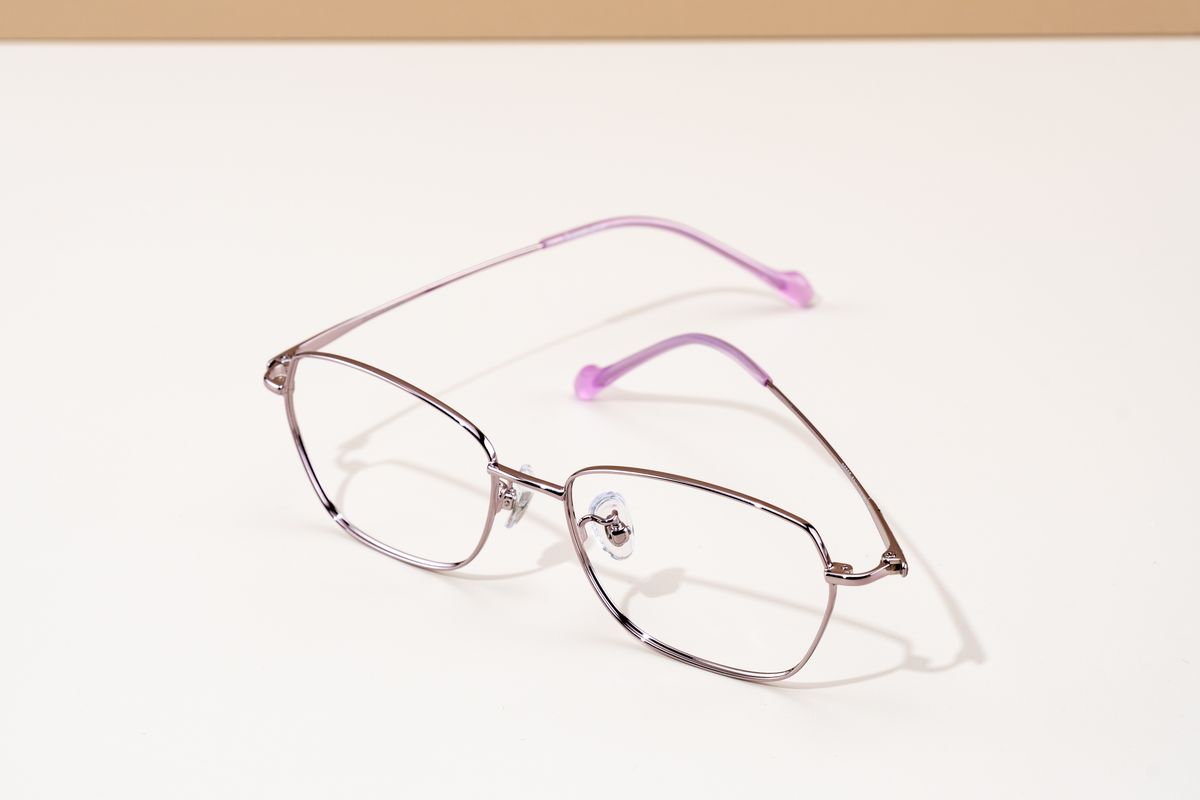
Stainless steel and the in-between alloys
Stainless steel is the quiet third option, common in value frames and in children’s eyewear. It shares Monel’s strength and costs less still, and its chromium content gives it corrosion resistance that the nickel alloys have to borrow from plating. It is heavier than titanium and stiffer than Monel, which limits it to simpler designs, but for a basic frame worn occasionally it is the rational default. Nickel-free stainless formulations exist and are often the compromise a sensitive wearer lands on when titanium’s price stings — with the same caveat as everywhere else in this piece: confirm the alloy, because stainless is a family of compositions, not one metal.
A note on the other alloys that fill the value tier: unnamed nickel alloys and nickel-silver compounds behave like Monel in most respects, including the skin question, and their listings usually say less. The less a maker states about the alloy, the more a sensitive wearer should assume.
Acetate: not a metal, and part of the decision anyway
Cellulose acetate is the plant-derived plastic sheet that dominates fashion frames, and no metals comparison is honest without it, because it answers the sensitivity question absolutely: no metal touches the skin in an acetate frame beyond the hinges, and even those are usually capped. Acetate starts as large sheets — which is where its signature layered, marbled colors come from — and is cut, milled, and hand-polished over days, a slower process than any metal fabrication and the reason good acetate frames carry a premium that seems counterintuitive next to wire frames.
Structurally, acetate is thicker by design: it cannot be drawn into a whisper-thin temple, so it suits larger frames and reads heavier on the shelf while often wearing lighter than it looks, thanks to that thickness carrying the shape. Its weaknesses are heat and aging — left on a car dashboard it can deform, and the material loses a little flexibility over years — and its adjustment requires a warm hand, not a bench press. For a sensitive wearer or a color-forward frame, acetate is frequently the correct answer.
Sensitivity: what hypoallergenic does and does not mean
Nickel is the allergen that matters in this category. Contact allergy to nickel is among the most common contact allergies in the population, and eyewear puts nickel alloys against warm, sweating skin for hours at a stretch — exactly the conditions that provoke a reaction. The term hypoallergenic appears on eyewear packaging constantly, and it is worth knowing plainly: it is not a regulated claim in this context, and it does not certify a nickel-free composition. Titanium, nickel-free stainless, and acetate are the materials a sensitive wearer can reason about; a hypoallergenic sticker on an unlisted alloy is not reasoning material.
Two practical steps make any frame safer for sensitive skin. Ask for the alloy by name — a maker or optician who can answer without hedging is telling you something true. And swap the nose pads: pads are the highest-contact part of any metal frame, and aftermarket pads in titanium or silicone cost little. Sweat is the accelerant in every corrosion and reaction story above, which is why wearers who live in the frame all day benefit most from these checks.
Nose pads and screws, the contact points that outlast the frame
The alloy line inside the temple describes the frame, not every part of it. Nose pads sit against the oiliest skin on the face, and their arms are soldered or clipped to the bridge — the exact joint where plated alloys show wear first. Hinge screws are similarly small, similarly high-contact, and commonly a different alloy from the temples. A sensitive wearer who verifies the frame metal should verify those two parts as well, because a nickel-free temple with a nickel-containing screw still puts the allergen at the highest-wear joint in the frame.
Weight, fit, and the daily-wear calculus
Material choice is ultimately a wearing-pattern decision. A frame that lives on the face from morning to night rewards every gram saved, which is titanium’s case. A frame worn for evenings and weekends can carry Monel’s heft and its price, and a fashion-forward frame that is part of the outfit is acetate’s territory. Weight also concentrates at two points — the nose bridge and the behind-ear hook — so a well-adjusted heavier frame can out-comfort a badly fitted light one. The optician’s adjustment does as much for comfort as the material list.
Corrosion exposure should be weighed just as honestly. A frame that survives gyms, pools, and coastal summers needs titanium or stainless; a frame that lives in an office with Monel’s plating will keep its finish for years. Match the alloy to the actual life of the frame, not to its aspirations.
What to check before you commit
Four checks take a minute at the counter. The material line inside the temple, by name rather than marketing word. The nose pad material, and whether it can be swapped. The screws and hinge construction, since a titanium frame with ordinary screws still puts nickel at the highest-wear joint. And the weight in hand, because material claims are the one eyewear spec you can verify without believing anyone. The rest of the desk’s accessory work lives in the accessories hub, the chemistry behind metal finishes in jewelry is covered in our vermeil explainer and the wider metals and stones archive, and How We Appraise explains why stated materials outrank photos in everything we recommend.
Frequently asked
Which frame material is best for a nickel allergy?
Titanium is the usual answer, and pure titanium in particular, because it contains no nickel. But hypoallergenic is not a regulated claim on eyewear, so a sensitive wearer should confirm the alloy with the maker or the optician rather than trusting the word on the tag — some titanium frames still use nickel-containing screws or temple cores.
Is Monel a bad frame material?
No. It is a nickel alloy that has carried mid-range and premium frames for decades because it is strong, malleable, and takes a fine finish. Its one honest weakness is skin: nickel release can bother sensitive wearers, and corrosion shows first on frames worn against sweat daily.
Why do acetate frames cost more than metal ones?
Acetate starts as sheets of plant-derived plastic that are cut, milled, and polished by hand over days, which is slower than stamping or soldering metal. In exchange you get rich layered color, a larger and lighter-than-it-looks frame, and no metal touching the skin at all.