Washing, drying, and storing a silk scarf
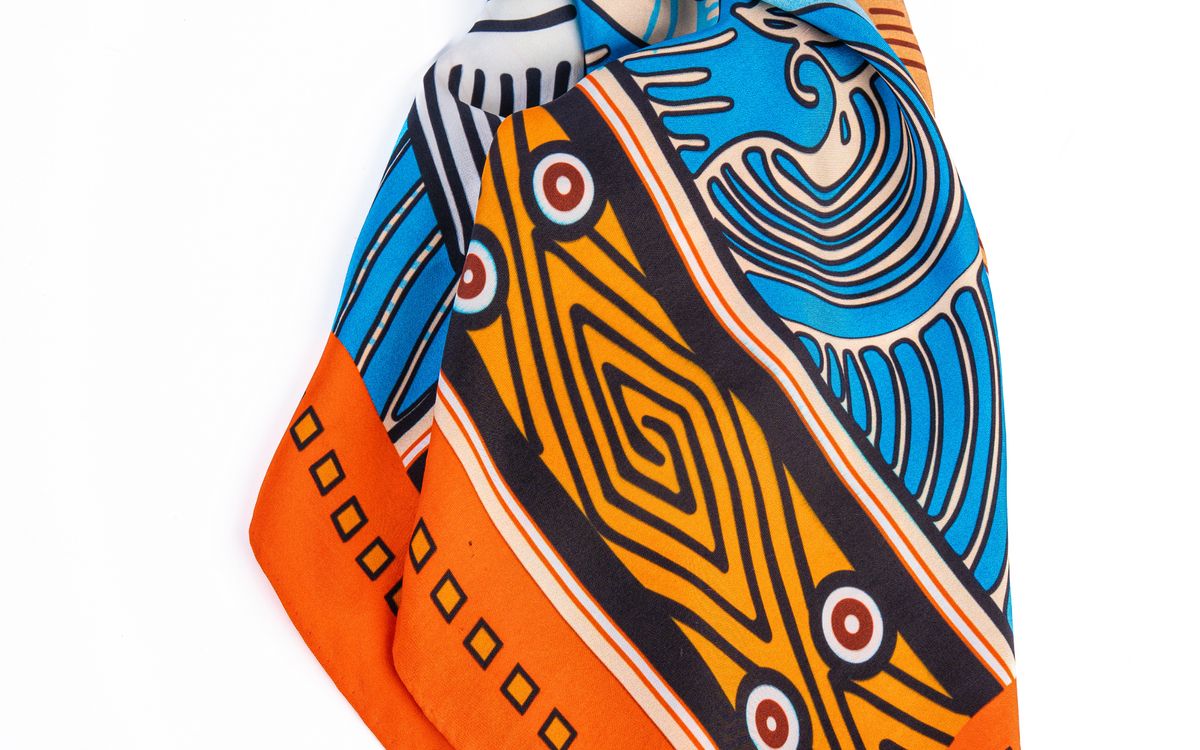
Silk is the strongest natural fiber in most people’s accessory drawer, and also the one treated the most gingerly — often wrongly, in both directions. The scarves that wear out early are rarely worn to death; they are washed in hot water with the wrong detergent, wrung like towels, or stored in a drawer against perfume for a season. The care routine that keeps a scarf looking new for years is short, cheap, and mostly about avoiding three specific mistakes. This guide walks it in the order the work actually happens: wash, dry, press, store.
Start with the care label, not the internet
Every silk scarf carries two kinds of care information: the label sewn in the hem or printed on the listing, and the general wisdom of the internet. Trust the first. A dry-clean-only line on a dense silk twill with a hand-rolled hem is a statement about construction — a machine wash works the rolled edge against the drum, and the finish that took skilled labor to make is the part most at risk. A hand-wash line on a lighter printed square is the maker telling you the dye and weave can take gentle water contact.
The general rule that reconciles them: the heavier and more elaborately finished the scarf, the more likely it belongs with a cleaner; the lighter and plainer, the more likely a basin is fine. When the label is silent — vintage scarves, market finds — treat it as hand-wash-only and accept that the dye may release a little color into the first wash. Wash it alone the first time, always.
Hand washing, step by step
Fill a basin with cool water — cool, not cold-shock, and never warm enough to feel comfortable on a wrist, because heat is what dulls silk’s sheen and can shift dye. Add a pH-neutral detergent made for silk or delicates; ordinary laundry detergent is alkaline, and alkalinity is the specific chemistry that silk resists worst, attacking the protein fiber the way it attacks nothing else in the wash basket. A few milliliters is enough for one scarf.
Lower the scarf in, press it under, and let it sit two to three minutes. Agitate by pressing and lifting the fabric, not by rubbing — friction between folds is where pills and thread snags start. If the water clouds with released dye, do not panic; change the water once and continue, as long as the color on the scarf itself looks even. Rinse in two changes of cool water until the water runs clear, and on the final rinse, a capful of white vinegar in the basin — a traditional step that restores the fiber’s mild acidity — leaves the hand softer without any scent of vinegar once dry.
When the water runs pink
Some printed scarves release dye on their first washes, and the color of the rinse water is not by itself a verdict. What matters is the scarf: if the print still reads even and undiminished after drying, the release was excess surface dye and the scarf is fine. If the print shows pale patches, the dye was not fixed well, and the right response is to stop washing at home and keep the scarf with the cleaner — or accept that it is a scarf that will fade, worn accordingly.
Drying: no wringing, no sun, no hangers
Never wring. Wet silk is weaker than dry silk, and twisting concentrates strain along one line of fibers, which breaks them and sets a permanent wrinkle along the twist. Press the water out instead: lay the scarf flat on a clean dry towel, roll the towel around it loosely, and press down along the roll. Unroll, move the scarf to a second dry towel if it is still dripping, and repeat once. The towel does the work the wringing would have done, at none of the cost.
Dry the scarf flat, spread to its natural shape on a dry towel or a mesh rack, away from direct sunlight and away from a radiator. Sunlight fades printed silk measurably in a single afternoon laid on a sunny sill, and heat from a radiator cooks the hand of the fabric stiff. Hanging a heavy wet square by one corner stretches the hem and the bias under the scarf’s own water weight — the shape it dries in is the shape it keeps.
Pressing and steaming
Silk wants to be pressed slightly damp, on the reverse side, at the lowest heat a real iron offers. Dry silk scorches at iron temperatures that cotton shrugs off, and a shiny scorch mark on the face of a printed scarf is permanent. Either press the scarf while it still holds a little moisture from the wash, or mist it lightly with water first, and keep the iron moving — a resting iron plate on silk leaves its outline. A hand steamer at a distance is the gentler tool for scarves with hand-rolled hems, because it presses nothing flat and nothing drags.
Between wears, most silk scarves do not need pressing at all. The drape that returns overnight on a hanger, or on a flat surface under nothing, is a real phenomenon — silk relaxes as it dries in shape — and reaching for the iron after every wear is work the fabric does not ask for.
Storage between seasons
Store silk loosely folded or rolled, never compressed under other items, and never in plastic: silk is a protein fiber that needs to breathe, and sealed plastic traps humidity against it, which invites mildew and sets creases. A cotton bag, a scarf box with acid-free tissue between the folds, or a drawer shelf with one scarf per layer all work. For long storage — summer scarves through a winter — roll rather than fold, because rolls distribute the bend along the whole width instead of concentrating it in four crease lines.
Two neighbors matter as much as the container. Perfume is the quiet destroyer: sprayed fabric ages and spots, so scarves should be stored and worn away from direct fragrance, which is also the styling rule of putting scent on before the scarf goes on. And moths seek out protein fibers, which makes silk a target exactly like wool — cedar blocks or lavender sachets near, not touching, the storage keep them at the door. Jewels and silk do not share a drawer well either: a snagged ring prong pulls a thread that no repair fully restores, which is why the pull happens in the drawer more often than on the body.
Rolled versus folded, and the travel version
For long storage — summer scarves through a winter — roll rather than fold, because rolls distribute the bend along the whole width instead of concentrating it in four crease lines that acid-free tissue only softens. For travel, the same logic scales down: roll the scarf loosely around itself and it occupies a pocket and arrives ready to wear, while a pressed-in fold takes an evening under a mattress or a steaming to undo. The only scarves that should always lie flat are heavily printed squares with hand-rolled hems, where even a soft roll can work the edge over months.
What damages silk fastest
Three accelerants do most of the lifetime damage, and all three are habits rather than accidents. Heat first: hot water, hot irons, radiators, and car dashboards each attack silk differently, and together they account for most dulled sheen and stiffened hand. Friction second: wringing, rubbing during wash, and repeated wear against a rough coat collar all abrade the surface fibers that give silk its luster. Chemistry third: perfume, hairspray, alkaline detergent, and the acid in sweat — the last of which is why a scarf worn against the neck daily should be washed more often than its visible cleanliness suggests, and why rinsing after a sweaty summer day is the single most underused habit in silk care.
None of these rules makes silk fragile. Washed cool, dried flat, and stored breathing, a silk scarf outlasts most of the wardrobe around it — which is the quiet argument for owning fewer of them, chosen well. For scarves worth owning, see the accessories hub, for how they sit in a whole outfit our styling notes and neckline layering guide cover the same fabric-against-skin logic, and How We Appraise explains how picks like these are chosen.
Frequently asked
Can silk scarves be hand washed at home?
Most can, when the care label allows it: cool water, a pH-neutral silk detergent, a two-to-three-minute soak, and gentle squeezing without wringing. Dry-clean-only scarves — typically dense twills with hand-rolled hems — should stay with the cleaner, because a wash cycle stresses the rolled edge.
Why can't I wring a wet silk scarf?
Wet silk loses some of its dry strength, and twisting concentrates stress along the fibers in one direction, which breaks them and leaves permanent creases. Press the water out flat between towels instead — slower, and the fabric comes out of it unmarked.
How should a silk scarf be stored long term?
Loosely folded or rolled, in a breathable bag or box, away from sunlight and away from direct contact with perfume, which damages silk fibers as well as scenting them. Acid-free tissue between folds prevents crease lines on long-stored squares, and cedar or lavender nearby discourages moths without touching the fabric.