Evening jewelry by dress code: black tie, cocktail, and the gap between
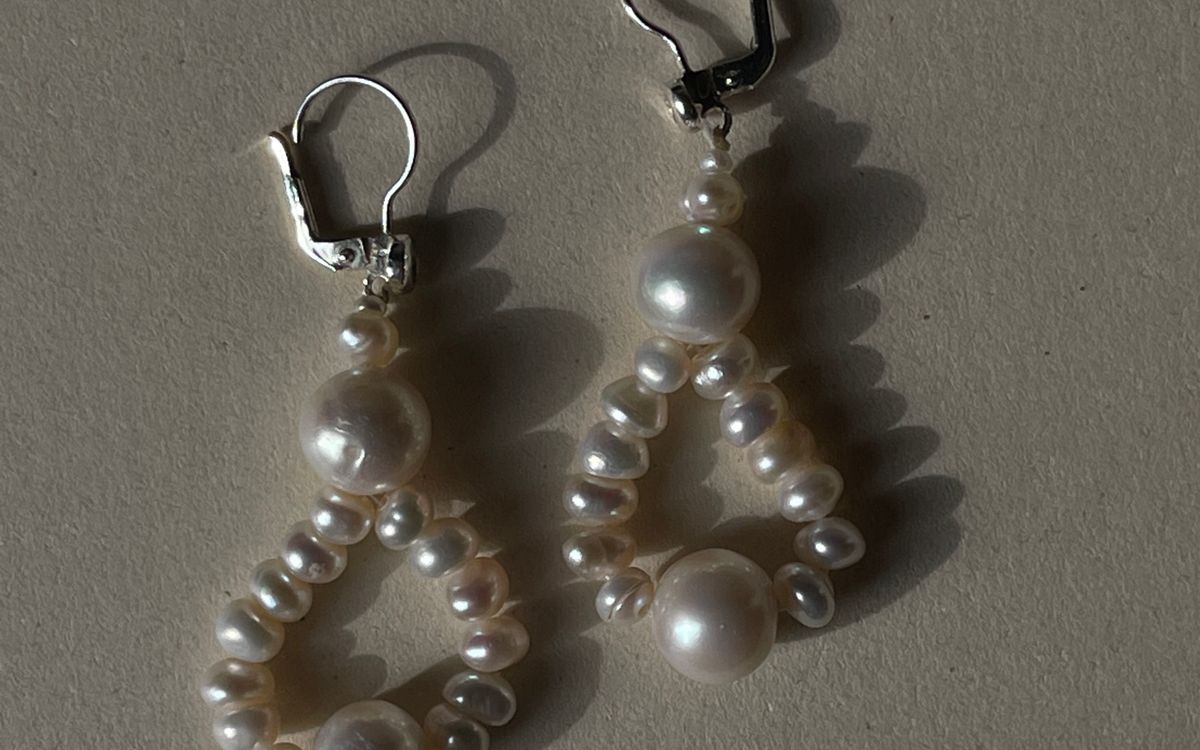
Evening jewelry is usually described as “more,” but the dress codes actually describe a ceiling. Black tie permits the most drama, not the most pieces; cocktail permits the most personality, not the least restraint. Read the codes that way and the whole territory simplifies: each dress code sets a maximum scale for the single focal point, and everything else in the outfit either supports it or gets left at home. This guide walks the ladder from black tie down to cocktail, and the practical details — clasps, coat drapes, straps — that no dress code mentions but every evening eventually tests.
The dress code sets the ceiling, not the floor
The common reading error is treating formal dress codes as a requirement to add rather than a boundary to respect. Black tie does not demand a necklace, earrings, a bracelet, and a ring; it permits one of those at full strength. The most confident evening looks in the room are usually the most edited, because evening lighting and evening distances — three feet across a dinner table rather than an arm’s length across a desk — amplify everything. A piece that reads as elegant at noon can read as busy after dark without changing at all.
The working method for any evening invitation: identify the dress code, find its ceiling, and then choose the single element that will reach toward it. Everything else steps back. The element that reaches is a personal decision — the ears, the wrist, the collarbone all work — but the number of elements that reach is one.
Black tie: one focal point, and it is usually the ears
Black tie concentrates attention at the face more than any other dress code, because the setting does half the work: gowns cut close to the collarbone, hair worn up, rooms where conversation happens at close distance. That combination is why the ears are the classic black-tie position, and why a strong pair of earrings carries the whole look with nothing else raised to match.
Why chandeliers carry the room
The chandelier earring’s dominance at black tie is not tradition for its own sake. An up-do gives the piece an unobstructed frame; a strapless or high-cut neckline gives it a bare stage; candle and low light give it movement and sparkle that a flat daytime setting cannot produce. The scale rule from daylight inverts here — the drop that would read as loud in an office reads as correct in a ballroom, because the room’s distances are larger and the light is lower. If the gown has a detailed or embellished bodice, the calculation changes: the dress is already the focal point, and the jewelry steps down to fine and quiet, or stays home entirely.
The necklace question at black tie
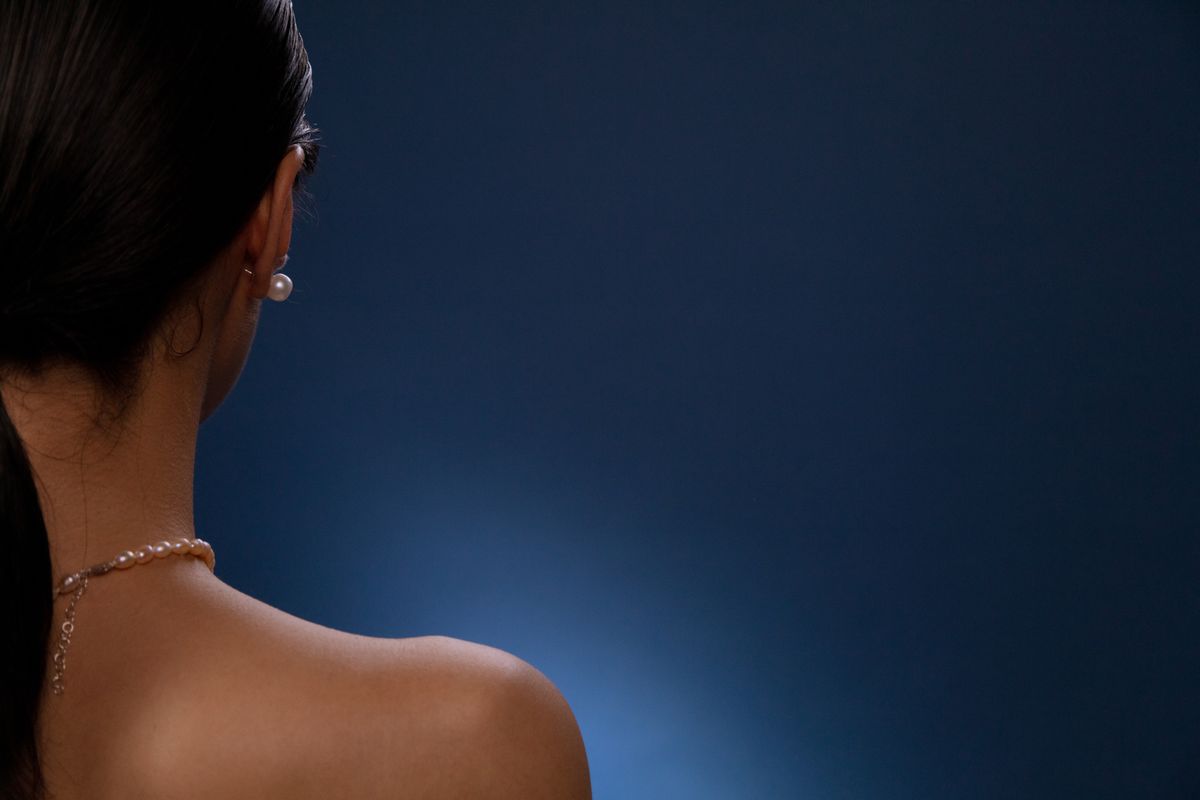
Necklaces at black tie are not wrong — they are conditional. A bare, simple neckline takes a fine necklace well, and a single strand or a solitaire pendant can hold the focal position as confidently as earrings. The failure mode is arithmetic: earrings, necklace, and bracelet all at full strength equals three focal points, and the gown loses to its own jewelry. If the ears are carrying the night, the collarbone stays bare or nearly so; the layering guide covers the daytime version of the same discipline.
Cocktail: the middle zone with the widest range
Cocktail is the dress code with the most room for personality, and paradoxically the hardest one to advise, because its ceiling is high and its floor is low. Daytime pieces can graduate to cocktail with one deliberate swap: the stud becomes a drop, the thin chain gains a pendant, the bare wrist takes a cuff. The wardrobe already owns more evening-capable jewelry than most people assume.
The structure that works: one strong piece plus a quiet supporting cast in the same metal family. A statement ring against bare ears; a cuff against simple studs; a bold necklace with the wrists left clean. Cocktail fails not through under-dressing but through accumulation — the code’s flexibility invites additions until the outfit has four focal points and none of them read. The arm’s-length test from the last section of this guide exists precisely for this code.
What changes after dark: metal and stone logic
The metals do not need to change for evening; the registers do. Trade convention, rather than any fixed rule, runs toward higher-polish surfaces and more saturated stones after dark — the reasoning being practical: low light rewards sparkle and depth, and the same polish that looks formal at noon looks celebratory at eight. Diamonds and light-catching stones read noticeably larger in low light, which is another argument for editing: a piece chosen at full evening strength in a brightly lit jewelry box will over-deliver in a candlelit room.
Pearls deserve their own line because they invert several of these assumptions: they photograph beautifully at night, they soften strong necklines, and they carry a formality that lets a single strand do focal-point work without any sparkle at all. For choosing the classic evening wrist piece from scratch, the tennis bracelet guide explains why that closed-line construction reads cleanly under low light.
The practical layer: straps, coats, and clasps
Evening logistics create contact scenarios that daytime never does. A coat draped over the shoulders all night lives in contact with earrings and bracelet edges, and a heavy drop can snag its own lining repeatedly through an evening. Evening bags with chain straps drag across the collarbone on every lift; a slim chain necklace and a crossbody-free night solve most of that arithmetic. Fitted bodices hide clasps from view but not from stress — a night of dancing puts repeated load on whatever closure is holding the necklace, and a lobster clasp with a working safety chain beats a decorative toggle that was never designed for the job.
The pre-departure check is worth two minutes: clasps closed and tested, earring backs seated, bracelet catches engaged. Evening repairs are the least convenient repairs in fashion — there is no desk drawer of spares at a ballroom — so the pieces that go out at night should be the pieces whose hardware was checked, not assumed.
The arm’s-length test before leaving the house
The final edit happens in the hallway mirror, and the test is distance: step back beyond arm’s length, then count focal points. One is the target. Two is a decision — occasionally right, usually loud. Three means the outfit is wearing the jewelry, and something comes off, and it is always the second-strongest piece rather than the weakest, because a single confident focal point outperforms a diluted pair every time.
This is the discipline that separates evening jewelry from daytime accumulation: the pieces are the same, the wardrobe is the same, but the lighting and the distances reward restraint in a way that daylight never forces. The styling desk keeps the running notes on how these choices play out across the season’s invitations, and the codes — read as ceilings rather than requirements — make every one of them easier to dress for.
Frequently asked
What jewelry is appropriate for black tie?
One focal point, usually at the ears, kept company by quiet supporting pieces. Chandelier drops, a single statement cuff, or a fine necklace — one of these, not all three. The gown's neckline decides: strapless favors a bare collarbone and strong earrings; a detailed bodice is already doing the work.
Can you wear daytime jewelry to a cocktail event?
Yes, with one swap. Keep the pieces and scale up a single element — a longer drop, a darker stone, a heavier cuff. Cocktail tolerates the widest personal range of any evening dress code; the risk is under-editing, not under-dressing.
How many statement pieces should you wear at once?
One. A focal point needs room, and two competing focal points read as noise from across a room. Everything else supports: smaller scale, smoother surfaces, one metal family. The arm's-length mirror test settles it faster than any rule.