Wedding guest jewelry: dressing around the dress code and the dance floor
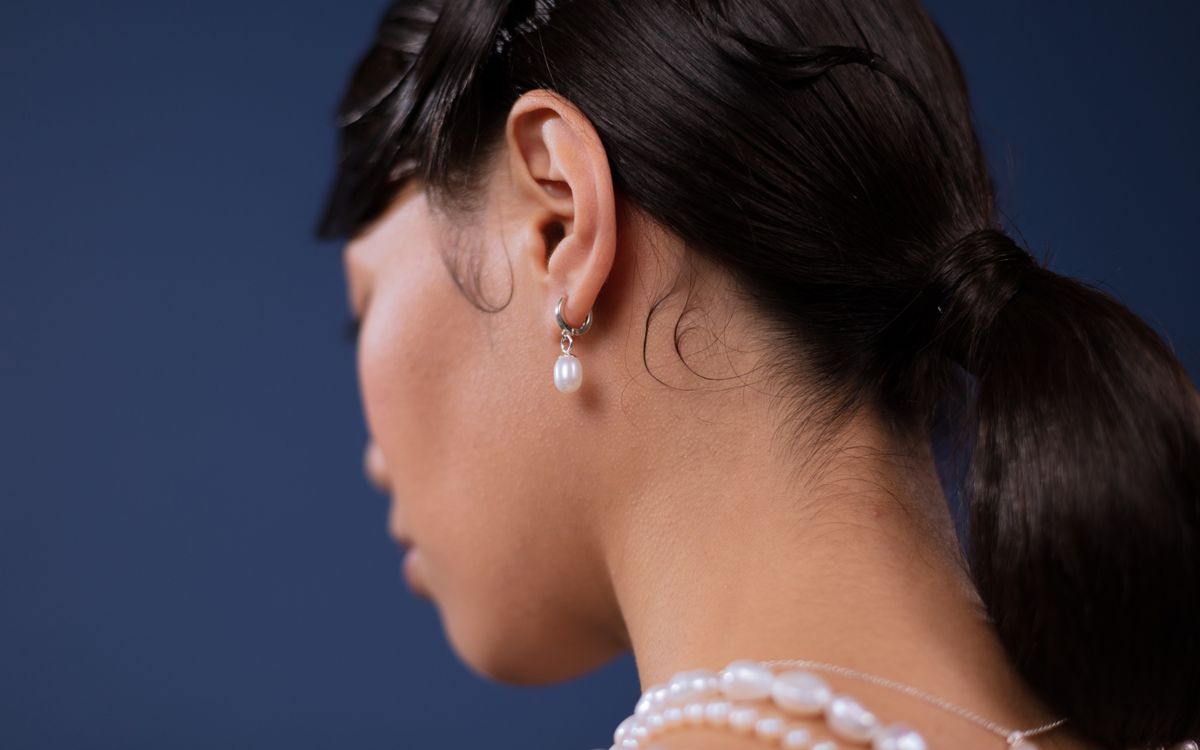
Wedding guest jewelry answers to two masters, and most advice only mentions one. The first is the ceremony: the dress code on the invitation sets a formality line your jewelry has to sit under. The second is the day itself: a wedding is eight hours on your feet, in photos, through a dinner, and on a dance floor, and jewelry that cannot survive that schedule fails in front of two hundred people. The pieces that work are the ones chosen for both constraints at once.
The boundary is the dress code line, not the bride
The folklore says do not outshine the bride, which is unfalsifiable and mostly unhelpful — nobody wears a tiara to someone else’s wedding anyway. The workable version: your jewelry should never rise above the formality word printed on the invitation. If the code says cocktail, cocktail-scale jewelry is your ceiling even if the room skews dressier. This framing does the same job as the folklore without requiring you to audit anyone else’s outfit, and it has the advantage of being checkable before you leave the house.
The dress code line is also the source of the answer to the commonest question — how much is too much. Read the word on the invitation, dress your jewelry one notch under it, and the question disappears.
Reading the dress code line on the invitation
Formal and black tie call for the finer register: fine metals, pearls, and pieces with real presence at small scale. Cocktail and semi-formal are the widest band — most jewelry works if the total stays composed. Casual, garden, and beach codes push toward matte textures and lighter metals, because daylight is unforgiving to costume sparkle and outdoor venues punish heavy pieces that bounce with every step on grass.
Daylight versus evening matters as much as the printed word. An afternoon ceremony photographs everyone in natural light, where yellow gold and pearls read warm and white metals read crisp. An evening reception runs on artificial and flash lighting, where white metals, crystals, and polished surfaces carry. The same outfit can want different earrings depending on when the ceremony starts.
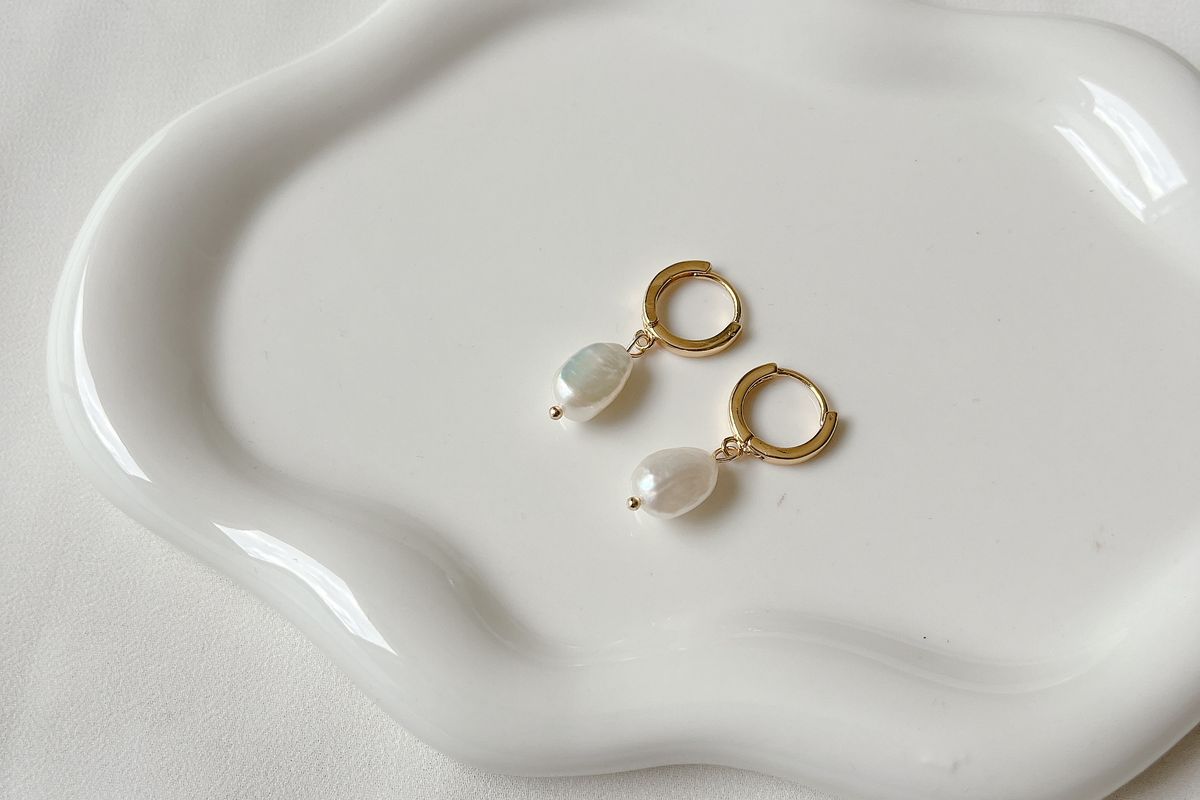
Earrings do more work than necklaces at seated events
A wedding is a seated event with a fixed sightline: other guests see you face-on across tables and aisle rows, and in every photo from the shoulders up. That geometry favors earrings. A necklace competes with the neckline of the dress and disappears when the table conversation starts; earrings frame the face in every frame of every photo.
The corollary is the one-zone rule: carry the statement in the earrings and keep the neckline quiet, or carry it in the necklace and keep the ears small. Two statement zones split the eye in photos, and the split reads as costume rather than composition. For anyone layering a fine chain with the statement piece, the length rules that keep layers separated all day are the same ones covered in the layering guide.
The dance floor test
The dance floor is where guest jewelry is actually stress-tested, and it tests three things: weight, catch points, and security. Weight because hours of movement turn heavy earrings into earlobes that ache by dessert. Catch points because hands are everywhere on a dance floor — hugs, toasts, a conga line — and anything that extends past the silhouette gets grabbed. Security because a lost earring at a wedding is lost in a field, a parking lot, or a stranger’s shoe.
The test is passable with planning rather than avoidance: choose the largest pieces that stay within your normal wearing weight, run a hand around every silhouette edge, and check the backs.
Earring backs that stay shut
The butterfly back, the standard fitting on most drop earrings, is the weakest link in a long day — it loosens with temperature changes and hair contact, and it rarely announces that it has. Lever backs close mechanically and do not rely on friction; screw backs hold by thread; locking backs add a click closure over the post. For any earring with meaningful weight, one of these three is the difference between keeping the pair and keeping one.
Bracelets and the clasp problem
Bracelets at weddings take more abuse than any other piece — they go through dinner, toasting, handshakes, and dancing with a full range of wrist motion. A lobster clasp with a jump ring is the common failure point; a hinged bangle has no clasp to fail at all, which is why bangles dominate on dance floors. If the clasp is the only option, a safety chain or a second clasp on a short extension converts a hopeful closure into a secure one.
What to leave at home
Four categories reliably fail at weddings. First, anything never worn for a full day — the untested new piece is the one that turns out to pinch, tilt, or irritate by hour three. Second, oversized cocktail rings, which make toasting, eating canapés, and holding a drink a two-hand negotiation. Third, long pendants, which swing exactly when the hug line and the photo line converge. Fourth, irreplaceable sentimental pieces — the day involves crowds, alcohol, and dance floors, and a piece whose loss would actually ruin your evening does not belong there.
Re-wear value after the wedding
Guest jewelry earns its drawer space on the way out: the pearl studs that work at the ceremony work at the office, the fine gold chain under the evening drops anchors a weekday stack, and the bangle that survived the dance floor is the same one that survives a Monday. Choosing guest pieces with a second life outside the wedding circuit is the difference between an occasion purchase and an addition to the wardrobe — the same wear-rate logic that governs a capsule. For pieces bought as gifts that then live through these occasions, the gifts guide covers the durable picks, and the styling desk keeps the running edit of how occasion pieces fold back into everyday wear.
Frequently asked
How much jewelry can a wedding guest wear?
One statement zone is the reliable rule — earrings or a necklace or bracelets, not all three. The scale should match the formality word on the invitation, and the whole look should stay quieter than the dress code line, not quieter than any individual bride.
What earrings stay secure through a whole wedding day?
Studs, huggies, or drops with locking backs or lever backs. Standard butterfly backs loosen over a long day of dancing, so for anything with real weight, a screw-back or locking mechanism is worth seeking out.
What jewelry should wedding guests avoid?
Anything never worn for a full day, oversized cocktail rings that make toasting awkward, and long pendants that swing during hugs and photos. The untested piece is the one most likely to fail mid-ceremony.