Three everyday gold chains, compared by construction
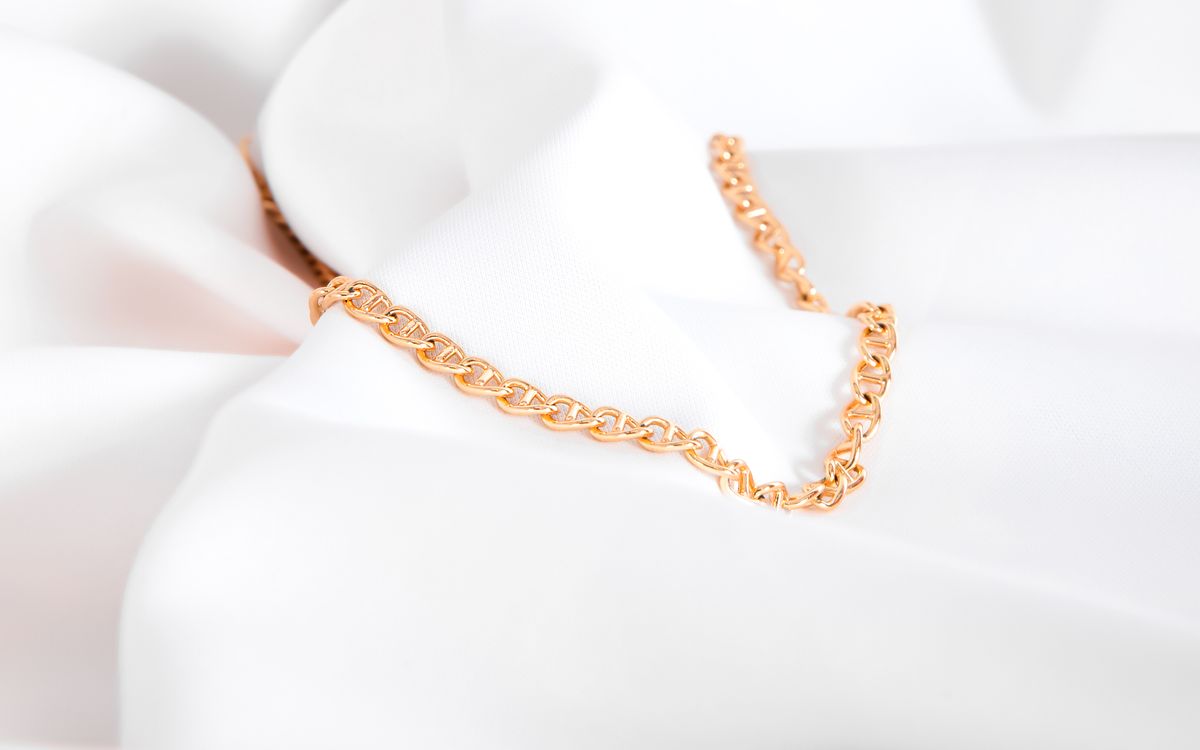
The everyday gold chain is the most-worn object in a jewelry box, which is exactly why it deserves more scrutiny than the occasion pieces. A chain worn four days a week runs through hundreds of on-and-off cycles a year, sits against skin and sunscreen and collars, and gets slept on by accident. Construction — what the metal actually is, how thick the gold layer is, how the clasp is built — decides how it looks in year three far more than the design does.
This guide compares three real, in-production chains from Mejuri, Missoma, and Gorjana that occupy three different constructions: 18k gold vermeil, gold-plated stainless steel, and 14k solid gold. All three were checked against the makers’ own product pages in November 2026, and prices below are the US site prices as listed there.
What makes a chain an everyday chain
Not every chain qualifies. An everyday chain has three properties that occasion pieces can skip. First, it lies flat and stays put: link shapes like herringbone, rope, and cable sit against the skin without twisting, while heavy statement links flip and catch. Second, it is light enough to forget — the Missoma pick below weighs under three grams, and that is a feature, not a shortcut. Third, the clasp survives repetition: a spring ring worked daily for a year is a different object than one worked monthly, so clasp type belongs in the buying decision, not the footnote.
Everything else — packaging, gift pouches, brand story — is presentation. The product page details that actually predict longevity are the material line, the chain width in millimeters, the length options, and the warranty. Those are the four rows that matter in any chain comparison, including the one below.
The three constructions at these prices
Between roughly $80 and $350, the market splits into three constructions, and each maker below represents one.
Gold vermeil is a thick layer of 18k gold electroplated over sterling silver — Mejuri states 2.5 microns of 18k gold over 91% recycled sterling silver on its product pages, which is the trade definition of vermeil rather than ordinary plating. It is the default honest choice for gold-look chains in this range. For the full chemistry and the FTC rules behind the term, see our vermeil explainer.
Gold-plated stainless steel is the newer value construction: a 316L stainless base with a PVD-bonded gold layer. PVD plating bonds harder than standard electroplating, which is why Missoma markets its stainless line as water-resistant and sweatproof — claims the brand publishes plainly on the product page. The base metal will never tarnish from the inside.
Solid gold needs no layer at all. At 14k, it is waterproof, hypoallergenic for most people, and effectively permanent — Gorjana’s solid-gold chain starts at a price that once belonged to vermeil, which is why the entry point into real gold is worth a row in this comparison.
The picks
All three picks were checked against the makers’ US product pages in November 2026. Prices move, so treat the numbers as a snapshot and confirm on the product page before buying.
Mejuri Bold Herringbone Chain Necklace — the vermeil pick
Mejuri’s herringbone is the classic gold-look chain of the three: 18k gold vermeil with the maker stating 2.5 microns of gold over a 91% recycled sterling silver base, a 5 mm width, and two lengths, 16 and 18 inches, with the price starting at $298 on the maker’s US page. Herringbone is the link style that reads most like solid gold in daylight, because the flat woven surface reflects light as a sheet rather than as individual links. The maker’s two-year warranty and free 30-day returns apply, both stated on the product page.
The honest trade-off is handling: herringbone is the most delicate of the three link geometries here and kinks if bent sharply, so it stores flat and never goes in a gym bag. Worn with that one habit, it is the pick that most convincingly replaces a solid gold chain at a fraction of the money — and it is the one we would buy first for a single daily chain.
Missoma Medium Rope Chain Necklace — the value pick
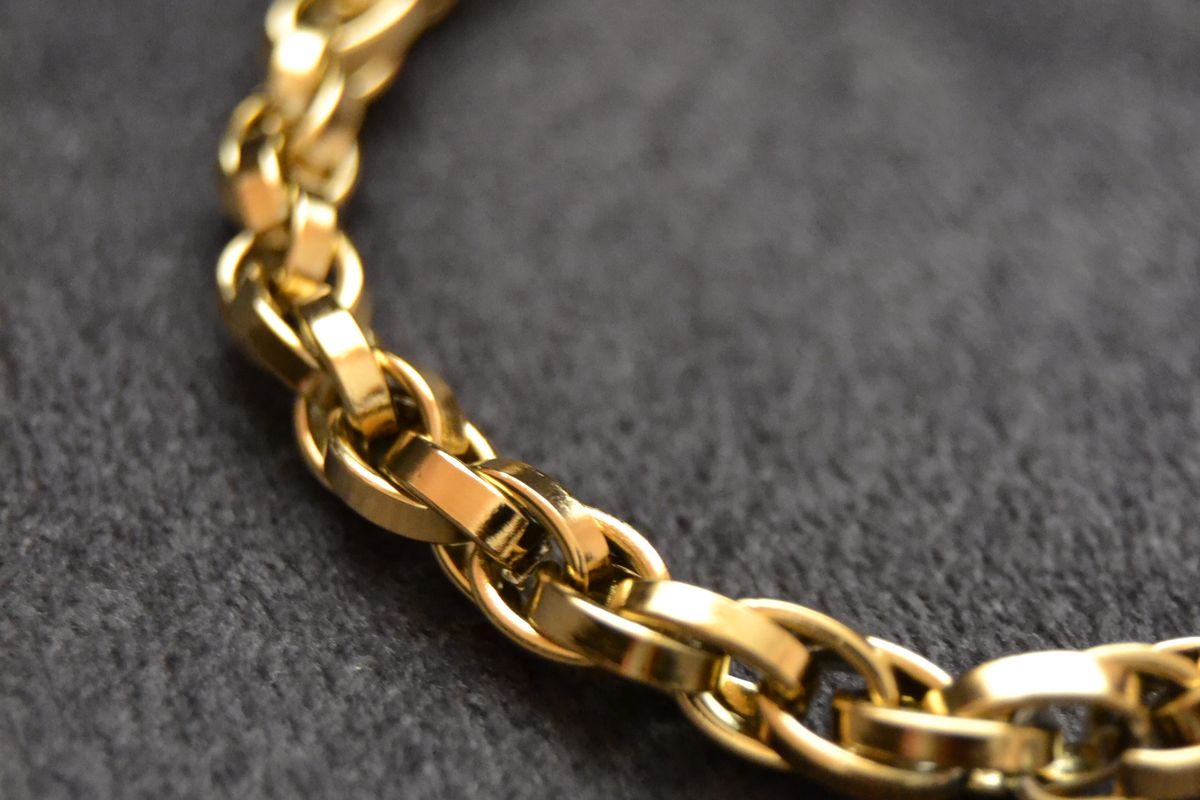
At $85 on Missoma’s US site, this rope chain is the construction outlier: 18k gold PVD plating over 316L stainless steel, with the maker’s page stating the chain is water-resistant, anti-tarnish, sweatproof, and hypoallergenic. The chain runs 50 cm with continuous adjustment from 46 to 50 cm — roughly 18 to 19.7 inches — and weighs 2.61 grams. Rope links twist as they lie, so the chain catches light from every angle and layers under pendants without fighting them. The maker states a two-year warranty and 60-day returns.
The trade-offs are the ones that come with the price: the gold layer is thinner than vermeil, and the maker does not publish a chain width for this piece, so the exact millimeters are a check-in-person item. What the construction buys instead is a chain that shrugs off showers and workouts — the only pick here the maker explicitly markets for water. For a first everyday chain, or a second chain that lives at the bottom of a stack, this is the one.
Gorjana 14k Gold Basic Chain — the solid gold pick
Gorjana’s Basic Chain is the step into real gold: 14k solid gold at $205 on the maker’s site, adjustable from 16 to 18 inches with a spring ring closure, sold as a layering foundation that takes charms. Solid gold changes the ownership math — no layer to wear through, no water restrictions, and a piece that holds intrinsic value if tastes change. At this price it undercuts most vermeil herringbone and box chains from comparable brands.
The trade-off is visual: 14k is paler and quieter than 18k vermeil, and the chain itself is deliberately plain — a fine cable with no texture. It is the least photogenic of the three and the most permanent. If the plan is one chain worn for a decade, through showers and travel and everything else, this is the pick; if the plan is a rotating stack, start with the vermeil or plated options above.
Length, width, and how each sits
Length is the most returned-against specification in chains. The everyday range is 16 to 18 inches: shorter reads as a choker on most necks, longer drops below the collarbone and tangles in necklines. Two of the three picks here solve the problem structurally — the Gorjana adjusts continuously from 16 to 18 inches, the Missoma from roughly 18 to 19.7 inches — and only the Mejuri offers fixed 16 and 18 inch options, which is workable but requires choosing at checkout.
Width changes how a chain reads from across a room. The Mejuri’s 5 mm herringbone is a visible gold band; the Missoma rope and the Gorjana cable are texture-and-line pieces that disappear into a stack. There is no correct width, only a use: a single signature chain wants the 5 mm, a layering collection wants the finer two. Our layering guide covers how widths combine across a stack.
Clasps and the daily on-off problem
A chain worn daily works its clasp several hundred times a year, and clasp failure is the most common repair in the category. The Gorjana uses a spring ring — small, secure, and the fiddliest of the common clasps at the 16-to-18-inch adjustment point. Mejuri’s herringbone carries the maker’s standard lobster-style closure with a two-year warranty behind it. Missoma states its closure on the product page and backs the piece with the same two-year warranty.
Two practical habits extend clasp life regardless of type. Open the clasp fully rather than forcing it over the ring, and fasten the chain in front of the neck before sliding it around, which halves the torque on the mechanism. If a clasp ever stops closing cleanly, stop wearing the chain until it is repaired — a failing clasp is how everyday chains get lost.
How each construction ages
Vermeil ages by gradual thinning: the gold layer wears first at contact points — the back of the neck, the clasp ring — over years of ordinary wear. Mejuri’s 2.5 micron specification is the trade standard for vermeil and the reason vermeil outlasts ordinary plating; the maker’s care guidance says to keep the piece away from water and oils. Plated stainless steel ages differently — the PVD layer is harder than electroplating, and the base cannot tarnish, so the failure mode is slow fading rather than blotching. Solid gold does not age in any visible way; it scratches, which is a patina, not a defect.
One comparison worth making explicit: the $85 Missoma and the $205 Gorjana are not competing products. The Missoma is the best cheap chain for someone whose habits include water and workouts; the Gorjana is the last chain anyone needs to buy in this style. Price alone does not tell you which construction fits your life — the material line on the product page does.
Sizing, care, and the habits that matter
Care reduces to one habit per construction. Vermeil: last thing off at night, first thing on after getting ready, dry cloth after wear. Plated stainless: tolerant of everything except chlorine and abrasives — Missoma’s care guidance is a soft, non-abrasive cloth and cool, dry storage. Solid gold: no restrictions at all, an occasional mild soap wash restores it.
For sizing, measure a chain you already own rather than your neck, and buy to that length. If between sizes, adjustable construction wins over a fixed length at the same price. And for how picks like these are chosen and checked — including what a maker’s product page must state before it counts as evidence — How We Appraise describes the full method.
How we chose and checked
The three picks were selected to represent the three constructions an everyday buyer can realistically choose between, from three established makers with published specifications. Every material claim, dimension, price, warranty term, and return window above was checked against the maker’s own US product page in November 2026 — Mejuri for the herringbone, Missoma for the rope chain, Gorjana for the solid gold basic. Where a maker does not publish a detail — Missoma’s chain width, Gorjana’s warranty term — the comparison above says so rather than estimating, because an unstated specification is information too.
Prices are the US site prices as listed at the November 2026 check and will move. What does not move is the decision logic: read the material line first, the length second, the clasp third, and let the brand name be the last consideration rather than the first.
The picks
Some links below are affiliate links — we may earn a commission at no extra cost to you.
Mejuri Bold Herringbone Chain Necklace
from $29818k gold vermeil with 2.5 microns of gold over a 91% recycled sterling silver base, a 5 mm woven herringbone that reads like solid gold in daylight, and a two-year warranty with free 30-day returns. The pick that most convincingly replaces solid gold at a fraction of the money.
Missoma Medium Rope Chain Necklace
$8518k gold PVD plating on 316L stainless steel, stated by the maker as water-resistant, anti-tarnish, sweatproof, and hypoallergenic, with continuous adjustment from 46 to 50 cm and a 2.61 g weight. The only pick here marketed for showers and workouts.
Gorjana 14k Gold Basic Chain
$20514k solid gold with a continuous 16-to-18-inch adjustment and a spring ring closure — no gold layer to wear through, no water restrictions, and an entry price for real gold that undercuts most vermeil chains from comparable brands.
Side by side
| Specification | Mejuri | Missoma | Gorjana |
|---|---|---|---|
| Construction | 18k gold vermeil, 2.5 micron gold on 91% recycled sterling silver | 18k gold PVD plating on 316L stainless steel | 14k solid gold |
| Link style | Herringbone | Rope | Cable |
| Width | 5 mm | Not stated | Not stated |
| Length | 16 / 18 inches | 50 cm, adjustable 46–50 cm | Adjustable 16–18 inches |
| Water | Keep away from water (maker care guidance) | Stated water-resistant and sweatproof | No restrictions (solid gold) |
| Warranty / returns | 2-year warranty, free 30-day returns | 2-year warranty, 60-day returns | Not stated, 30-day returns on unworn items |
| Price at last check | from $298 | $85 | $205 |
Sources
- Mejuri product page — Bold Herringbone Chain Necklace, 18k Gold Vermeil (mejuri.com US site), checked November 2026
- Missoma product page — Medium Rope Chain Necklace, 18k Gold Plated (us.missoma.com), checked November 2026
- Gorjana product page — 14k Gold Basic Chain (gorjana.com), checked November 2026
Frequently asked
Is gold vermeil good enough for a chain worn every day?
Vermeil — a thick gold layer over sterling silver — is the standard construction for everyday gold-look chains between roughly $80 and $350. It lasts years with ordinary care, but it is not solid gold: keep it out of water and it will outlast careless habits by a wide margin. Chains advertised as simple gold plating over brass wear faster.
What chain length works for daily wear?
16 to 18 inches is the everyday range — short enough to sit at the collarbone, long enough to layer over. Adjustable chains remove most of the guesswork: if a maker offers an adjustable length, buy it over a fixed length at the same price.
Can I shower with a gold chain on?
With solid gold, yes. With vermeil and plated chains, no — soap and water gradually wear the gold layer, and the makers' own care pages for the picks below say the same thing. The two-second habit of taking a chain off before a shower is the single biggest determinant of how it looks in year three.