Three everyday gold hoop earrings, compared by construction
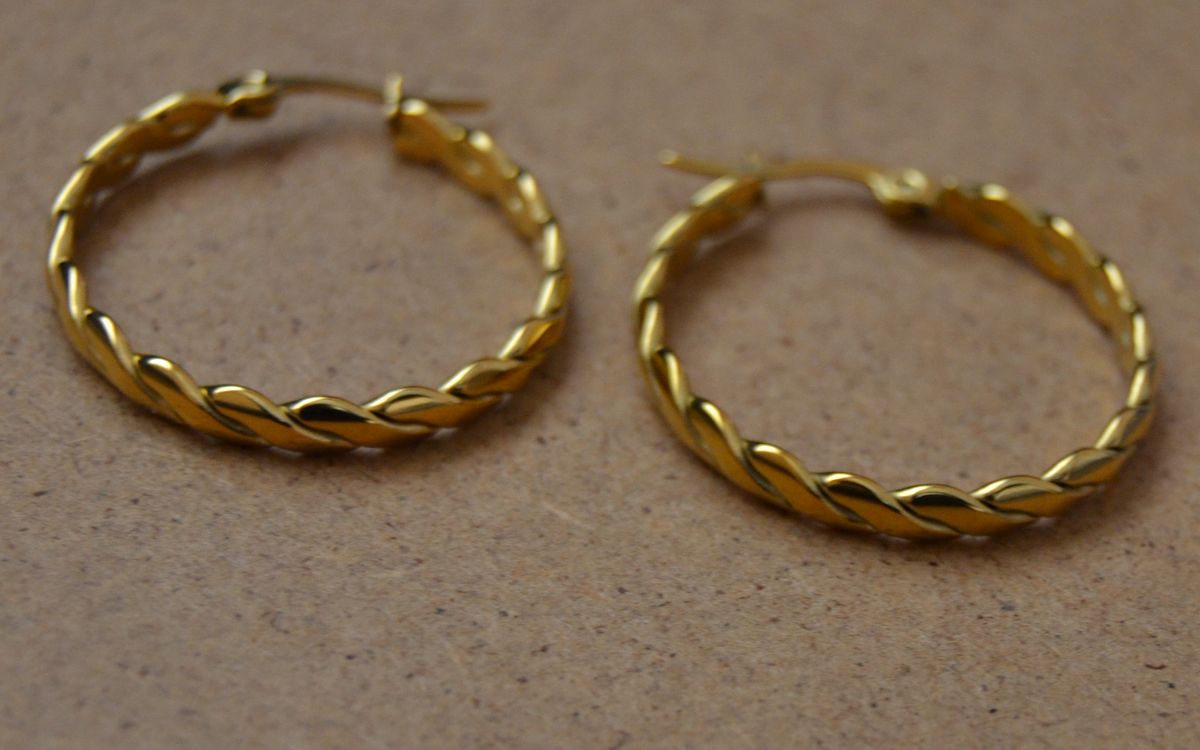
The gold hoop is the piece most people wear more often than anything else they own, and the market answers with hundreds of near-identical listings. The differences that matter are not the differences the photos show. Diameter decides whether a hoop survives a phone call pressed against your ear. Weight decides whether the lobe is tired by evening. And the material line — vermeil, plated brass, plated alloy — decides what happens at the contact points in year two.
This guide compares three real, in-production hoop pairs from Mejuri, Missoma, and Gorjana, spanning huggie and small-hoop sizes and three published constructions. All three were checked against the makers’ own US product pages in November 2026, and the prices below are the US site prices as listed there.
Why hoop size is the whole decision
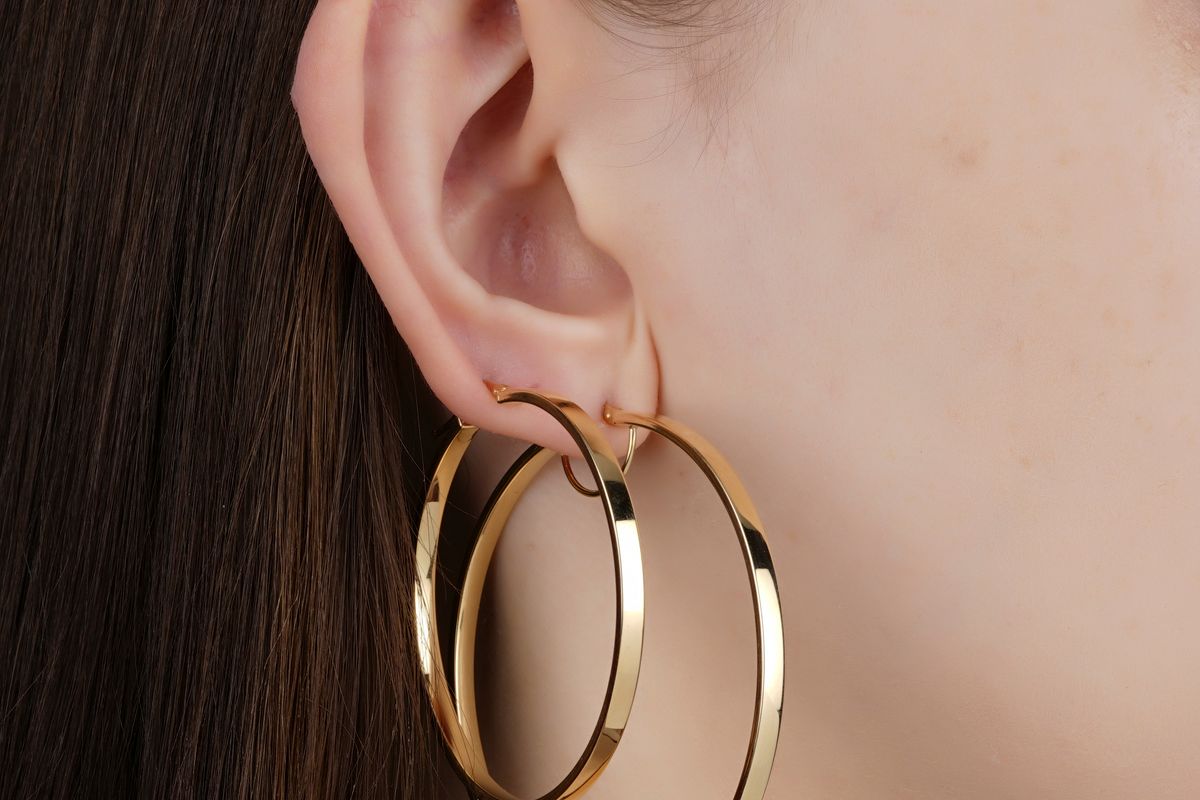
Hoop buying fails at the wrong diameter far more often than at the wrong brand. A hoop too large for daily life gets taken off — and pieces that come off are pieces that get lost. The working range for an everyday hoop runs from about 10 mm (huggies, which hug the lobe and mostly disappear) to about 20 mm (small hoops, which read clearly as a hoop from across a room). Mejuri publishes a 12 mm outer diameter for its huggie below; Missoma publishes an 18 mm height for its small molten hoop; Gorjana’s Lou sits in the same small-hoop band. That is not a coincidence — all three makers design these sizes for all-day wear, and the sizing page language on each site says so.
Width and weight are the second filter. A thin 1.4 mm hoop vanishes into an ear stack; a 3 mm huggie reads as a solid gold band. Weight is the quiet variable: the picks below run from roughly 2.6 to 3.1 grams per the makers’ published figures, which is the zone where most people stop noticing they are wearing anything at all.
The three constructions at these prices
Between roughly $70 and $160, everyday hoops come in three constructions, and each pick below represents one.
Gold vermeil is a thick layer of 18k gold over sterling silver — Mejuri’s product pages state 2.5 microns of 18k gold over a palladium barrier on 91% recycled sterling silver. The silver base matters for sensitive ears: the contact surface stays precious metal even where the gold layer thins. Missoma’s vermeil hoops use the same published recipe — a sterling silver base electroplated with a 2.5-micron layer of 18k gold, as the maker’s material guide states.
Gold plating on brass is the design-forward tier: Missoma’s Molten line is published on its US pages as 18k recycled gold plating on brass, which buys sculptural texture at a mid price. Brass bases are fine for most ears; the honest caveat is that the contact surface is the plating itself, and plating on high-touch closures wears sooner than on flat surfaces.
Gold plating at the value tier is Gorjana’s territory: the maker lists the Lou Hoops as 18k gold plated, and its product-page materials guidance describes its plated jewelry as a gold layer over brass with an anti-tarnish barrier. At around $70 a pair, this is the construction that makes hoops disposable in the good sense — wear them hard, replace them without grief.
The picks
All three picks were checked against the makers’ US product pages in November 2026. Prices move, so confirm the number on the product page before buying.
Mejuri Bold Huggie Hoops — the vermeil pick
Mejuri’s Bold Huggie Hoops are the closest thing to a default daily hoop in this price band: 18k gold vermeil, a 12 mm outer diameter, a 3.2 mm width, and $118 on the maker’s US page. The maker’s specification is unusually explicit for the category — 2.5 microns of 18k gold over a palladium barrier on a 91% recycled sterling silver base — and the piece carries the maker’s two-year warranty and free 30-day returns. The 3.2 mm width is the point: at that thickness the huggie reads as a solid gold band on the lobe rather than a wire, which is the look most people are actually shopping for at this price.
The trade-off is size, not construction. At 12 mm these are huggies, not hoops — no swing, no visible circle below the lobe. Anyone who wants the hoop silhouette should look at the two picks below. For a wear-everywhere pair that survives sleep and phones and never needs thinking about, this is the one we would buy first.
Missoma Molten Classic Small Hoop Earrings — the design pick
Missoma’s Molten Classic Small Hoops are the pick for people who want texture rather than a plain circle: an organic molten surface on an 18 mm by 12.6 mm hoop, 2.6 to 3.1 mm thick, weighing 3.13 grams, at $154 on the maker’s US page. The maker publishes the construction as 18k recycled gold plating on brass, and the piece carries a two-year warranty and 60-day returns. The molten texture is the reason to choose it: the irregular surface catches light the way a plain hoop cannot, and it reads intentional worn alone rather than waiting for a stack.
The trade-offs are the ones that come with the brass base and the texture. Plating on brass wears at contact points sooner than vermeil on silver, and the molten surface is harder to clean than a polished circle — a soft brush matters more here than a flat cloth. As the one design-forward pick in a field of plain hoops, it earns its price for the right buyer.
Gorjana Lou Hoops — the value pick
Gorjana’s Lou Hoops are the entry point: $72 a pair on the maker’s site, listed as 18k gold plated, in the same small-hoop size band as the Missoma above. The maker’s product-page materials guidance describes its plated jewelry as a gold layer with an anti-tarnish barrier, and the brand sells the Lou as its everyday hoop — the piece the collection page calls the hoops you wear everywhere, every day. Returns are accepted on unworn items within 30 days per the maker’s policy.
The trade-off is the one that comes with the price: the gold layer is thinner than vermeil, the maker does not publish diameter and weight figures for this pair, and the finish will not survive the decade the Mejuri construction is built for. What it buys instead is the lowest-risk way to test whether a small gold hoop is actually your daily shape — and if the answer is yes, the vermeil pair above is the upgrade path.
Diameter, width, and weight, read together
The three picks map the everyday range cleanly. The Mejuri sits at the huggie end — 12 mm, 3.2 mm wide, essentially a band around the lobe. The Missoma and Gorjana sit in the small-hoop band around 18 mm, where the circle is visible but nothing swings. Between those two poles is where most buyers should stay, and the honest way to choose is to decide first whether you want a hoop that disappears or a hoop that reads.
Width changes the read as much as diameter. At 1.4 mm a hoop is a line; at 3 mm it is a shape. The Mejuri publishes its 3.2 mm width because that thickness is the product; the Missoma’s 2.6-to-3.1 mm range is the same idea in a larger circle. Weight is the third check — the makers’ published figures for both vermeil and plated picks above sit near three grams, which is the threshold where all-day wear stops registering on the lobe.
Closures, and why the hinge matters
Everyday hoops fail at the closure before anywhere else. Huggies and small hoops of this class use hinged closures — the post clicks into a channel rather than needing a separate back, which is why they survive daily on-off cycles better than butterfly-back designs. Missoma’s classic hoop line publishes a hidden hinge closure as a selling point, and the molten pick fastens the same way; Mejuri’s huggie uses the maker’s standard hinged click closure with the two-year warranty behind it.
Two checks tell you whether a closure will last. First, the click should land with a definite stop, not a soft close — a soft close wears into an open hinge within months of daily use. Second, the post should align with the channel without wiggling; lateral play at the joint is the earliest sign of a hinge that will not close flush by spring. Gorjana does not publish closure specifications for the Lou, so that pair gets the in-person check that the other two get from their spec sheets.
Sensitive ears and the metal line
The material line decides comfort for sensitive ears, and it is worth reading literally. The Mejuri’s sterling silver base means the contact surface stays precious metal even as the gold layer thins — the reason vermeil is the standard recommendation for sensitive ears at this price. Plated brass keeps the gold at the surface; while that layer is intact, most ears cannot tell the difference, but the closure points wear first. Anyone with a known metal sensitivity should weight the silver-based picks, and for the full chemistry of how these constructions differ, see our vermeil explainer.
The makers’ care pages converge on the same guidance: keep plated and vermeil pieces out of water, store them dry, and clean with a soft non-abrasive cloth. For hoops specifically, one habit matters more than any product — taking them off before sleep, which halves the working cycles on the hinge that is statistically the first part to fail.
Care, and the two-habit program
Hoop care reduces to two habits. First, last on and first off: hoops go on after hair products, sunscreen, and perfume, and come off before sleep and the shower. Second, a monthly wipe: a soft cloth over the inner curve and the closure channel, where skin oils collect and where plating wears first. That is the entire program; nothing on the makers’ care pages asks for more than this.
Storage matters more for hoops than for chains because hinges snag. A pair stored loose in a dish wears its plating against whatever it touches; a pair stored closed and separated keeps its finish for years. None of this is optional polish on the purchase — at these constructions it is the difference between a pair that reads gold in year two and a pair that reads dull.
How we chose and checked
The three picks were selected to cover the everyday range — one huggie, two small hoops — across three constructions and three established makers. Every material claim, dimension, weight, price, warranty term, and return window above was checked against the maker’s own US product page in November 2026: mejuri.com for the Bold Huggie Hoops, us.missoma.com for the Molten Classic Small Hoops, gorjana.com for the Lou Hoops. Where a maker does not publish a figure — Gorjana’s diameter and weight, and its closure specification — the comparison says so rather than estimating, because an unstated specification is information too.
For how picks like these are chosen, and what a maker’s page must state before it counts as evidence, How We Appraise describes the method end to end. Prices are the US site prices as listed at the November 2026 check and will move; the construction logic behind them will not.
The picks
Some links below are affiliate links — we may earn a commission at no extra cost to you.
Mejuri Bold Huggie Hoops
$11818k gold vermeil — 2.5 microns over a palladium barrier on 91% recycled sterling silver — at a 12 mm outer diameter and 3.2 mm width that reads as a solid gold band on the lobe. Two-year warranty and free 30-day returns. The pair that survives sleep, phones, and years.
Missoma Molten Classic Small Hoop Earrings
$154An organic molten texture on an 18 mm by 12.6 mm hoop at 3.13 grams, published by the maker as 18k recycled gold plating on brass, with a two-year warranty and 60-day returns. The one pair here that reads intentional worn alone.
Gorjana Lou Hoops
$72Listed by the maker as 18k gold plated with an anti-tarnish barrier, in the same small-hoop size band as picks twice the price. The lowest-risk way to test whether a small gold hoop is your daily shape before upgrading to vermeil.
Side by side
| Specification | Mejuri | Missoma | Gorjana |
|---|---|---|---|
| Construction | 18k gold vermeil, 2.5 micron gold on 91% recycled sterling silver | 18k recycled gold plating on brass | 18k gold plated, anti-tarnish barrier per maker's materials guidance |
| Size | 12 mm outer diameter | 18 mm height, 12.6 mm width | Not stated |
| Width / thickness | 3.2 mm | 2.6–3.1 mm | Not stated |
| Weight | Not stated | 3.13 g | Not stated |
| Warranty / returns | 2-year warranty, free 30-day returns | 2-year warranty, 60-day returns | Not stated, 30-day returns on unworn items |
| Price at last check | $118 | $154 | $72 |
Sources
- Mejuri product page — Bold Huggie Hoops, 18k Gold Vermeil (mejuri.com US site), checked November 2026
- Missoma product page — Molten Classic Small Hoop Earrings (us.missoma.com), checked November 2026
- Gorjana collection and product pages — Lou Hoops, 18K Gold Plated (gorjana.com), checked November 2026
Frequently asked
What hoop size works for every day?
Between roughly 10 and 20 millimeters of outer diameter. Huggies around 10 to 12 mm sit close to the lobe and survive sleep, phones, and collars; small hoops near 18 to 20 mm read as a visible hoop without swinging. Anything past roughly 30 mm starts catching on scarves and seatbelts, which is why it leaves the everyday rotation.
Are gold-plated hoops safe for sensitive ears?
It depends on the base metal, not the plating. The plating itself is gold and inert; irritation comes from the base alloy once the plating wears at contact points. Vermeil and sterling-based constructions keep silver at the contact surface, which most sensitive ears tolerate better than brass or unidentified alloys. The makers' material lines state which base each hoop uses.
Can you sleep in small gold hoops?
Physically, huggies with secure hinges usually survive it; mechanically, the hinge is the part that wears. Sleeping in any hoop works the hinge hundreds of extra cycles a year and snags pillows. Taking ten seconds at night is the cheapest way to extend the life of the closure, whatever the price of the pair.