Jewelry and sensitive skin: the metals that rarely cause a reaction
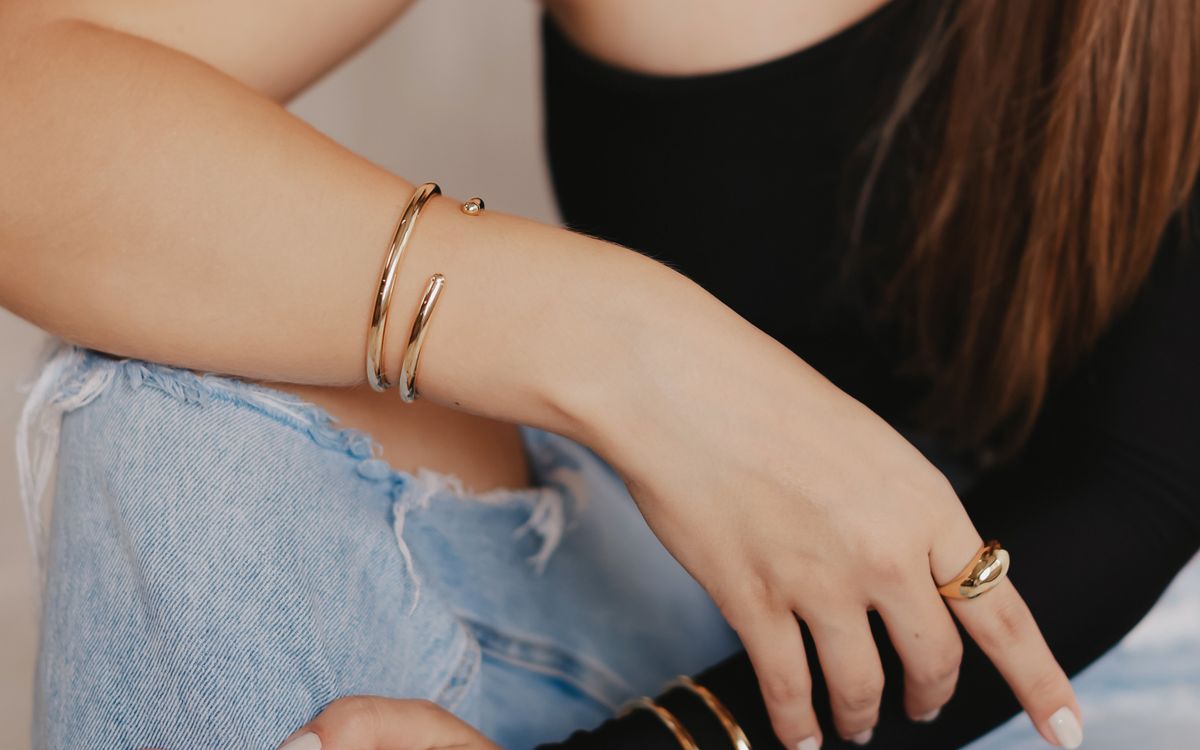
A ring that leaves a red band, earrings that itch by evening, a necklace clasp that raises a rash — the pattern is familiar, and it is usually not the metal you think. Most jewelry reactions are not reactions to precious metals at all. They are reactions to nickel, a hardening metal that appears in stainless steel, in base-metal alloys, and in the underlayers of plating. It is the single most common contact allergen in industrialized countries, and jewelry — especially pierced earrings — is where sensitization most often begins.
The good news is that this is one of the most solvable problems in jewelry buying. Nickel allergy does not require giving up jewelry; it requires knowing which constructions release nickel and which do not.
What is actually causing the reaction
Nickel allergy is a delayed hypersensitivity: the immune system, once sensitized, treats nickel ions released onto the skin as an invader, and contact dermatitis follows hours later. Sensitization affects roughly one in ten people in Western Europe and North America, and it is more common in women, largely because pierced earrings were historically the first nickel exposure many people had. Once sensitized, the allergy is lifelong — which is why prevention of that first reaction matters, and why flare-ups from old, worn pieces are so common: as plating wears through, the nickel-bearing layer underneath finally touches skin.
The European rules worth knowing
The European Union regulates nickel release rather than nickel content, because what matters medically is how much nickel migrates onto skin. Under the nickel restriction in Annex XVII of the REACH regulation, items intended for direct and prolonged skin contact may release no more than 0.5 micrograms of nickel per square centimeter per week, and the limit drops to 0.2 for post assemblies inserted into pierced parts of the body — a stricter number for a more exposed route. The reference test method is EN 1811, which soaks the item in artificial sweat for a week and measures the released nickel, and coated items are additionally tested under EN 12472, which simulates roughly two years of wear and corrosion before the release test.
Two practical points follow. First, the limit is about release, so a plating can be compliant when new and fail as it wears — hence the wear simulation. Second, the United States has no comparable federal release limit, and “hypoallergenic” has no regulated definition there. A buyer in any market who wants the stricter standard can look for it: reputable makers serving Europe publish nickel compliance per EU requirements, and a seller who cannot state what their base alloy is has not earned the word.
The metals ranked by how often they cause problems
Sensitivity varies by person, but the population-level pattern is consistent enough to rank.
Titanium and niobium sit at the top for tolerance. Both are biocompatible enough to be used in orthopedic implants, release effectively no nickel, and come in grades cheap enough for everyday jewelry. Niobium has the added trick of anodizing into vivid colors without any plating layer to wear through.
Platinum and palladium follow. They are precious metals that are naturally hard, so they need little alloying, and neither releases significant nickel. Cost keeps them out of most first-time purchases, but a platinum earring post is as safe as the category gets.
Surgical-grade stainless steel is more complicated, which is why it has its own section below.
Gold, silver, and plated constructions each carry specific caveats that depend on karat and wear, covered below. The consistent loser across every ranking is unmarked base metal — the unnamed alloy under most costume jewelry — which is where the highest nickel release lives.
Surgical stainless steel: better than it sounds, with one caveat
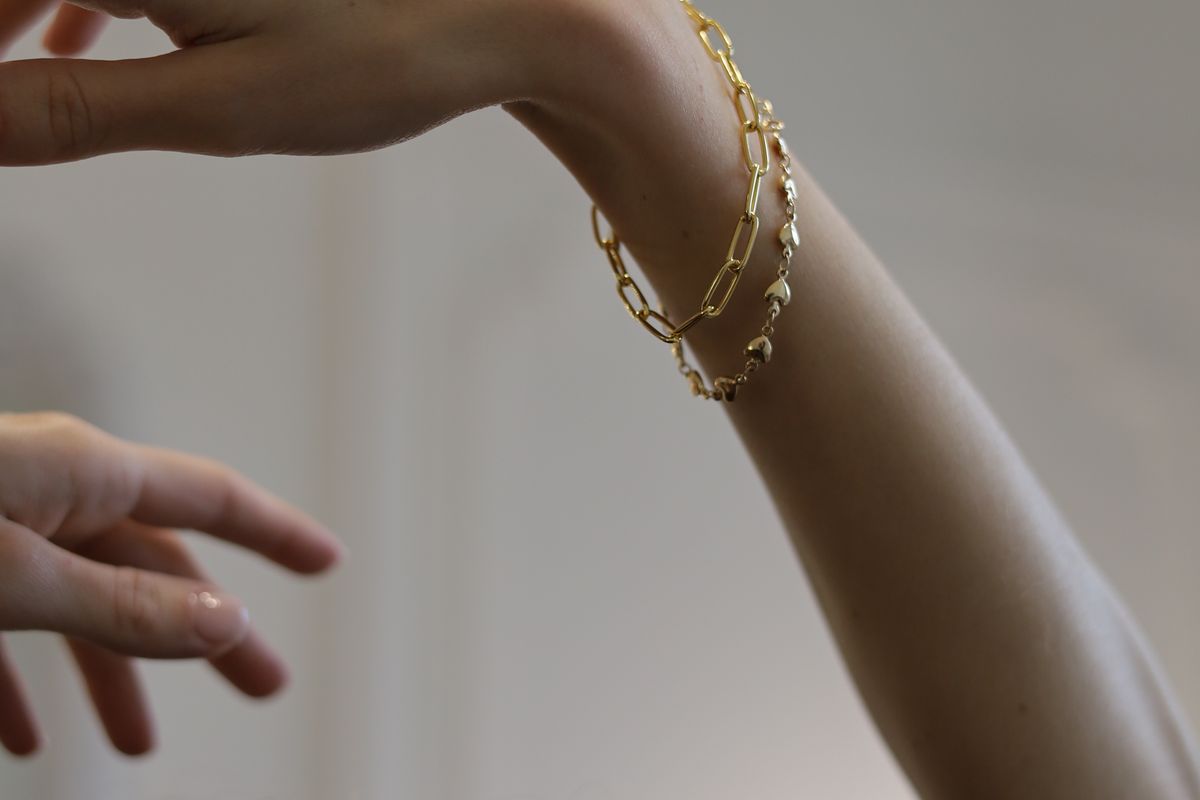
“Surgical stainless steel” sounds clinical, but the phrase covers several alloys, and the common ones — notably 316L — contain meaningful amounts of nickel, simply locked tightly into the alloy matrix. Well-finished 316L steel releases nickel below the EU limit and is generally tolerated by most sensitized people, which is why it is the standard for fresh-piercing studs in Europe. The caveat is the word “generally”: a minority of strongly sensitized people do react to steel, and older or scratched pieces release more than new ones. Steel is a reasonable default that deserves a patch-test period, not a guarantee.
Gold: karat matters more than the word gold
Why 10k can be the irritant
Gold itself rarely causes allergies — the alloy does. Pure gold is soft, so jewelers mix in harder metals, and depending on the recipe those can include nickel, palladium, or silver and copper. Lower karats contain more alloy: a 10k piece is roughly 41.7 percent gold and 58.3 percent everything else, while an 18k piece is 75 percent gold with a smaller alloy share. For a nickel-sensitive wearer, the practical order is 18k and 22k first, 14k usually fine, and 10k worth a cautious test. Nickel-white-gold recipes have largely been replaced with palladium whites in reputable production, but white gold deserves an explicit question to the seller about the alloy, since “white gold” alone does not answer it.
Plated gold adds a wear dimension: the plating itself is fine, but the base alloy underneath is often nickel-bearing, and once the plating wears through, exposure begins. For sensitive skin, thin plating over unknown base metal is a delayed reaction waiting for month six.
Sterling silver and the copper caveat
Sterling silver is 92.5 percent silver, alloyed mostly with copper, and copper allergy is far less common than nickel. Most sensitized wearers handle sterling without trouble, and silver releases essentially no nickel — pure silver does contain trace nickel impurities, but at levels that make sterling a broadly safe choice. The common complaint with silver is not allergy but tarnish, which can temporarily stain skin dark gray. That stain is discoloration, not dermatitis, and it washes off. For people who react even to well-made sterling, the alloy is again the suspect, and niobium or titanium solves it.
The two-week test when trying a new metal
Any new metal earns a cautious introduction: wear one piece — ideally a small earring or a ring — for a few hours, then check the skin under and around it after a day. A reaction to nickel typically appears one to three days after contact, so a single day of comfort proves less than it feels like it does. Two weeks of daily wear without redness, itching, or texture change is a reasonable pass. During the test window, keep the piece dry: water, sweat, and lotion all increase metal release, so a piece that passes on dry skin can still fail on a humid hiking day. And if a reaction appears, remove the piece and let the skin settle before experimenting again — retesting on inflamed skin tells you nothing.
For the metal-versus-plating decisions behind these choices, our vermeil and plating guide covers how coatings wear, and the metals and stones collection goes deeper on the materials themselves.
Frequently asked
Which jewelry metals are least likely to cause a reaction?
Titanium and niobium are the two most biologically tolerant metals commonly used in jewelry — both are used in medical implants. Platinum and palladium are also well tolerated, and high-karat solid gold is usually fine once nickel allergy is ruled out. The metal to avoid is nickel-releasing alloy: most cheap steel and plated fashion jewelry.
Can I be allergic to gold itself?
Rarely. True gold allergy is uncommon; most people who react to gold jewelry are reacting to nickel or other alloy metals mixed in to harden it. Lower-karat gold contains more alloy per gram, so a 10k ring is more likely to cause trouble than an 18k one for the same person.
Does hypoallergenic mean anything on a jewelry label?
In the United States, no. There is no regulated federal definition of hypoallergenic for jewelry, so the word carries no tested threshold. In the European Union, jewelry has regulated nickel-release limits instead. Treat the label as a seller's claim to be verified against the actual materials named in the listing.