NATO or leather: choosing the strap that fits your week
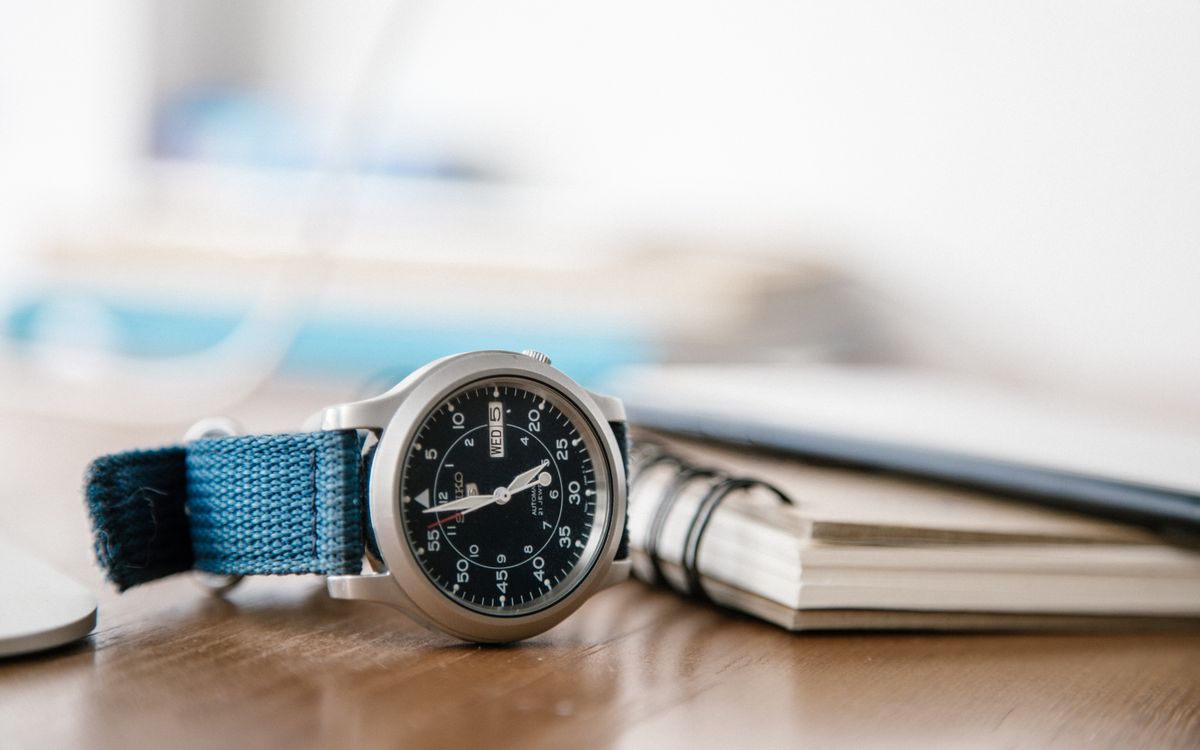
Straps are where watch owners disagree most loudly for the least money. The NATO-style nylon band and the traditional two-piece leather strap cost about the same, fit the same watches, and take the same two minutes to swap — yet they produce entirely different wearing experiences. One shrugs off a swim, a workout, and a summer; the other softens, darkens, and slowly becomes the part of the watch you are attached to. Neither is better. The useful question is which one fits the week you actually have.
This page compares the two materials on the things that decide daily satisfaction: how each feels after a few hours, what happens when they meet water, how they age, and what each one costs to replace when it finally gives up.
Where each strap came from
The NATO strap’s design comes from British military field gear, and watch-historical accounts trace the nickname to the supply paperwork that specified the strap for service watches: a one-piece woven nylon band, wide keepers, and a single buckle, built to be hosed off and issued again. The design brief explains its character. A field strap exists to survive indifferent owners, wet climates, and loss — so it was made thin, light, and cheap, with no hardware beyond the buckle.
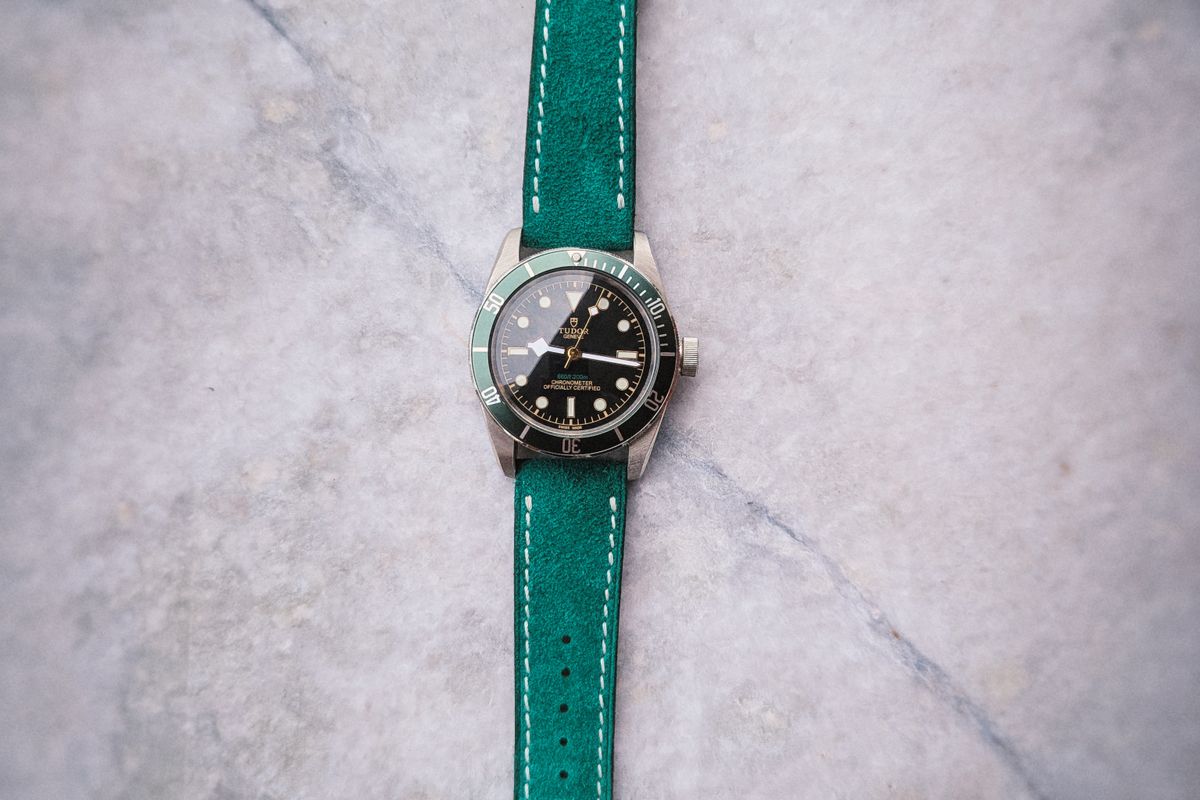
Leather’s credentials are older and civilian. Two-piece leather straps have dressed watches since the wristwatch itself, chosen for the reason every formal shoe is leather: the material conforms to the wearer, ages into a personal patina, and reads as considered rather than issued. A tapered leather strap narrows toward the buckle, which drops the visual weight under a cuff — a detail nylon, with its constant width, cannot reproduce.
Comfort: weight, breath, and sweat
On a fresh wrist, the two feel more different than their prices suggest. A NATO strap is light, and its one-piece design slides the watch a few millimeters off the wrist on top of a doubled layer of nylon — some wearers find the lift keeps the case from pressing on the wrist bone, others find it makes the watch sit tall. Nylon breathes through the weave, which is why it tolerates heat and workouts that would soak a leather band.
Leather sits flatter against the wrist and, once broken in, becomes the most comfortable material in watchmaking — the strap takes the shape of your wrist and keeps it. The cost is sweat. Perspiration works into the pores, and repeated wear without drying out shortens the strap’s life and eventually produces the stiffness and odor that signal the end. Wearers who sweat heavily or live in humid climates get a fraction of the leather lifespan that dry-climate wearers do.
Water: the deciding test
Water is where the comparison stops being a matter of taste. Woven nylon gets wet, dries in hours, sheds salt with a rinse, and returns to the wrist as if nothing happened — which is why the NATO style pairs naturally with dive watches, beach weeks, and gyms.
What water does to leather
Leather that meets water regularly stiffens, deforms at the buckle, and cracks along the fold lines within a season or two. Every maker’s care guidance says the same thing in different words: keep leather dry.
The practical translation: if the watch is worn into water more than a few times a year, the strap question is already answered. Some owners solve it by rotating — leather for the office week, nylon for weekends and vacations — and the swap takes less time than packing either way.
Cost and lifespan
Both materials start cheap and diverge upward. A basic woven NATO-style band runs in the mid-twenties from the major strap makers, and even premium nylon stays under most leather prices. Leather starts at similar money for bonded or basic calfskin and climbs through buffalo grain, French hides, and exotic embossing into the low hundreds. The lifespan curves run opposite to the price curves: the cheapest nylon often outlives the cheapest leather, because bonded leather fails at the fold while nylon’s failure mode — fraying at a hole — is trimmable.
Replacement math favors nylon as well. When a NATO strap dies, it costs lunch money and arrives in two days. When a good leather strap dies, replacing it means re-buying a taste decision — color, stitch, taper, buckle finish — which is part of why owners wait too long and wear cracked leather to meetings.
How to choose
The decision collapses into one question: what does the watch meet in a normal week?
The case for leather
Desk, meetings, and dinners point to leather — the material reads formal, ages personally, and disappears under a cuff the way the category expects. Leather is also the forgiving choice for rotation wearers: a strap that comes off for evenings and weekends ages slowly, and a better hide rewards the care with a patina that mass-market straps never develop.
The case for nylon
Gym bags, pools, beaches, and small children point to nylon, which treats every day as washable and never asks to be cared for. The low replacement cost also changes behavior — a watch on a $27 strap gets worn into the ocean, the garden, and the airport luggage bin without a second thought, which is its own kind of value.
Rotation is not indecision. Many owners land on both, and the watches that handle it best are the ones with standard lug widths and quick-release spring bars, where switching materials is a two-minute job with no tools. What deserves honesty is the compromise neither strap escapes: nylon never looks formal, and leather never gets truly dry. Choose the material whose weakness your week can absorb — and if the strap is part of a larger wrist-and-outfit decision, the pairing logic in our styling guides covers how a strap’s texture and color sit against the rest of what you wear.
For products in each material that pass the listing checks, see the picks in the watches hub guides.
Frequently asked
Can a NATO strap get wet?
Freely. Woven nylon dries in hours, sheds salt water with a rinse, and does not stiffen or crack the way leather does after repeated soaking. This is the single largest practical difference between the two materials.
How long does a leather strap last?
Roughly two to five years of regular wear, depending on the hide, climate, and how much sweat and water it meets. Makers' care guidance agrees on the basics: keep it dry, keep it out of the sun, and treat the original strap as the first part of any watch you replace.
Does a NATO strap work on a dress watch?
Technically yes — it fits any standard lug width — but a one-piece nylon band reads casual in every context and lifts the case slightly off the wrist. For suits and cuffs, a tapered two-piece leather strap remains the honest choice.