What watch water resistance ratings actually mean, from 30m to 200m
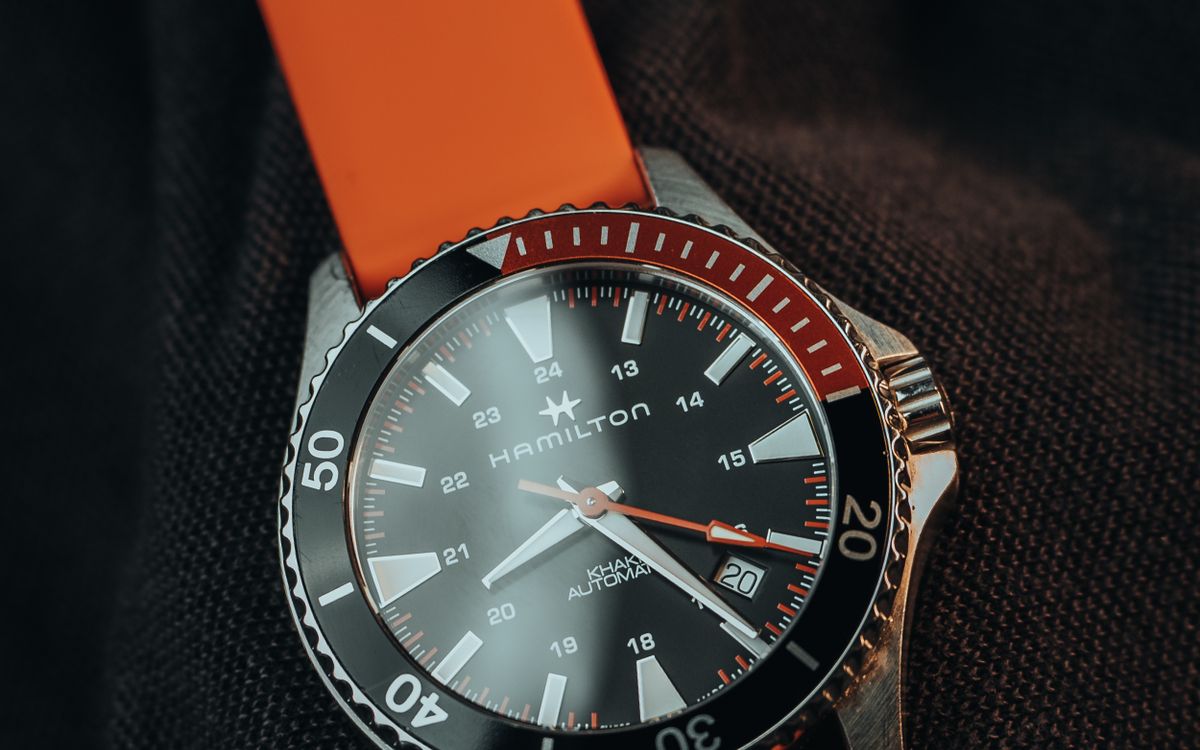
Every watch listing carries a water resistance figure, and almost every buyer misreads it. The number looks like a depth limit — 30 meters, so you can dive thirty meters — and it is not that at all. It is the result of a laboratory pressure test on a still, stationary watch. Understanding what was tested, and what was not, is the difference between a watch that shrugs off a rainy commute and one that fogs over in a swimming pool.
This page decodes the ratings, explains why a watch rated far deeper than you will ever swim can still leak in the shower, and covers the one standard that separates true dive watches from the rest.
What the depth number actually measures
A water resistance rating states the static water pressure a watch survived in testing. Test machines pressurize the case with air or water until the stated equivalent depth is reached, then check for ingress — often by condensation testing, where the crystal is heated and cooled and any fogging reveals moisture inside. New watches that pass carry the figure on the dial or caseback.
Static is the operative word. In the test, the watch sits still in water at a controlled pressure. On your wrist, the watch moves: a swimming arm stroke slams the case into the water surface, momentarily multiplying the pressure well beyond the still-water equivalent at that depth. A watch that withstood the equivalent of fifty static meters can see dynamic pressures above that in ordinary swimming. The rating is real, but it describes a different event than the one you are about to have.
Why 30 meters does not mean thirty meters underwater
The smallest rating on the market is usually 3 ATM or 30 meters, and it is the most misunderstood. It describes a watch that resists splashes, rain, and hand-washing — nothing more. Wear it swimming and you are testing the seals against forces the rating never measured, particularly if the crown is pushed in rather than screwed down.
Two details in the test conditions explain more than the number itself. First, the tests are run on a new watch with fresh gaskets; seals are rubber compounds that compress, dry, and age, so a five-year-old watch is not the watch that earned the rating. Second, hot water changes everything: heat softens and deforms gaskets and expands metals at different rates, which is why even a genuinely well-sealed watch does not belong in a hot shower, a hot tub, or a sauna — the steam pressure and temperature attack the seals simultaneously.
The everyday ladder: what each rating is for
The industry works from a de facto ladder that maps ratings to use. It is trade convention rather than a single written rule, but it is consistent enough across makers and testing labs to plan around:
| Dial marking | What it survived in testing | Realistic use |
|---|---|---|
| 30m / 3 ATM | splash-level pressure | rain, hand-washing, splashes |
| 50m / 5 ATM | light submersion at rest | brief accidental immersion; not swimming |
| 100m / 10 ATM | sustained pressure at depth | swimming, snorkeling |
| 200m / 20 ATM | pressure at significant depth | recreational scuba diving |
| 300m and up | deep-pressure testing | serious diving use; often ISO 6425 territory |
Why screw-down crowns change the math
Read the ladder with the crown in mind. At 100m, a screw-down crown is the difference between a swim-safe watch and a hopeful one, because a push-pull crown is a spring-loaded hole in the case. At 50m, even a screw-down crown does not change what the rating covers. And note what the ladder omits: ratings describe the case, never the strap. Leather and fabric straps fail in water long before the case does.
When a watch can be called a diver’s watch
The deep end of the ladder has a written standard. The International Organization for Standardization’s ISO 6425 defines the minimum requirements for a watch that may be marketed as a diver’s watch, and a watch marked “DIVER’S” on the dial is claiming to meet them.
The standard is broader than depth. Its headline requirements include: a minimum water resistance of 100 meters, tested with a safety margin — each watch is subjected to overpressure above its rated depth, commonly described as 125 percent of the rating; a diving time indicator, in practice a rotating bezel that turns in one direction only, so an accidental knock adds elapsed time rather than hiding it; legibility in total darkness at 25 centimeters, including an indication that the watch is running; resistance to magnetic fields and to shock; corrosion resistance in a saline solution comparable to seawater; and strap attachment points that withstand a defined pulling force without failing. A plain water-resistance rating covers none of those points — a 100m dress-style watch with no bezel is water resistant, but it is not a diver’s watch under the standard.
Certification is voluntary
ISO 6425 testing is voluntary, and manufacturers do not have to submit watches for third-party certification to build to the standard. The practical consequence for a buyer: the word “DIVER’S” on the dial carries the claim, but some brands publish full test compliance without pursuing formal certification paperwork, and the standard itself does not certify — accredited third-party laboratories do. When a listing says only “ISO compliant” with no testing detail, treat the claim as the maker’s own statement rather than an independent certificate.
What wears a rating out
Water resistance is not a permanent property, and the decline is invisible. The usual suspects, in rough order of frequency: aged gaskets, which harden and stop sealing evenly — most makers and service protocols replace seals whenever the case is opened; an unscrewed or half-seated crown, which leaves the stem hole open; and temperature swings, which repeatedly expand and contract the case and loosen fittings over years. Salt adds its own toll — seawater attacks un-rinsed gaskets and case finishes, so a watch worn in the ocean should be rinsed in fresh water afterward.
None of this means a rated watch is fragile. It means the rating has a maintenance schedule, like the movement does.
Keeping the rating honest
A watch you actually take in water deserves a short routine. Rinse it in fresh water after salt or chlorinated pools. Check that the crown is fully seated before submersion — every time, because a single forgotten check is the most common leak story there is. And have the seals pressure-tested when the watch is serviced, or sooner if it takes an impact, since a knock can shift a crystal or caseback enough to break a seal that looks perfectly intact.
One habit completes the routine: never operate the crown or pushers underwater. Pulling a crown at depth opens the stem channel while the case is pressurized, and the water takes the shortest path inside. The ratings on the dial assume you leave the seals alone while wet.
If you are choosing a watch for actual water use, our watches guides go deeper on the spec sheet, and the editorial standards behind these pages are laid out on the desk.
Frequently asked
Can I swim with a 50m water resistant watch?
Trade convention says no. A 50m rating is a static pressure test result, and swimming strokes multiply the pressure a watch sees well beyond still water at that depth. For regular swimming, look for a watch rated 100m with a screw-down crown.
What does 200m water resistance mean on a watch?
A 200m rating means the case withstood static pressure equivalent to 200 meters of water in testing, typically with a safety margin above the stated figure. It is generally regarded as suitable for recreational snorkeling and scuba diving, especially on watches that also meet the ISO 6425 diver's watch requirements.
Why did my water resistant watch still leak?
Ratings describe a new watch under test conditions. Gaskets age, hot water softens seals, and a crown that is not screwed down leaves the case open regardless of what the dial says. Most leaks in rated watches trace to worn seals or an unsecured crown, not to depth.