A watch care routine: winding, magnetism, and service intervals

Watch care is a smaller job than the mystique around it suggests. The daily part takes under a minute; the serious work happens at intervals of years, mostly inside a watchmaker’s shop. What actually damages watches between services is not neglect of rituals — it is a handful of specific hazards: a dead battery left in place, a close pass over a magnetic clasp, salt left on a case, and seals nobody has checked since purchase. This page turns those into a routine.
The weekly wipe-down
Start with the habit that costs nothing. Once a week, wipe the case and crystal with a soft, slightly damp cloth and dry it. On a metal bracelet, run a damp cloth between the links occasionally too — skin cells, soap film, and dust collect there and slowly abrade the finish. If the watch has been in the ocean or a pool, rinse it in fresh water and dry it, regardless of its rating; salt and chlorine keep working after you take the watch off.
Skip solvents, ultrasonic cleaners, and household sprays. Hot water and dish soap touch nothing on a properly sealed watch, but everything on a compromised one, and you have no way to see the gaskets from outside.
Winding and power habits
How a watch gets its power is the one daily decision an owner makes, and doing it right takes three sentences per movement type.
Hand-wound watches
Wind once a day, ideally at the same time, and stop when you feel the crown firm up — that resistance is the mainspring reaching full wind, and forcing past it strains the spring and the winding gears. If you miss a day, the watch stops; that is harmless. Wind it and reset the time. The rate of a mechanical watch is often most consistent at a fuller wind, which is the real reason the daily habit exists.
Automatics and manual winding
An automatic winds itself from the motion of your wrist and does not need help on days you wear it. On days you do not, a few gentle crown turns start it again — thirty or so winds bring most movements back to a useful reserve. Avoid shaking a stopped watch to wind it: the rotor swings freely, but impulsive movement is not how the winding mechanism is designed to be loaded. Watch winders — the rotating boxes — are genuinely useful for watches with complicated settings, like annual calendars, that are tedious to reset. For a plain time-and-date watch, a winder is optional and mostly a convenience; the watch does not suffer from stopping.
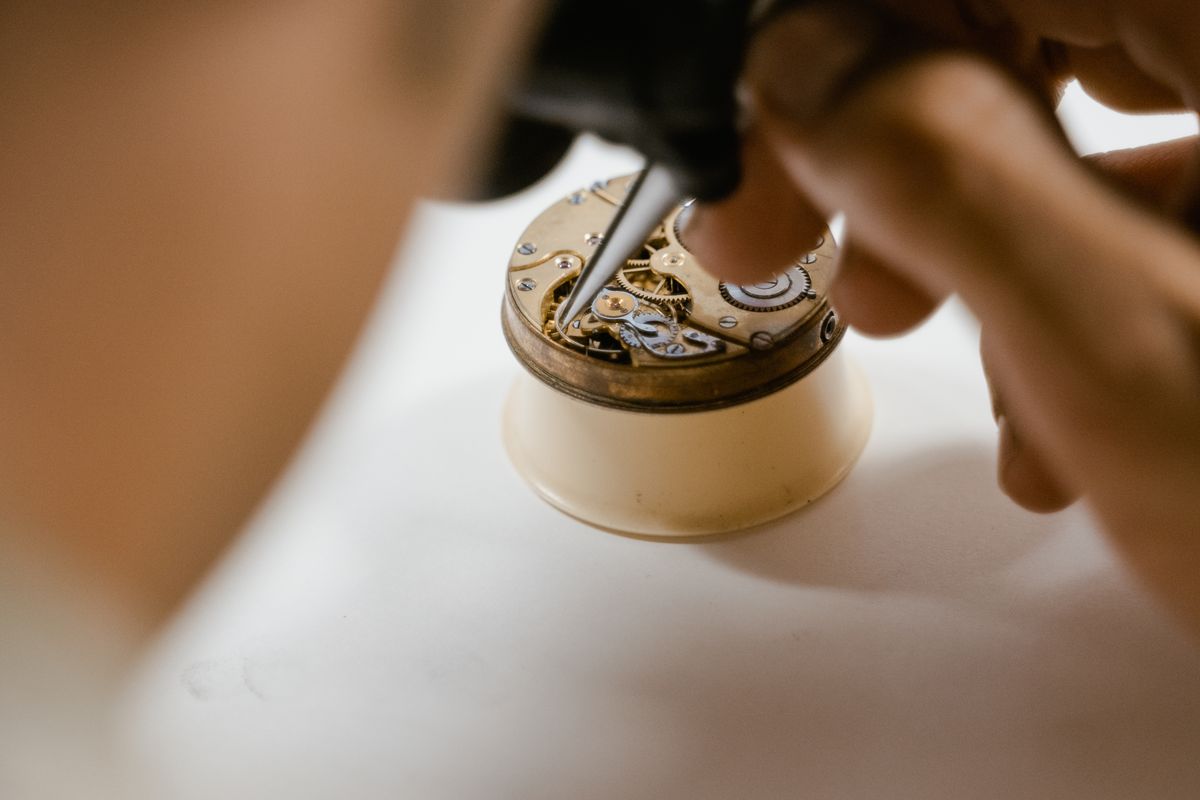
Magnetism: the quiet accuracy killer
The most common sudden change in a mechanical watch’s rate is magnetization, and the exposure usually comes from something mundane: magnetic clasps on bags and phone cases, laptop speakers, tablet covers, and certain handbag closures. A magnetized movement runs fast — often by minutes a day — because the steel components inside the escapement begin to stick together briefly at each swing.
The symptom is diagnostic: a watch that kept good time for years and is suddenly, dramatically fast is magnetized until proven otherwise. A watchmaker demagnetizes it in seconds, and home demagnetizer units are inexpensive. Some modern movements are built with non-magnetic escape components and carry magnetic resistance ratings, but the habit is cheap insurance either way: store the watch away from bags and devices with magnets in them.
Water, heat, and chemicals
Water care follows the rating, and the rating assumes the crown is closed. Before any immersion, check that a screw-down crown is actually screwed down and that a push-pull crown is fully seated. Never operate the crown or pushers while the watch is wet. After salt water, rinse in fresh water.
Heat is the underrated hazard. Hot showers, saunas, and hot tubs soften gaskets and press steam at the seals simultaneously, and repeated exposure ages seals that would otherwise last years. Chemicals run the same track: perfumes, sunscreens, and chlorine degrade gaskets and attack strap materials, so spray fragrance before the watch goes on, not over it. Leather straps should stay dry on principle — one soaked leather strap rarely recovers its shape.
Service intervals by movement type
The long-cycle work belongs to a watchmaker. The conventions are settled enough to plan around:
| Movement type | Power routine | Service rhythm |
|---|---|---|
| Quartz | battery change every 2 to 5 years | replace dead batteries promptly; seals checked at battery changes |
| Hand-wound mechanical | wind fully once daily | full service roughly every 5 to 8 years |
| Automatic mechanical | wear regularly or wind manually | full service roughly every 5 to 8 years |
A full service means disassembly, cleaning, fresh lubricants, regulation of the rate, and replacement of worn parts and seals — and it is the right moment to have water resistance re-tested. Two timing notes matter more than the exact interval: a quartz watch with a dead battery should not sit for months, because leaking cells can destroy the circuit; and a mechanical watch whose rate has drifted noticeably is due earlier than the calendar says, because drifting rate is how a movement reports wear. Trade convention sets these intervals, and a maker’s own guidance for the specific movement overrides them when the two differ.
Storage when the watch is off the wrist
Store watches where the temperature is stable and the company is safe: away from magnets, away from direct sunlight, which fades dials and dries straps, and not pressed under heavy objects. The original box or any lined case does the job; the goal is simply to keep straps from creasing and crystals from meeting keys. For leather straps in humid climates, a dry drawer beats a sealed box, because trapped humidity is what shortens strap life fastest.
A monthly two-minute inspection
Once a month, look at the watch rather than through it. Check the crystal for chips, the caseback and crown for play, the strap or bracelet for cracked links or stitching, and the timekeeping against a known reference — if the watch gained or lost noticeably more than its usual rate, note it. This is not maintenance; it is noticing, and noticing early is what keeps small problems small. A loose crown found in a monthly check is a cheap fix; found after a swim, it is a movement.
That is the whole routine: wipe weekly, wind daily if the movement asks, keep it away from magnets and heat, store it sensibly, service it on rhythm, and glance at it once a month. Our watches guides cover the buying decisions this routine protects, and the editorial standards behind what we recommend are described on how we appraise.
Frequently asked
How often should I wind my hand-wound watch?
Once a day, at about the same time, until you feel resistance — then stop. Winding a hand-wound watch fully every day keeps its rate consistent, and stopping at resistance protects the mainspring from overwinding damage. Do not wind it past the point where the crown firmness rises.
Can a watch demagnetize itself?
No. Once a movement's steel parts are magnetized, they stay magnetized until deliberately demagnetized with a degausser — a watchmaker does this in seconds, and inexpensive demagnetizer tools exist for home use. A watch that suddenly runs fast by minutes a day is the classic symptom.
How long can an automatic watch sit unwound?
Indefinitely. A stopped automatic is not a damaged automatic — the power reserve simply ran out. Wind it or wear it again and set the time and date. Storage habits affect strap condition and lubricant settling far more than the act of stopping.