Three dress watches with real movements and honest prices
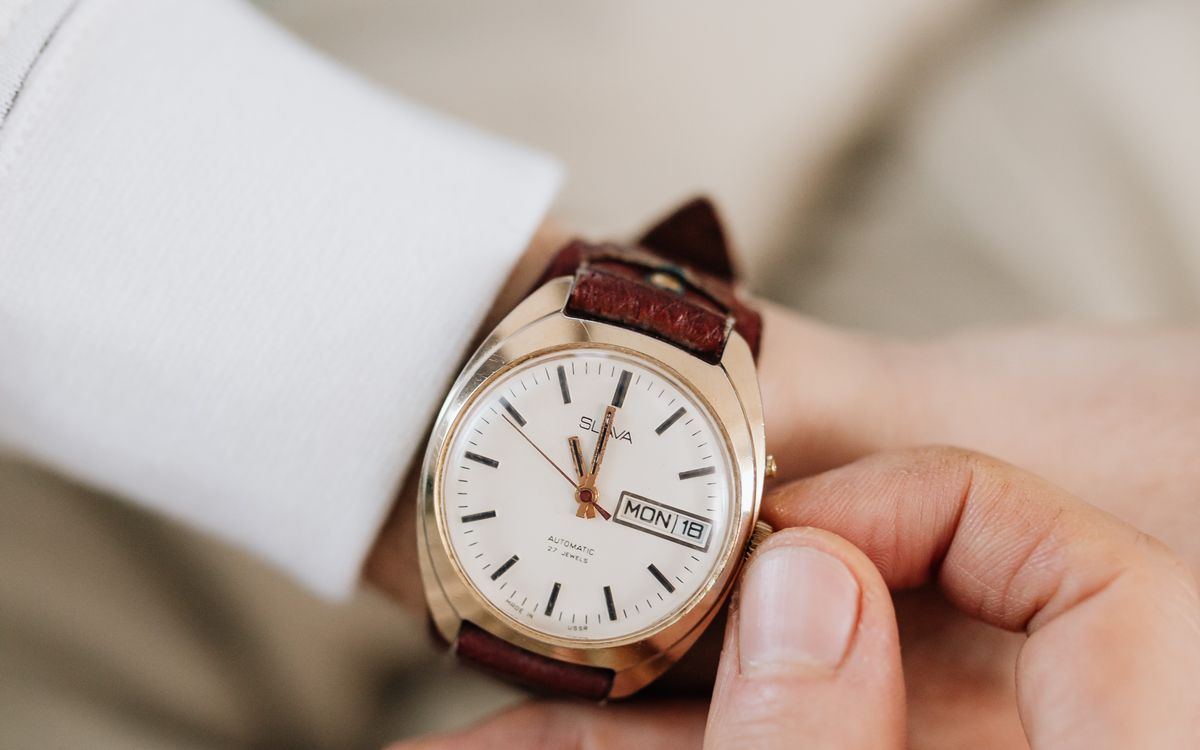
The dress watch is the most demanding category in watchmaking precisely because it is the simplest. With no bezel, no lume, and no complications to hide behind, every millimeter of the case and every element of the dial is exposed to judgment. A dress watch sits under a shirt cuff for most of its life and appears for a few seconds at dinner — which means the case must be thin enough to vanish, the dial clean enough to read at a glance, and the strap supple enough to feel like part of the shirt.
The good news is that this is the one category where the old rule about price and quality breaks in your favor. Because a dress watch deliberately omits the expensive parts of a sports watch — no rotating bezel, no heavy water-resistance engineering, no bracelet — a real mechanical watch with a real movement costs $259 to $295 new. The three picks below cover the three ways to spend that money well.
What the money has to buy
Three things decide whether a watch at this price is a proper dress watch or a casual watch wearing a suit. The first is proportion: cases between 34 and 39 millimeters, with height under about 11 millimeters, so the watch slides under a cuff instead of pushing against it. The second is the dial: printed or applied indices, uncluttered, with a hand design that reads as traditional rather than tactical. The third is the movement — and at $300, the movement is where the category’s real bargain lives, because mechanical and solar calibers that cost thousands in luxury branding cost a couple hundred unbranded.
Everything else on the product page is negotiable. Water resistance at this level tops out around 30 meters, which covers hand-washing and weather but not swimming. Crystals are usually acrylic or mineral glass rather than sapphire. Strap leather is adequate rather than luxurious. None of these compromise the category — a dress watch is judged at the cuff, not the pool.
The picks
All three picks were checked against the makers’ own product pages in November 2026. The Orient and Citizen figures move with the sellers’ sale cycles, so treat the prices as the numbers at last check.
Orient Bambino Version 7 (38.4mm) — the classic pick
Ask a watch forum for a first mechanical dress watch and the Bambino arrives before the question finishes. Orient’s Version 7 carries the line’s classic proportions at 38.4 mm, runs an automatic movement that winds itself as it is worn, and lists on the maker’s US store at $295 — down from a stated $430 list in the seller’s own presentation, which tells you how this brand competes. The dial does the dress-watch job with domed simplicity, and the price includes the sort of in-house movement engineering that other brands reserve for four figures.
The trade-offs are the ones the category imposes: expect splash-level water resistance and a strap chosen for cost rather than longevity. Neither matters much, because the Bambino’s 20 mm-adjacent lugs accept any standard strap, and swapping a better hide onto a $295 automatic is the cheapest upgrade in watchmaking. For most people, this is the dress watch to buy first.
Timex Marlin Hand-Wound California Dial 34mm Leather Strap Watch — the craft pick
Timex publishes the most complete specification sheet in the budget category, and the Marlin Hand-Wound earns it. The maker’s page states a 34 mm polished stainless steel case 10 millimeters high, a hand-wound mechanical movement with no battery, an acrylic crystal chosen for its warm vintage look, and a quick-release 18 mm leather strap — tool-free, swappable in seconds. The California dial, with its mix of Arabic and Roman numerals split across the dial, is a 1960s design revived for this version, priced at $259 on the maker’s US site.
Hand-winding is the honest dividing line here: the movement stores about a day of power, so the maker recommends winding the crown until you feel resistance, at the same time each day. Some owners find the ritual makes the watch theirs; others abandon it in a month. If you already know which camp you occupy, the decision is made. Timex also states the 34 mm case fits wrists up to seven and one-half inches, with any 18 mm strap extending the range — the kind of fit transparency worth copying when you compare anything else.
Citizen Corso Eco-Drive — the practical pick
Citizen’s Corso is the dress watch for people who do not want a second routine in their life. The line runs on Eco-Drive, Citizen’s solar quartz technology, which converts any light — sun, office fluorescents, a desk lamp — into power, and the maker’s US catalog lists Corso models from $275 in its men’s classic collection. The dial and case keep the traditional proportions the category requires, and the movement keeps quartz accuracy with no battery to replace and no winding to remember.
The trade-off is mechanical romance: there is no rotor to watch through a caseback, and the caliber is an instrument rather than a story. For a watch that serves as the only dress piece in a rotation — worn monthly, expected to run always, gifted to someone who will not wind anything — the Corso is the sensible end of the argument, and Eco-Drive’s long service intervals are the reason it outlasts the alternatives in a drawer.
Size: the 34 to 39 mm window
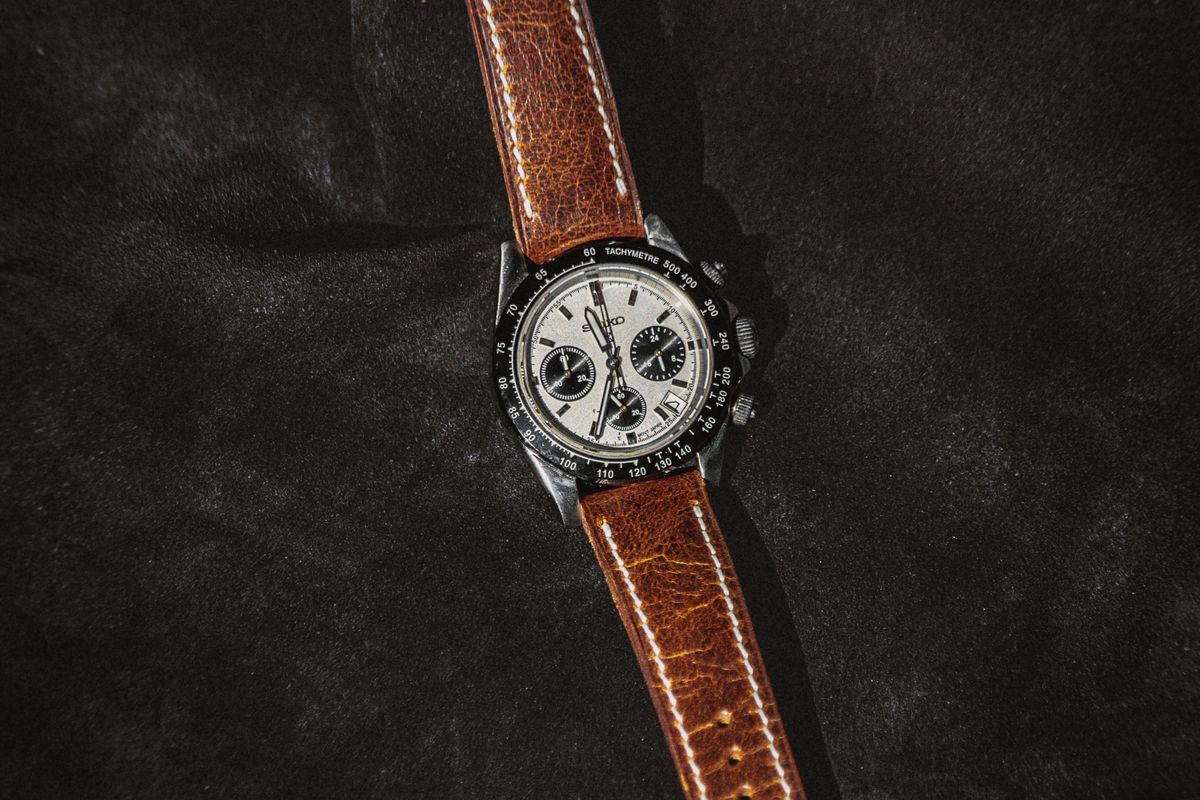
Dress watch sizing inverts sports watch logic. The case should read slightly small on the wrist, because the cuff is part of the design; a 44 mm dress case is a category error no amount of dial beauty repairs. The three picks span the window deliberately: 34 mm (Timex), 38.4 mm (Orient), and the Corso’s mid-range proportions, so the choice between them is largely a choice about your wrist and your cuffs.
Measure before ordering. Wrist circumference in inches or millimeters against the maker’s stated fit does more than any case-diameter rule of thumb — our ring size guide covers the measuring mistakes that apply here too — and the strap matters as much as the case: an 18 mm or 20 mm strap that tapers toward the buckle keeps the watch sitting flat under a sleeve.
Hand-wound, automatic, and solar: choosing the movement
The three picks represent the three movement answers, and the right one is about your habits rather than the specs. Hand-wound (the Marlin) suits someone who enjoys interacting with the object and does not mind the daily ritual; the maker’s own guidance frames winding as part of the appeal. Automatic (the Bambino) suits daily wear — wrist motion keeps it running, and a few days off the wrist only means resetting the time. Solar quartz (the Corso) suits a rotation or a gift: it runs indefinitely on light and keeps the best time of the three.
Accuracy, upkeep, and service follow the same split. Quartz wins accuracy and loses story; automatics gain seconds a day and need eventual service; hand-wound movements occupy both ends at once. None of the three is a wrong answer, and none requires the $500-plus tier to do its job.
Straps, cuffs, and one habit
Leather at this price is the weak link by design, and every maker’s care guidance agrees on the basics: keep the strap dry, keep it out of the sun, and expect the original strap to be the first thing you replace. Quick-release spring bars, now standard on Timex straps, make the swap a two-minute job with no tools — worth checking for before any order, because it converts the strap from a cost into a wardrobe.
The one habit that protects a dress watch is removal. Thirty meters of water resistance covers rain and hand-washing; it does not cover a pool, a shower, or a sink full of dishes. A watch that comes off at the bathroom door and lives on a tray survives its acrylic crystal and its leather strap for decades.
What changes above $300
It is worth knowing what the next tier buys, because the answer is narrower than the price suggests. Sapphire crystal becomes common rather than exceptional, case finishing tightens — sharper edges, better-brushed surfaces — and more elaborate movements appear, with dressing like decorated rotors and blued screws. None of it changes the category’s physics: a $300 Bambino and a $1,500 dress watch do the same job at the same cuff height, and the difference is refinement rather than capability.
That is the argument for starting here. The failure modes at $300 — a strap that ages out, a crystal that scuffs, a battery that needs replacing — are all fixable for small money. The failure mode above it is owning a watch too precious to wear, which is the most expensive outcome in the category.
What we left out and why
We left out the fashion-brand dress watches in the $100 to $250 range, because their listings consistently hide the movement and the case metal behind marketing words — the same problem our vermeil explainer documents in jewelry. We left out vintage watches, because no listing can be checked against a maker’s page and every purchase is a condition assessment instead. And we left out anything above $300 even where a maker’s sale price dips under it, so that every pick here is a normal-price purchase rather than a timing gamble.
For how picks like these are chosen — which claims are checked, and which are left out — How We Appraise describes the method.
The picks
Some links below are affiliate links — we may earn a commission at no extra cost to you.
Orient Bambino Version 7 (38.4mm)
$295The forum-default first mechanical dress watch: classic proportions at 38.4 mm, an automatic movement, and a US list price presented at $295 against the seller's own $430 stated list. The most movement for the money in the category.
Timex Marlin Hand-Wound California Dial 34mm Leather Strap Watch
$259The most complete published spec sheet at the price: 34 mm polished steel case 10 mm high, hand-wound movement, acrylic crystal, quick-release 18 mm leather strap, and a stated fit for wrists up to 7.5 inches. A 1960s California dial revived faithfully.
Citizen Corso Eco-Drive
from $275Solar quartz that runs on any light with no battery changes and no winding — the dress watch for a rotation or a gift. Traditional proportions, listed in Citizen's men's classic collection with Corso models from $275.
Side by side
| Specification | Orient Bambino V7 | Timex Marlin Hand-Wound | Citizen Corso Eco-Drive |
|---|---|---|---|
| Movement | Automatic | Hand-wound mechanical | Solar quartz (Eco-Drive) |
| Case size | 38.4 mm | 34 mm, 10 mm high | Not stated |
| Crystal | Not stated | Acrylic | Not stated |
| Water resistance | Not stated | 30 m | Not stated |
| Strap | Not stated | Quick-release 18 mm leather | Not stated |
| Price at last check | $295 | $259 | from $275 |
Sources
- Orient Watch USA store — Orient Bambino Version 7 (38.4mm) listing (orientwatchusa.com), checked November 2026
- Timex product page — Marlin Hand-Wound California Dial 34mm Leather Strap Watch TW2U96700 (timex.com), checked November 2026
- Citizen Watch US catalog — Men's Classic Watches collection, Corso Eco-Drive listing (citizenwatch.com), checked November 2026
Frequently asked
What size case is right for a dress watch?
Between 34 and 39 mm for most wrists, and the maker's stated fit matters more than the diameter alone. Timex states its 34 mm Marlin fits wrists up to seven and one-half inches, and any 18 mm strap extends that range — a useful honesty most makers do not publish.
Does a hand-wound dress watch need daily winding?
In practice, yes. A hand-wound movement stores roughly a day of power, so the maker recommends winding the crown until you feel resistance, ideally at the same time each day. If that ritual sounds like a chore, choose an automatic or a solar quartz movement instead.
Can a dress watch survive daily wear?
With care, yes. Expect 30 meters of water resistance at most — enough for hand-washing and rain, not for swimming — and expect an acrylic crystal to pick up scuffs that polish out. Remove it before the gym, the beach, and anything that swings arms.