Gold karat explained: what 9k, 14k, 18k, and 24k actually contain
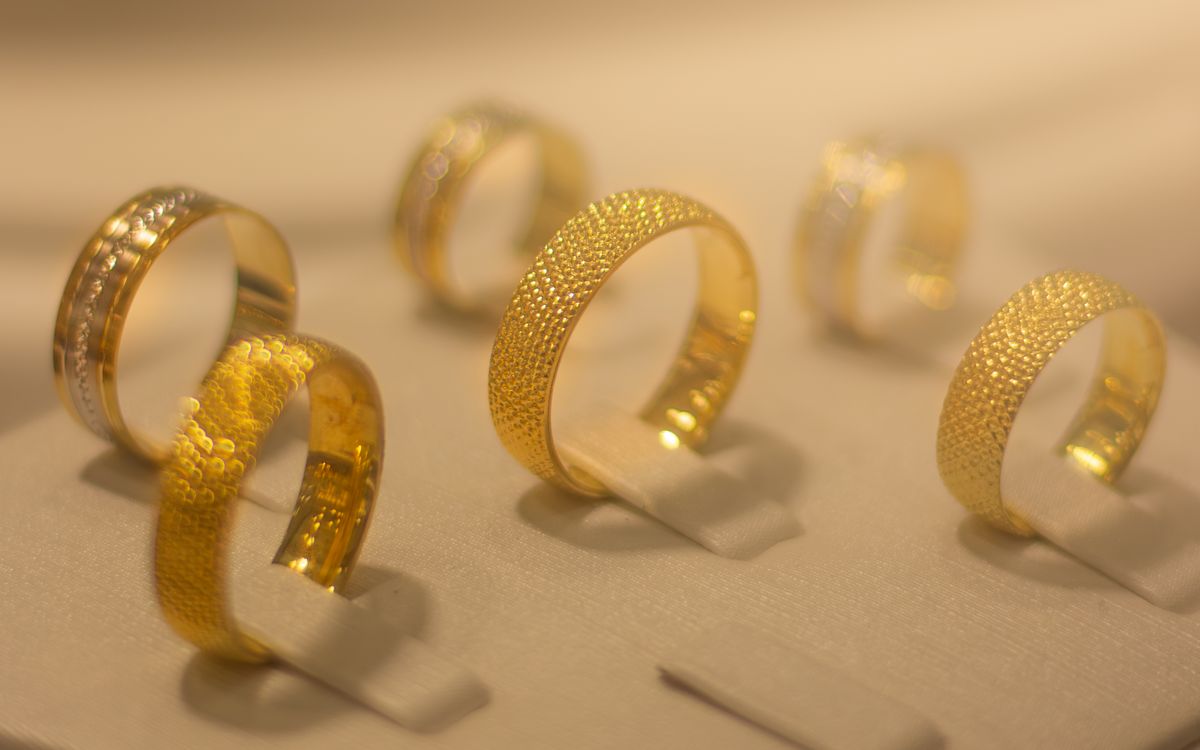
Karat is the least mysterious word in jewelry and the most widely misread. It is not a quality grade, a brand tier, or a finish. It is a fraction with a fixed denominator: karat counts the parts of pure gold out of 24 in the alloy. Read a karat stamp that way and everything else about gold jewelry — price, color depth, scratch behavior, even which karat bothers sensitive skin — follows from simple arithmetic.
This page walks through the scale, what each common karat contains, where each one earns its place, and the two practical trade-offs (durability and skin) that the karat number actually predicts.
How the karat scale works
Pure gold is 24 karat. Everything below it is pure gold cut with alloy metals — copper, silver, zinc, nickel, palladium — chosen for strength and color. A piece marked 18k is 18 parts gold mixed with 6 parts of other metal; a piece marked 14k is 14 parts gold to 10 parts alloy. The arithmetic is always karat divided by 24: 18/24 is 75 percent pure gold, 14/24 is about 58 percent, 9/24 is 37.5 percent.
Jewelry also carries the same information as a three-digit fineness stamp — parts per thousand. 750 is 18k, 585 is 14k, 375 is 9k, 417 is 10k. European and British pieces typically use the fineness number; American pieces typically use the karat mark. The two systems say the same thing.
What the stamps legally mean
In the United States, the Federal Trade Commission’s jewelry guides govern the words. Under the FTC guides, an item below 24k must carry its karat right alongside the word “gold,” and the karat mark should appear together with the maker’s registered trademark — the mark of the company standing behind the claim. A karat stamp without a trademark next to it is exactly the situation the FTC’s consumer guidance tells you to walk away from. In the United Kingdom, hallmarking is stricter still: pieces are tested by assay offices and struck with official hallmarks, which is why the 375 stamp on a British piece carries more institutional weight than a maker’s own stamp.
The karats side by side
| Karat | Pure gold | Fineness stamp | Character |
|---|---|---|---|
| 24k | 99.9 percent | 999 | Rich deep yellow; too soft for most jewelry |
| 18k | 75.0 percent | 750 | Deep warm color; luxury standard |
| 14k | 58.3 percent | 583 or 585 | Classic warm yellow; the American default |
| 10k | 41.7 percent | 417 | Palest color; hardest; the US floor |
| 9k | 37.5 percent | 375 | UK standard; lightest color; hardest |
Two features of this table do most of the explanatory work. First, color deepens with purity: the alloy metals dilute the gold’s color, so 24k reads unmistakably orange-gold while 9k reads as a paler, brassier yellow. Second, hardness runs the other way — the more alloy, the harder the metal, because pure gold is soft enough to bend under thumb pressure in thin sections.
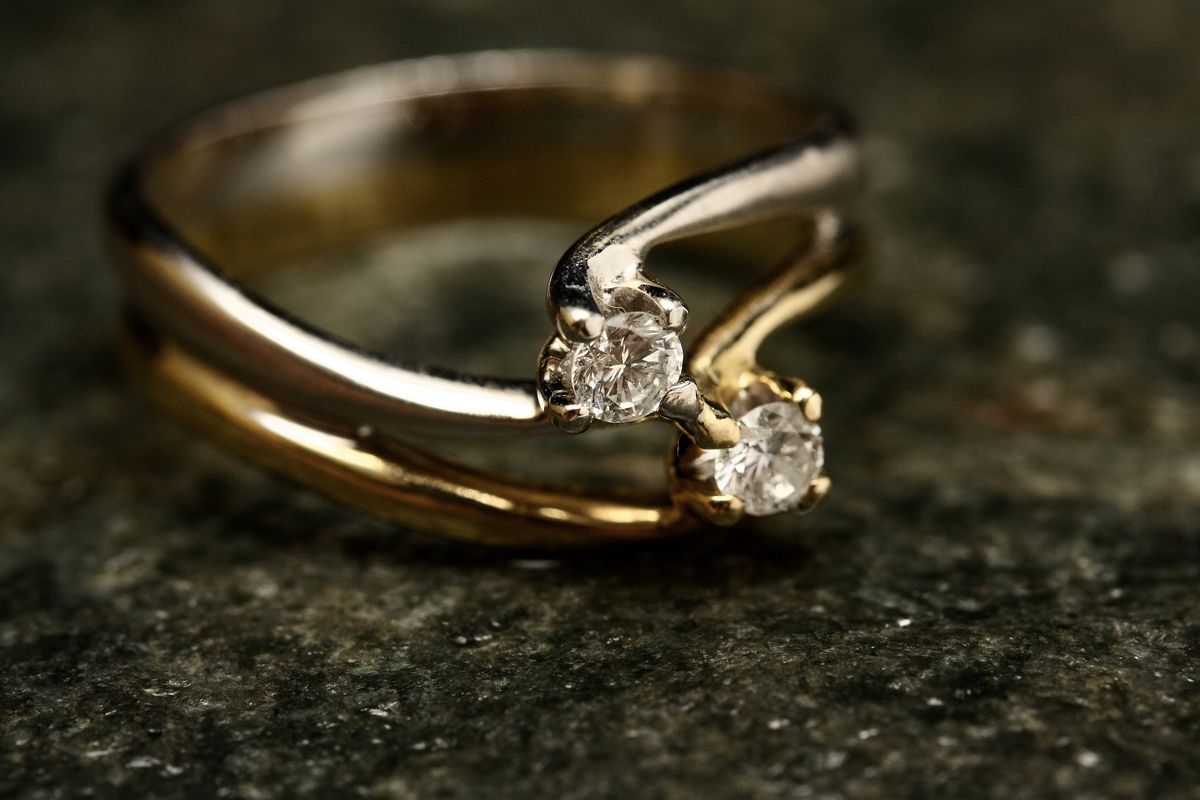
9k, 14k, and 18k in practice
9k: the Commonwealth standard
9k is 37.5 percent gold and the lowest legal standard under the United Kingdom’s hallmarking system, where it is stamped 375. It is the hardest of the common karats and the most affordable, with the palest color. For the US market it matters in one specific way: pieces imported from Britain arrive carrying a genuine legal hallmark, and 9k is a legitimate, hallmarked material rather than a shortcut — but it sits below the 10k floor that the FTC treats as the bottom of karat-gold descriptions domestically, so American retailers sell it mostly in imported and heirloom-style lines. For budget pieces that take light wear, 9k is real gold at the lowest real-gold price.
14k: the American default
14k is 58.3 percent gold and the most common karat in United States jewelry, for reasons the alloy math explains: it holds strength for thin bands, prongs, and chains while keeping a recognizably warm yellow. It is the karat most engagement rings and wedding bands are made in, and the karat most white and rose gold is formulated in — white gold’s rhodium plating and rose gold’s copper content both sit on top of a 14k base. If one karat had to be called the practical answer for jewelry worn every day, 14k is it.
18k: the heirloom karat
18k is 75 percent gold — the same 750 fineness used for high-end watch cases and much of the luxury jewelry market. The extra purity buys a visibly deeper color and a lower alloy content, which matters for both tarnish resistance and sensitive skin. What it gives back is softness: 18k scratches sooner and thin sections wear faster than 14k. It is the karat for pieces meant to last generations rather than take daily abuse, and the karat premium in the price reflects the metal content directly.
Karat and skin sensitivity
Skin reactions to gold jewelry are almost never reactions to gold. They are reactions to the alloy metals, and nickel is the most common trigger — found in some white gold formulations, more often in lower karats where the alloy share is larger. That is why the karat number is a decent proxy for skin comfort: 18k carries half the alloy of 9k, and pure 24k essentially none. Wearers with nickel sensitivity tend to do best in 18k yellow gold, in nickel-free formulations that makers state explicitly, or in high-karat pieces worn less continuously. The trade-off is structural: the karats kindest to skin are the softest, so sensitive-skin pieces should be designs that do not take hard wear.
The durability trade-off, stated plainly
The whole karat decision reduces to one exchange: alloy buys hardness and gives back color and purity. Lower karat means a piece that resists scratches and bending better, at a paler color and a slightly higher chance of dulling over years as the alloy metals oxidize — the gold never tarnishes, but the copper and silver in the alloy can. Higher karat means richer color and inertness, at the cost of softness. Neither end of the scale is a mistake; mismatching karat to use is. A 9k band survives a workshop job and an 18k one does not; an 18k heirloom ring holds its color for decades and a 9k one slowly goes brassy.
Which karat for which piece
Daily-wear rings and chains: 14k, with 10k or 9k for rough-duty budgets. Engagement rings and pieces meant for decades: 14k or 18k depending on wear habits. Sensitive skin: 18k yellow or explicitly nickel-free formulations. Statement pieces worn occasionally, where color depth matters most: 18k. British imports and vintage-style lines: 9k, bought knowingly and worn for its hardness.
The metal side of a listing is half the price tag; the other half is construction — solid versus plated — which our gold vermeil guide covers in detail. For how karat plays into specific piece types, the tennis bracelet budget guide works through a full example, and the metals and stones hub collects the rest of the desk’s coverage.
Frequently asked
Is 9k gold real gold?
Yes. 9k gold is 37.5 percent pure gold — 9 parts gold out of 24 — alloyed with other metals. It is a legal hallmark standard in the United Kingdom, where it is stamped 375. It sits below the 10k floor that applies to karat-gold descriptions in the United States, which is why American shoppers see it mainly on imported pieces.
Which karat is best for sensitive skin?
Generally the highest karat you can afford for pieces that touch skin all day. Higher-karat gold contains less alloy metal, and reactions trace to the alloy — nickel in some white golds is the most common trigger. Pure 24k gold essentially never causes a reaction, but it is too soft for most jewelry.
Does lower karat gold tarnish?
The gold itself does not tarnish; the alloy metals can. Lower-karat gold carries a higher share of copper, silver, and nickel, which can darken or dull with exposure to sweat, chlorine, and air. Higher-karat pieces resist this because there is less alloy present to react.