Why sterling silver tarnishes, and the home care that works
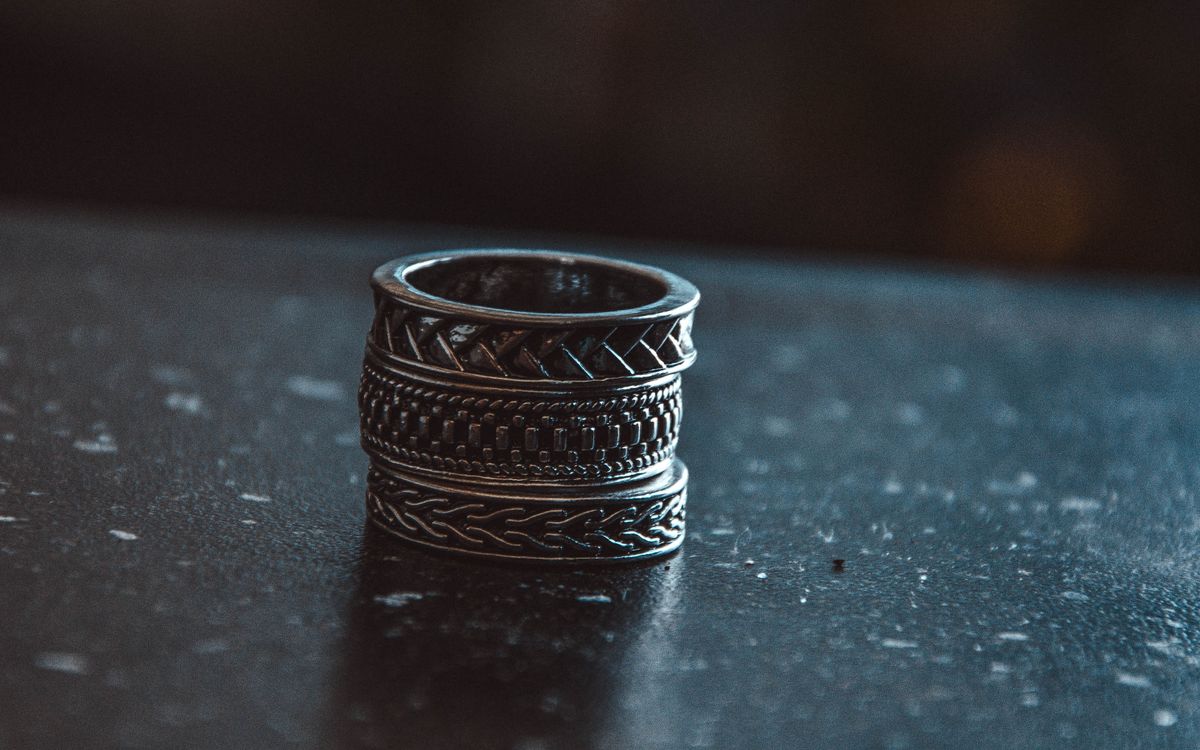
Every owner of sterling silver learns the same lesson a few months in: the piece that came out of the box bright and mirror-white does not stay that way. A chain left in a drawer goes grey-brown. A pair of earrings worn last week shows dark seams in its crevices. Most people call this “oxidizing,” which is one of the most persistent small errors in jewelry — oxygen is not the culprit, and knowing what is makes the whole subject of care easier.
This page covers what tarnish actually is, why some pieces darken faster than others, which home methods are worth your time, and which well-meaning habits do permanent damage.
What tarnish actually is
The dark film on neglected silver is silver sulfide — a compound of silver and sulfur, written chemically as Ag2S. Silver reacts with sulfur-bearing gases in the surrounding air, and the most important of them is hydrogen sulfide, present in small quantities everywhere from industrial air to kitchens. When silver meets hydrogen sulfide over time, the surface converts, atom by atom, into a layer of sulfide that ranges in color from pale yellow through brown to near-black.
That chemistry explains several things owners notice but rarely connect. First, tarnish is a conversion of the metal surface, not a deposit sitting on top of it, which is why it reappears no matter how often it is wiped away. Second, it is driven by what the air carries, not by use — a necklace worn weekly usually stays brighter than the same necklace sealed in a drawer, because handling and gentle friction slow the surface reaction while airtight storage traps whatever gases are in the bag. Third, it explains the smell: sulfur compounds are volatile, and a truly tarnished piece often announces itself before you see it.
Why some silver tarnishes faster than others
Two pieces of sterling silver in the same house can darken at visibly different rates, and the difference is usually the alloy and the environment.
Sterling is, by definition, at least 92.5 percent silver — the United States trade guides treat “sterling” as a claim of 925 parts of silver per thousand. The remaining fraction is mostly copper, added for hardness, because pure silver is too soft for most jewelry. Copper is the faster reactor: it darkens readily in damp, sulfur-bearing air, which is why higher-copper alloys tarnish more eagerly than fine silver. Pieces marked “fine silver” or 999 do resist tarnish better, at the cost of being soft enough to scratch and bend in daily wear.
The environment does the rest. Humid climates accelerate the reaction; so does anything in the drawer that off-gasses sulfur — rubber bands, wool felt, some painted surfaces, and certain foam inserts. Food is a classic contact source: eggs, onions, and mayonnaise have ended more than one set of silver forks. Even perspiration varies from person to person, which is why one earring of a pair can darken faster than the other.
The home care that works
Routine polishing
For surface tarnish on unadorned metal, the honest first tool is a soft polishing cloth made for silver. It carries a very mild cleaning compound, lifts the sulfide layer with light pressure, and leaves the piece looking finished rather than stripped. Work in straight, light strokes rather than circular scrubbing — the goal is to remove the film, not to burnish the surface. Antique dealers generally prefer this method precisely because it takes off tarnish while leaving the fine surface character of the piece intact.
The foil and baking soda method
For heavier tarnish on plain silver, the method with the best chemistry behind it is the warm aluminum foil bath. Line a pan with foil, place the silver in contact with it, add hot water and a spoonful of baking soda, and let the pieces sit until the darkening lifts. The reaction converts silver sulfide back to metallic silver by drawing the sulfur onto the aluminum, so unlike polish, it does not remove any silver from the piece — a reason conservation guidance tends to prefer it over abrasive pastes for heavily tarnished plain silver.
The method has real limits, and they matter. It is too aggressive for silver with intentional oxidation — the darkened recesses of a Victorian-style piece or an engraved chain — because it reverses those blackened details along with the tarnish. It is also the wrong tool for any piece with glued components, lacquer, or porous stones. Treat it as a restorer for plain, all-metal silver, not a universal cleaner.
The mistakes that do real damage
The most common mistake is toothpaste. It works — the film does come off — because it is abrasive, and the same abrasion leaves thousands of fine scratches that permanently dull the surface. The damage is cumulative and unrecoverable without professional refinishing. The next is a household generalization: any cleaner containing chlorine bleach attacks silver alloys aggressively and can pit the surface in a single soak. Dish soap and warm water, used with a soft brush, are the only general-purpose cleaners a piece with stones should ever meet.
Ultrasonic cleaners deserve their own caution. They are fine for plain metal and safe settings, but they shake apart anything fragile or assembled — emeralds with their traditional oil filling, glued bezels, oxidized details, and opals all fail the ultrasonic test. A little tarnish is a cosmetic problem; a cracked stone or a detached bezel is a repair bill.
One more habit worth unlearning: polishing away tarnish on silver that was designed to have it. Ornamental darkening in engraved lines and filigree recesses is part of the piece’s look, and aggressive polishing flattens the design into a featureless plate.
Storage beats rescue
Everything above is remediation; prevention costs less. Silver stored well mostly does not tarnish. Airtight is the principle — zip bags with the air pressed out, or a lined box with a closing lid — because the reaction needs sulfur-bearing air. Anti-tarnish strips and treated cloths work by scavenging those gases, and they are cheap consumables worth replacing on a schedule. Keep the storage dry, keep rubber and wool away from direct contact, and skip the refrigerator: condensation on cold silver does more harm than the room-temperature air it avoids.
Worn silver, it is worth repeating, is usually the brightest silver. The jewelry that lives in rotation on skin, cleaned gently now and then, needs the least rescue of anything in the drawer.
When to hand it to a jeweler
Three situations outgrow home methods. Heavy, uniform blackening that resists the foil bath is best handled with professional polish and, if needed, re-plating — a rhodium-plated piece whose coating has worn through needs the coating renewed, not just a polish. Second, any piece with gemstones, especially emeralds, pearls, or opals, should be cleaned professionally rather than experimentally, because the safe method depends on the stone and its setting. Third, pieces with sentimental or monetary value deserve the professional’s eye before any chemistry touches them; our metals and stones guide covers what those treatments mean, and if the piece in question is vermeil or gold rather than silver, the care rules in our vermeil explainer apply instead.
Frequently asked
What actually causes sterling silver to tarnish?
Tarnish is silver sulfide, a dark compound formed when silver reacts with sulfur-bearing gases in the air, most notably hydrogen sulfide. Humidity speeds the reaction, which is why silver stored in a damp drawer darkens faster than silver worn regularly.
Is the aluminum foil and baking soda method safe for silver?
It is widely used because it converts the sulfide layer back to silver through an electrochemical reaction rather than polishing it away, so it does not remove metal. It is still too aggressive for pieces with intentional oxidation in the recesses, glued stones, or delicate sealants.
Should tarnished silver be cleaned with toothpaste?
No. Toothpaste is mildly abrasive and leaves fine scratches that dull the surface permanently. A purpose-made silver polish used sparingly, or a soft polishing cloth, does the same job without marring the finish.