Pearl grading explained: luster, surface, shape, and the letter systems
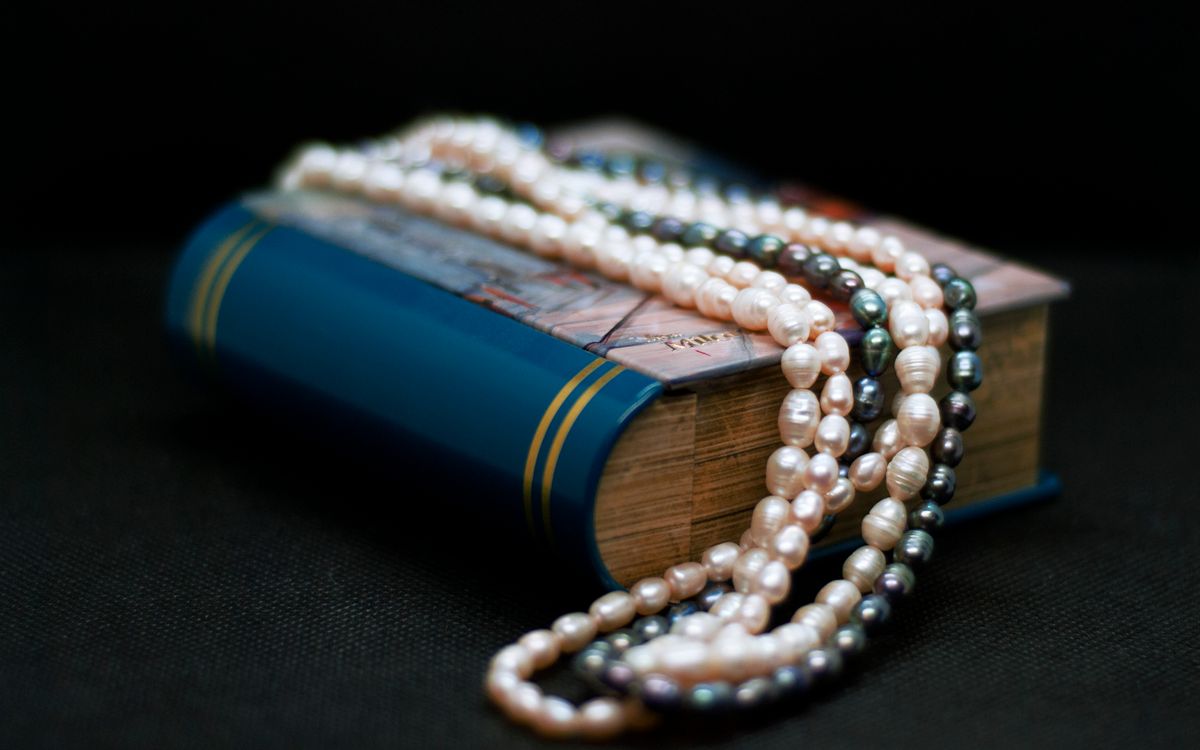
Diamonds have the 4Cs and a certificate from a named lab. Pearls have neither. There is no universal pearl grading standard — no equivalent of GIA’s diamond system that every seller grades against — and the AAA or A you see on a pearl listing is the vendor grading its own inventory on its own scale. An “AAA” from one seller can be another seller’s “AA,” and a Tahitian “A” means the opposite of an Akoya “A.”
That does not make pearl grades useless. It makes them relatable rather than absolute: the letters summarize how a seller judged the same handful of quality factors every serious buyer weighs. This page covers those factors, the two letter systems, the four pearl types and how they differ, and the checks that work without trusting the tag.
Why pearls never got a 4Cs
The diamond industry standardized over decades around one mineral graded by independent laboratories. Pearls resist that model for structural reasons: they are organic gems produced by different mollusks — saltwater oysters and freshwater mussels — in shapes from perfect spheres to free-form baroques, across four main commercial types with different conventions. GIA, which set the diamond vocabulary, describes pearl quality through value factors rather than issuing a single letter grade, and no other body has unified the market either. The grading you encounter in stores is trade convention, applied by farms and vendors and audited by nobody.
The practical consequence: pearl grades are only comparable within one seller’s scale. Between sellers, you compare the pearls, not the letters.
The value factors every grader weighs
Beneath every letter grade sit the factors GIA uses to describe pearl quality. Three of them do most of the work.
Luster
Luster is the sharpness and depth of surface reflections, and it is the single biggest driver of both beauty and price. A high-luster pearl reflects the light source crisply, almost like a mirror; a low-luster pearl glows vaguely, sometimes described as chalky. When two pearls of the same type and size differ in price, luster is usually why. It beats size: a small pearl with sharp luster outshines a larger, dull one.
Surface quality
Pearls are organic and carry natural marks — spots, wrinkles, small pits, growth rings. Grading measures how much clean surface the pearl shows; the common trade descriptions use percentages, with top grades described as 95 percent or more blemish-free, meaning flaws are hard to see at arm’s length. Small natural marks are not defects to fear — they are evidence of nacre rather than a coated bead.
Nacre and matching
Nacre is the layered material the mollusk deposits around the nucleus, and its thickness and evenness decide how well the pearl wears over time: thick nacre keeps its luster for years, thin nacre can dull or wear. Matching is the strand-level factor — how uniformly the pearls agree in size, color, shape, and luster. A well-matched strand can take multiple harvests to assemble, which is why matched strands price far above the sum of their loose pearls.
The remaining factors — shape, color, and size — price the pearl rather than grade it. Perfect rounds are rarest and most expensive; drops, buttons, and baroques are valued styles rather than defects. Color is preference, not rank. Size drives price steeply within each pearl type.
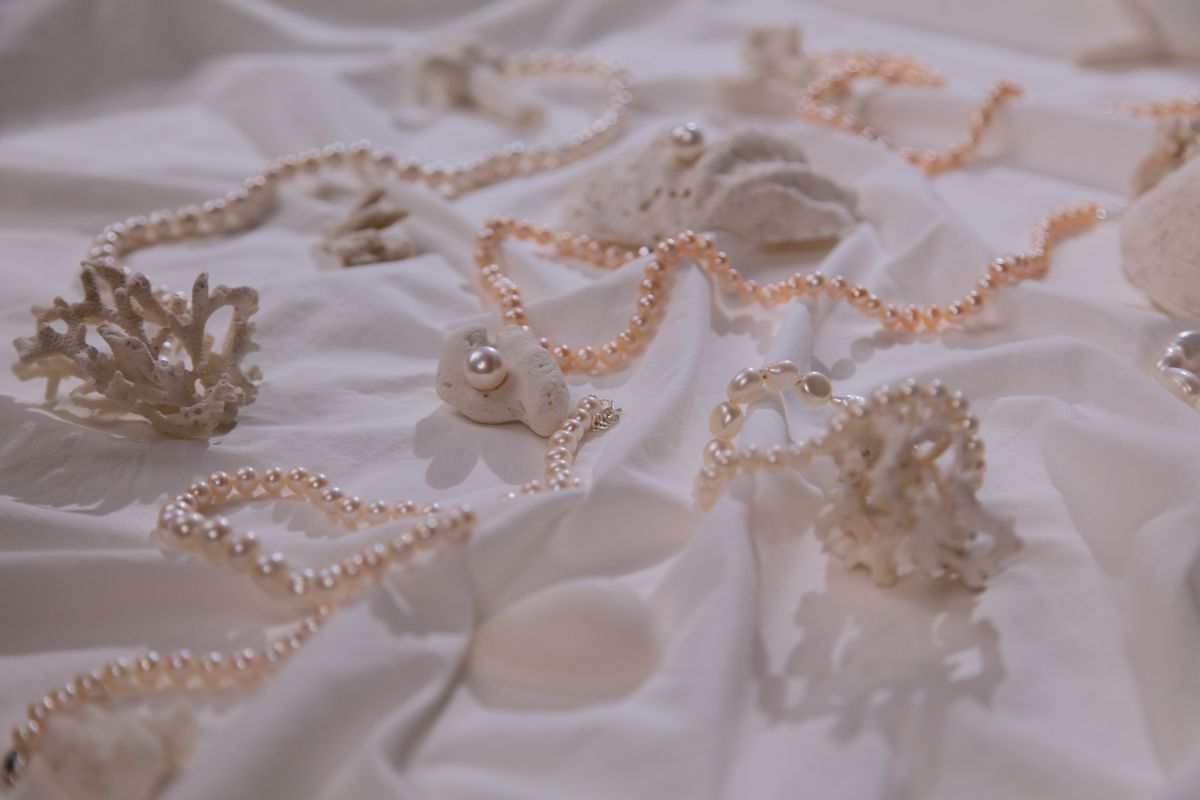
The two letter systems, and the trap between them
Two scales dominate retail, and they run in opposite directions.
The AAA-to-A system grades from AAA (highest) down through AA+ and AA to A (lowest), and it is the common convention for Akoya and freshwater pearls. Top grades in this system describe mirror-like luster, 95-percent-plus clean surfaces, and round, well-matched pearls.
The A-to-D system — used for Tahitian and South Sea pearls, with roots in French Polynesia’s export conventions — grades from A (highest) down to D (lowest). French Polynesia’s export rules are commonly cited as requiring a minimum nacre thickness before Tahitian pearls may leave the territory, which anchors the D grade as a floor rather than a suggestion.
The trap is comparing letters across systems. A Tahitian “A” is top quality — roughly the level of an Akoya “AAA” — while an Akoya “A” is entry level in its own system. Ask any seller which system they use before you ask what grade the pearls got, and treat any grade above AAA (“AAAA,” “gem grade”) as marketing shorthand, not a recognized tier.
The four pearl types
Akoya
Akoya pearls are the classic white strand — grown in saltwater oysters, mostly in Japan, and typically small, round, and lustrous, with a sharp, almost metallic reflection that is the benchmark for the category. They are commonly processed after harvest (bleaching to even out color is standard trade practice) and graded on the AAA-to-A scale. For a first quality strand, Akoya is the default answer.
Freshwater
Freshwater pearls, grown in mussels and produced at scale in China, are the most affordable type and the most varied in shape. Unlike the bead-nucleated saltwater types, most freshwater pearls are tissue-nucleated, which makes them nearly solid nacre — a genuine durability advantage. Grading uses the same AAA-to-A convention, though the top of the freshwater scale is a different price universe from the top of the Akoya scale.
Tahitian
Tahitian pearls are the dark-colored saltwater pearls from French Polynesia — “black” pearls, in shades from silver and graphite to peacock green and aubergine. The color is natural, produced by the oyster, and graded on the A-to-D system described above. Size typically runs moderate to large, and color depth moves price as much as luster does.
South Sea
South Sea pearls are the largest commercial type, grown in oysters across Australian, Philippine, and Indonesian waters, in white-silver and golden hues. They are graded on the A-to-D convention or on hybrid scales, and their size — often well beyond the Akoya range — plus their satiny rather than mirror-sharp luster defines the type. They occupy the top of the price ladder.
How to judge a pearl without trusting the tag
Three checks replace the letter grade. First, look at luster in real daylight or near a window: a good pearl shows a crisp reflection of the light source, not a fuzzy glow. Second, scan the surface at arm’s length — fine pearls look clean at conversation distance, while obvious pits, rings, or wrinkled bands at that distance mark a lower tier. Third, ask the seller three questions: which grading system they use, what nacre thickness applies (for bead-nucleated saltwater types), and whether the color is natural or dyed. The seller’s willingness to answer is itself a quality signal.
What the grades never tell you
Letter grades summarize luster, surface, shape, and matching — not color, not treatment status, and not origin. Two pearls of the same grade can differ completely in color, and dye is the biggest undisclosed variable in the market: dyed freshwater pearls are sometimes sold in the look of Tahitian or golden South Sea material, with color concentrated at drill holes as the tell. Natural-color Tahitian and golden South Sea pearls carry a premium precisely because the color grew in the oyster, and reputable sellers state natural color explicitly. The grade letters and the disclosure both matter; only one of them appears in bold on the tag.
Pearls pair naturally with layered pieces — see how strands work in stacks in our layering guide. If a pearl piece is heading into a gift, the gift budget guide covers where pearls fit at each price point, and the metals and stones hub holds the rest of this desk’s coverage.
Frequently asked
What does AAA mean for pearls?
AAA is the top grade in the most common trade scale, which runs AAA down to A and is used widely for Akoya and freshwater pearls. It describes strong, mirror-like luster, a mostly clean surface, and round, well-matched pearls. Because no official body certifies pearl grades, an AAA from one seller can equal an AA from another — the letters are shorthand for that seller's scale, not a universal certificate.
Is an A-grade Tahitian pearl good quality?
Yes — it is the opposite of an A-grade Akoya. Tahitian and South Sea pearls commonly use an A-to-D system where A is the highest grade, a convention tied to French Polynesian export rules. A Tahitian A sits at roughly the same level as an Akoya AAA. Never compare letters across the two systems.
Why is there no official pearl grading standard?
Pearls are organic gems produced by several mollusk species in wildly different shapes, sizes, and colors, and no single body has established a diamond-4Cs equivalent. GIA describes pearl quality through value factors — luster, surface, shape, color, size, nacre, matching — but the letter grades you see in stores are vendor-applied conventions.