Hair accessory care: why clips wear out and how to slow it down
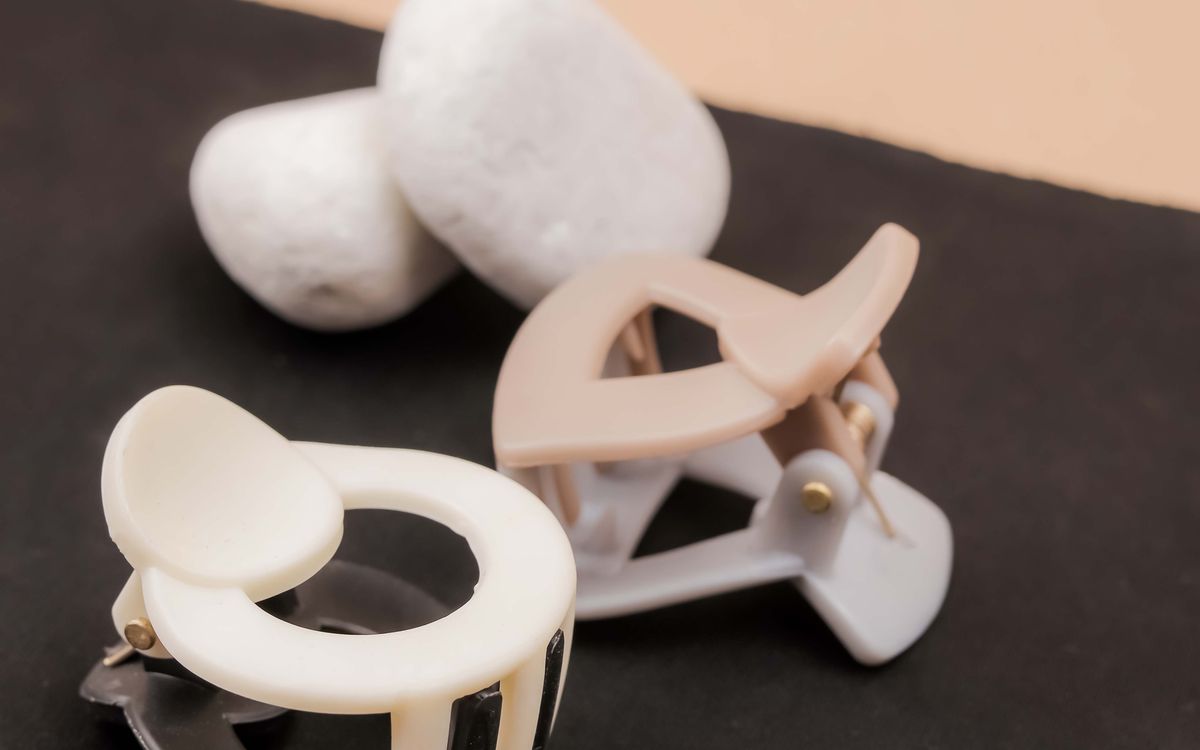
Hair accessories take more abuse per gram than anything else in a jewelry box. They are pulled through hair, sprayed with product, sat on, dropped on bathroom tile, and shoved into bags without pockets. The failures that follow — a gold clip that turns brassy at the teeth, a claw that no longer closes with force, a slide that snaps at the seam — are not random. Each one has a mechanical cause, and each one can be delayed by changing two or three habits. This page goes through the three places hair accessories actually fail and what to do about each.
What actually wears out on a hair clip
A hair clip has three working parts, and they wear at different speeds. The first is the coating, on metal clips and slides. The second is the spring or hinge, the mechanism that generates clamping force. The third is the body itself — the acetate or molded plastic arms, teeth, and seams. Coating failure is the most visible and the most misunderstood, because people read it as cheap construction when it is usually a thickness problem. Mechanism failure is the least visible until the clip stops working. Body failure is the rarest in acetate and the most common in the thinnest molded plastics.
Which part fails first tells you what to change. Coating wear means contact is too frequent or too harsh. Spring fatigue means the clip is being opened too far or too often. A snapped arm in cold weather means the material was never suited to the job.
The plating problem: why gold clips turn brassy at the teeth
Plated hair clips lose their finish in the same order, every time: at the tooth tips first, then along the hinge, then across the flat faces. The teeth drag through hair thousands of times, and every drag is a fine abrasion. The hinge wears because the two coated halves rub against each other at every open and close. The flat faces last longest because they touch nothing.
Product contact thins the coating in a different way. Hairspray is the main offender — the alcohol and resins in it sit on the plating, dull it, and slowly undermine the layer underneath. Scalp sweat does the same near the roots, which is why clips worn high on the head lose finish faster than ones worn low.
The fix is not handling the clip less; it is shortening what the coating has to survive. Wipe clips down with a dry cloth after a day of hairspray, keep them out of the shower, and take them off before swimming. When buying, the thickness of the coating is the number that matters — the same logic that separates vermeil from flash plating on chains applies to clips, and our guide to gold vermeil and plating terms covers how to read those words on a listing.
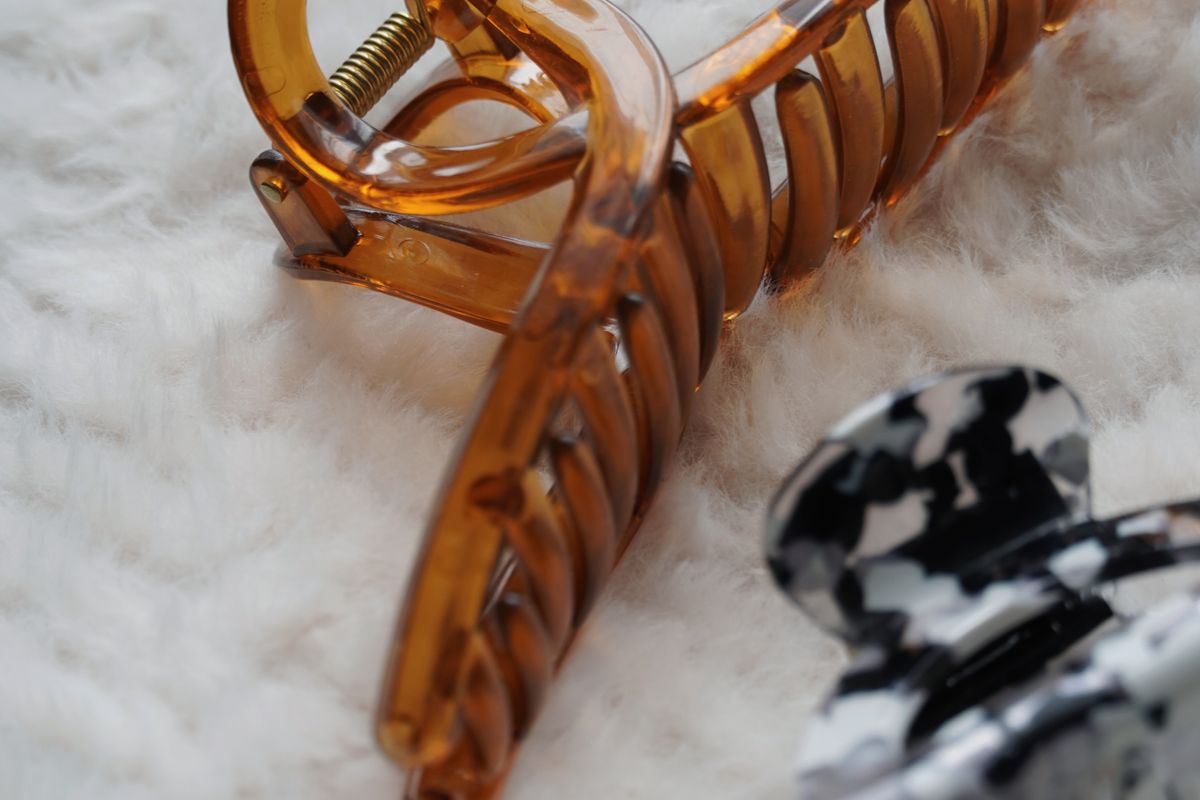
Springs and hinges: the mechanism is the clip
Claw clips: springs and how they fatigue
A claw clip works because a metal spring stores energy when you open it and releases it against your hair when you let go. Spring steel holds its temper — its ability to spring back — until it is overstretched. The two habits that kill springs are opening the clip wider than it was designed to go, usually to swallow more hair than it can hold, and forcing it closed over a load it cannot grip, which bends the arms and pre-loads the spring permanently.
Two warning signs arrive before the failure. A clip that needs a second squeeze to hold has a spring that is starting to lose seat tension — sometimes the spring has simply shifted in its housing, and pushing it back into place restores the grip. A clip whose arms splay apart when relaxed has been chronically overloaded, and its holding days are numbered.
Snap clips and the pivot problem
Hinged snap clips fail differently: grit works into the pivot and grinds the mechanism. That grit is hair product residue plus dust, and a once-a-month rinse at the hinge flushes most of it out.
Acetate versus molded plastic: the body of the clip
The body material decides how a clip ages. Cellulose acetate is made from plant-derived cellulose formed into sheets, then cut and polished — which is why good acetate clips have depth to their patterns and slightly rounded edges. Injection-molded plastic is melted and pressed into a mold, which is faster and cheaper, but produces a lighter, more brittle body that shows mold lines and snaps at stress points.
Acetate has one weakness worth knowing: it softens with heat. A clip left on a car dashboard or a radiator in summer can warp slightly, and a warped claw never closes evenly again. Molded plastic has a different weakness — cold — turning brittle enough in a winter bag to snap when sat on.
Storage that actually matters
Hair accessory storage solves three problems at once. Separation protects coatings: clips jostling in one drawer scratch each other, and a fabric-lined divided tray or small pouches prevent that. A dry spot protects springs, because residual moisture at the hinge is what starts the corrosion that stiffens a mechanism. And room temperature protects acetate, which rules out hot windowsills, car consoles, and radiators.
One habit covers most of it: give wet clips an hour to air-dry before they go back in the box. Hinges trap water in a way flat jewelry does not, and that trapped water works on the spring for as long as it sits there.
Cleaning: what to use and what to skip
Lukewarm water with a drop of mild soap handles product buildup on both acetate and coated metal. Use a soft toothbrush at the hinge and between teeth, where residue actually accumulates, then dry immediately and thoroughly — drying matters more than washing for the mechanism’s sake.
Skip three things. Alcohol-based cleaners and acetone strip or dull coatings fast. Abrasive cloths and polishing pastes are for solid metal, not plating — on a plated clip they push wear forward by months. And dishwashers, which people genuinely do try: the heat cycle warps acetate and the detergent attacks finishes.
When replacement is the honest answer
A worn coating cannot be restored at home, and replating a $20 clip costs more than replacing it. A fatigued spring cannot be re-tempered on a kitchen table. But an intact clip that has only gathered residue is fully recoverable with the cleaning above, and most clips retired as “old” are simply dirty.
The practical rotation is to match the clip to the day. A plated clip with intact finish for occasions, a sturdy acetate claw for daily duty, and the habit of wiping down whatever came through a hairspray-heavy day. That rotation, more than any careful handling, is what keeps a hair accessory collection looking new through years of use — and the same logic of matching the piece to the job runs through everything in our accessories guides.
Frequently asked
Why is my gold hair clip losing its color?
The coating is wearing through. Hair clips take more abrasion than almost any other accessory: hairspray residue, scalp oils, and the friction of teeth sliding through hair all thin the plating. Thin coatings on clips can show the base metal within a season of daily use.
Can a loose claw clip spring be repaired?
Sometimes. If the spring has simply shifted out of its seat, reseating it restores tension. If the spring steel has fatigued from being overstretched, the weakened temper cannot be restored at home, and the clip will keep loosening.
How should hair clips be stored?
Dry, separated, and away from heat. Coated metal clips scratch when they jostle together in one drawer, acetate can warp in a hot car, and residual moisture at the hinge corrodes the spring. A divided tray or fabric-lined box solves all three.