Lab-grown diamonds, explained: what the certificates say and what the market pays
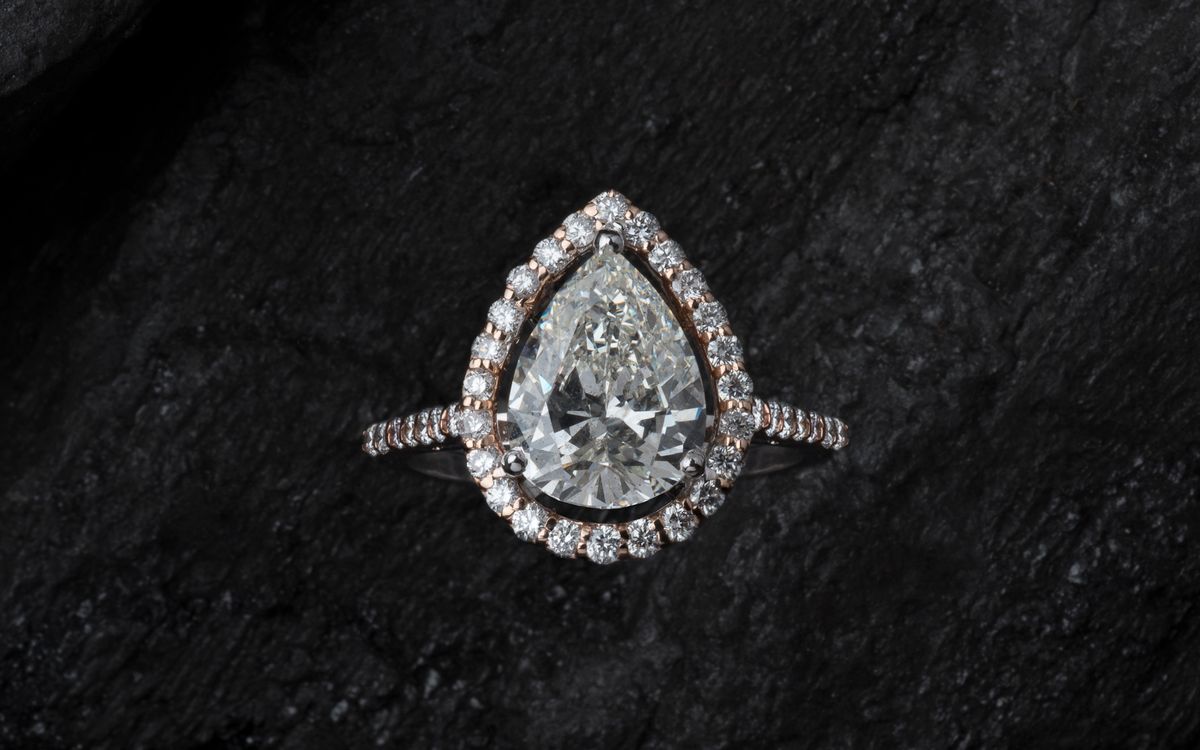
A lab-grown diamond is not a lookalike, a simulant, or a diamond-coated something. It is diamond — carbon crystallized in the same cubic structure, with the same hardness, the same refractive behavior, and the same 4Cs grading scale as the stone that comes out of a mine. What is different is the production timeline: a natural diamond forms over billions of years deep in the earth, while a laboratory-grown stone is grown in a chamber over a period of weeks.
That distinction — same material, different origin — is the only one that matters, and it drives everything else on this page: how the stones are certified, what the certificates actually say, and why the price gap between the two categories has become the largest story in the diamond market.
What a laboratory-grown diamond is
The cleanest definition comes from the Gemological Institute of America. GIA states that laboratory-grown diamonds have “essentially the same chemical composition, crystal structure, optical, and physical properties” as diamonds found in nature, and that the differences between the two become clear only when the stone is examined by a trained grader in a gem laboratory. The United States Federal Trade Commission treats them the same way for naming purposes: both natural and man-made diamonds may be called diamonds, as long as the growth origin is disclosed.
Two production methods account for virtually all gem-quality growth.
HPHT: high pressure, high temperature
The HPHT method recreates the conditions that form natural diamonds. A press applies extreme pressure and heat to a growth chamber where carbon dissolves in a molten metal and crystallizes around a diamond seed. The crystals that come out have a distinctive combination of cubic and octahedral faces.
CVD: chemical vapor deposition
The CVD method works differently. A carbon-rich gas such as methane is broken down in a vacuum chamber, and carbon atoms deposit onto a flat diamond seed layer by layer, producing a tabular crystal. GIA notes that most CVD stones receive additional heat treatment after growth to improve their face-up color. Either way, growing a gem-quality stone typically takes less than a month.
How certification works: IGI reports and the GIA assessment
Because the eye cannot separate the two categories, paperwork does the work. In the lab-grown market, the certificate most buyers encounter is an IGI report — the International Gemological Institute grades lab-grown stones on the full 4Cs scale, the same D-to-Z color and Flawless-to-I3 clarity vocabulary used for naturals. IGI reports dominate the lab-grown market simply because IGI moved into that grading segment early and at scale; if you are shopping stones in the range where lab-grown is most commonly sold, an IGI report is what you will see most often.
GIA takes a different approach, and it is worth understanding before you buy. GIA tests every diamond submitted to determine whether it is natural. If the stone turns out to be laboratory-grown, GIA issues a Laboratory-Grown Diamond Quality Assessment — a document that looks distinctly different from a standard GIA grading report — and laser-inscribes the stone’s girdle with a report number and a statement that the diamond is laboratory-grown. The practical takeaway: the report a lab-grown stone carries is doing two jobs at once, confirming the stone is diamond and confirming its growth origin. Read which document is actually attached to the stone you are buying, because a Quality Assessment and a full grading report are not the same product.
The 4Cs on a lab-grown report
Every grading term you already know transfers directly. Carat weight is the physical measure — a one-carat lab-grown stone weighs the same 200 milligrams and spans roughly the same 6.5 millimeters as a one-carat round natural. Color runs the same D-to-Z scale. Clarity runs the same Flawless-to-Included scale, and the inclusions themselves differ in kind rather than degree: HPHT stones can carry tiny metallic flux remnants from the growth process, while CVD stones can show strain patterns invisible without magnification. Cut quality is determined by the cutter, not the origin, and lab-grown stones are cut on the same equipment by the same trade.
One asymmetry is worth knowing: because lab-grown material is produced rather than mined, near-top grades are far more available. A natural D-color, Flawless one-carat stone is a genuine rarity; a lab-grown one with the same paper grades sits in inventory by the hundreds. The grades mean the same thing, but scarcity means something different in each category.
What lab-grown diamonds cost now
The price gap is the defining fact of the current market. Price-tracking indexes that compare like-for-like stones — same carat weight, same color and clarity band, same cut grade — put the lab-grown discount in the 75-to-85-percent range at one carat, and the gap widens as stones get larger: at two and three carats, the discount commonly runs 85 percent or more. One widely cited index recorded a one-carat lab-grown round median around $700 to $800 against roughly $3,900 to $4,500 for the equivalent natural in late 2026, with both figures moving down year over year.
Why the gap keeps widening
The mechanism is simple supply. Natural diamond rarity rises steeply with size, because large, clean crystals are geologically rare. Factory production costs scale far more gently, and new capacity keeps coming online. That is why the discount at one carat is large and the discount at three carats is larger — the lab-grown price ladder is nearly flat compared with the natural one.
The resale reality
Both categories lose money on resale, and lab-grown loses more. Trade commentary consistently puts lab-grown resale at a small fraction of retail — the secondary market has no premium for origin-free stones when supply is effectively unlimited. If resale value matters to you, that is an argument for natural stones or for other assets entirely. If the stone itself is the point, the discount is the argument for lab-grown.
How to read the paperwork before you buy
Three checks, in order. First, confirm the stone is certified at all — an uncertified lab-grown stone forces you to trust the seller’s grades without backup. Second, read the certificate type: an IGI report grades the full 4Cs, while a GIA document for a lab-grown stone will be the Quality Assessment format, not a standard grading report. Third, verify the girdle inscription against the report number — on lab-grown stones, the inscription is both an authenticity check and the permanent origin disclosure that protects you when the stone changes hands.
What this means for what you should buy
Lab-grown is the rational choice when the priority is maximum stone for a fixed budget — the same money that buys a modest natural buys roughly double the carat weight in lab-grown, at equivalent paper grades. Natural is the rational choice when provenance, geological rarity, or resale matters more than size per dollar. Neither is a mistake; the mistake is buying one category while assuming the pricing logic of the other.
The rest of the metals-and-stones desk covers the other choices on the tag — and if you are weighing a diamond tennis piece specifically, the tennis bracelet budget guide breaks down what each carat class actually costs. For how our desk verifies claims like the ones on this page, see how we appraise.
Frequently asked
Are lab-grown diamonds real diamonds?
Yes. The Gemological Institute of America states that laboratory-grown diamonds have essentially the same chemical composition, crystal structure, and optical and physical properties as diamonds found in nature. The difference is origin: one grew in the earth over billions of years, the other in a factory over weeks.
Can a jeweler tell a lab-grown diamond from a natural one?
Not by eye. GIA notes that the differences only become clear when the stone is viewed by a trained grader with laboratory equipment. Certification paperwork and girdle inscriptions exist precisely because the two cannot be separated by sight.
Do lab-grown diamonds hold their value?
No. Lab-grown diamonds trade at a fraction of their retail price on the secondary market, and the discount against natural stones has widened every year as factory capacity grows. Buy one for the stone you get today, not for what it might resell for later.