Quartz versus automatic: accuracy, servicing, and what each one costs to own
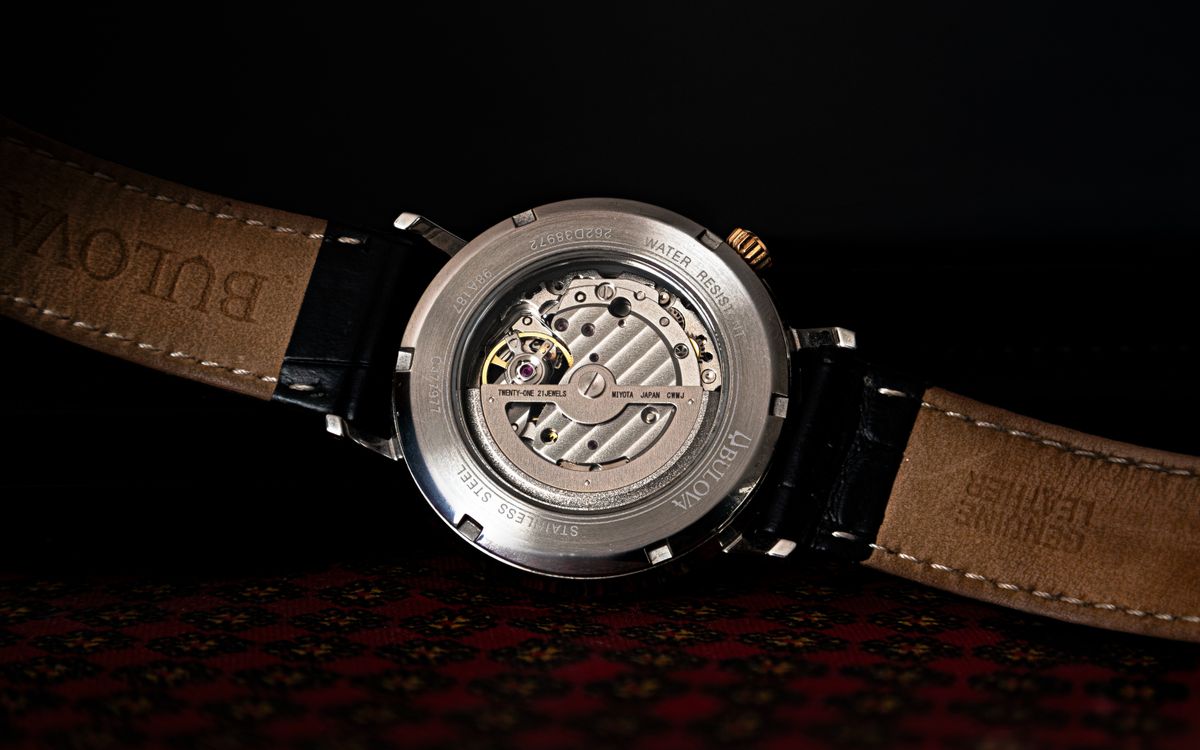
Two watches can read the same hour, cost the same, and be built on entirely different machines. One counts time with a vibrating quartz crystal regulated by a battery-fed circuit; the other stores energy in a wound spring and meters it out through an escapement. The choice between them is usually framed as taste, but the practical differences — accuracy, what maintenance looks like, and what a decade of ownership costs — are measurable, and they point in opposite directions depending on what you want from the watch.
How a quartz movement keeps time
A quartz watch works by passing a small electric current through a shaped crystal of quartz, which vibrates at a very stable frequency — 32,768 times per second in the standard design. A circuit counts those vibrations and drives a stepper motor that advances the hands once per second. That is the whole machine: a battery, an oscillator, a counter, and a motor.
The stability of the vibration is why quartz is accurate. Frequency drifts mainly with temperature, and since the crystal lives inside a case at roughly constant skin temperature, the movement holds its rate remarkably well. Standard quartz movements are typically rated within about plus or minus 15 to 20 seconds per month, and high-accuracy quartz calibers tighten that to seconds per year. The moving parts are few, the loads are light, and there is very little to wear out mechanically.
How a mechanical movement keeps time
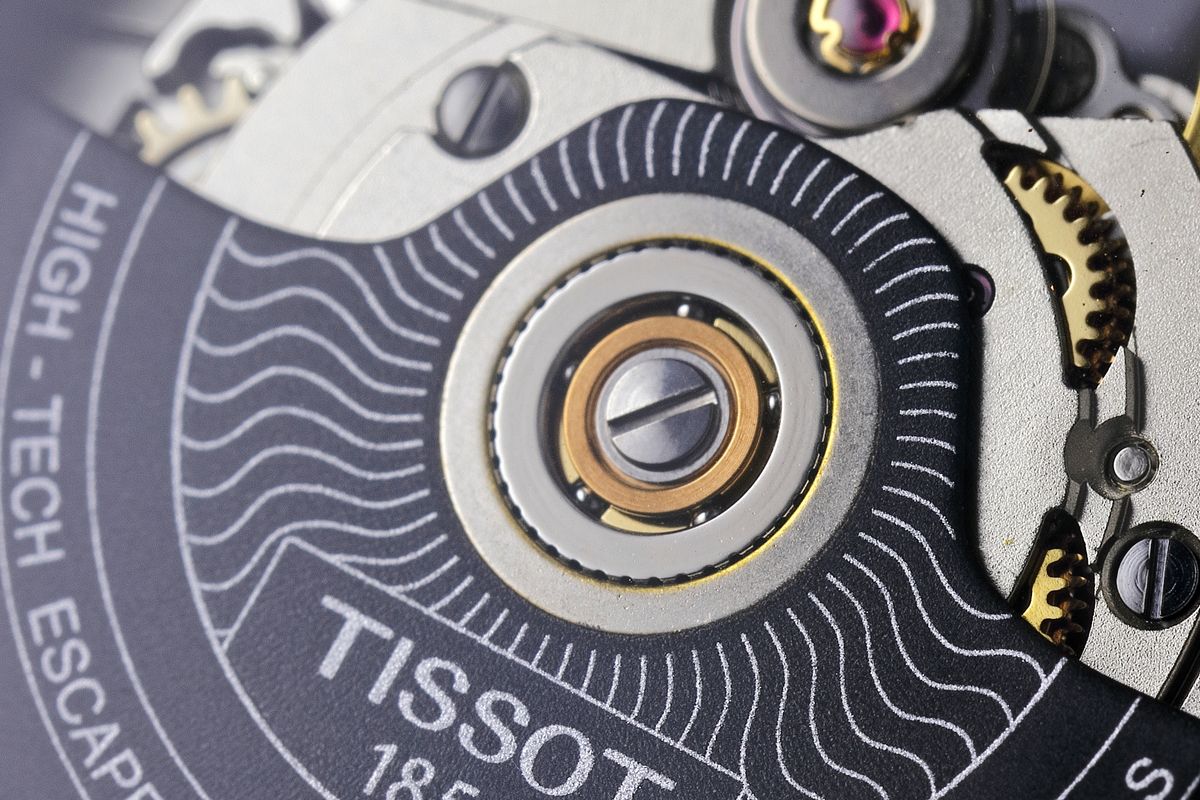
A mechanical watch — automatic or hand-wound — has no electronics. A coiled mainspring stores energy, either wound by hand through the crown or wound automatically by a swinging rotor as you move. That energy travels through a gear train to the escapement, which releases it in fixed increments, and the balance wheel — the oscillating ring visible through an open caseback — swings back and forth at a set frequency, traditionally 28,800 half-swings per hour. The hands advance because every part of this chain is geared together.
Where mechanical accuracy comes from
The balance is a mechanical oscillator, and its rate depends on geometry, lubrication, and position — a mechanical watch runs slightly differently dial-up, crown-up, or on the wrist. This is inherent to the design, not a defect. The industry’s chronometer certification, administered in Switzerland by the Control Officiel Suisse des Chronomètres (COSC), accepts an average daily rate between -4 and +6 seconds per day for certified mechanical movements. Summed across a month, that allowance is wider than what a plain quartz movement drifts in a year.
What the tolerances mean in practice
A mechanical watch within specification still gains or loses enough over weeks that owners reset the time periodically, and rate can shift as lubricants age. If you want a watch that is right without attention, mechanical is the harder path — and some owners consider that maintenance relationship part of the appeal. It is a preference, not a performance claim.
Accuracy: rated versus real-world
The numbers above describe rated performance. Real-world drift depends on wear patterns and how the watch is stored — a mechanical watch left crown-up overnight accumulates a different rate than one worn all day, and quartz movements slow slightly in extreme cold. Two practical points follow. First, no mechanical watch holds time like quartz, at any price; a $200 quartz watch outperforms a $10,000 mechanical one at the accuracy column, and that is not controversial. Second, mechanical accuracy is a range, not a promise: a watch running +12 seconds a day is outside chronometer spec but inside many makers’ own tolerances, so it is worth knowing whose spec a listing quotes.
Maintenance: what each movement asks of you
A quartz watch’s maintenance is a battery change, typically every two to five years depending on the caliber’s current draw. Between changes, there is nothing to do. The one quartz-specific risk is letting a dead battery sit in the movement for months, which can corrode the cell and damage the circuit — replace promptly and the movement will likely outlast the case.
A mechanical watch asks for more, and on a longer rhythm. Trade convention places a full service — disassembly, cleaning, re-lubrication, regulation, and new seals — at roughly every five to eight years. Skipping services does not stop the watch; it lets lubricants degrade and abrasion quietly accumulate, which shows up first as drifting rate. Automatics add one more consideration: gasket integrity. Any watch you wear in water needs its seals tested when serviced, because water resistance is only as good as its oldest gasket.
What ownership costs over a decade
Rough arithmetic makes the comparison concrete, using common service pricing as the variable rather than quoting brand rates, which vary widely.
| Ownership item | Quartz movement | Mechanical movement |
|---|---|---|
| Power source | battery every 2 to 5 years | winding, by wrist or hand |
| Periodic upkeep | battery changes only | full service roughly every 5 to 8 years |
| Accuracy to expect | seconds per month | seconds per day |
| Downtime | none between batteries | stops when unworn; reset on pickup |
Over ten years, a quartz watch costs a few battery changes and nothing else. A mechanical watch costs winding attention every day, at least one service, and periodic resets. Neither ledger is wrong — the question is whether you want to own a watch or maintain one.
Choosing between them
Buy quartz if the watch’s job is telling time with minimal attention: an everyday beater, a travel watch, a piece you wear weekly rather than daily. Buy mechanical if the machinery itself is part of the value — the movement, the sweep of the seconds hand, and the routine of winding and resetting. Many collectors run both, and the pairing works precisely because the weaknesses do not overlap.
If you are weighing specific models, our watches guides cover the other decisions that shape a purchase, and the full reading path across the site is laid out in start here.
Frequently asked
Is quartz or automatic more accurate?
Quartz is far more accurate. A standard quartz movement is typically rated within about plus or minus 15 to 20 seconds a month, while even a chronometer-certified mechanical movement is allowed a daily deviation in the range of a few seconds — which compounds over a month.
How often does an automatic watch need servicing?
Trade convention puts a full mechanical service at roughly every five to eight years, depending on the movement and the maker's guidance. Many watches run longer between services, but seals dry, lubricants thin, and worn parts drift in rate long before the watch stops.
Do automatic watches stop when not worn?
Yes. An automatic keeps running only while worn or wound. Once the mainspring runs down, the watch stops and will need resetting — including the date — when you pick it up again. A hand-wound or automatic watch left in a drawer for a week is simply a stopped watch.