Why white gold turns yellow, and what rhodium plating really is
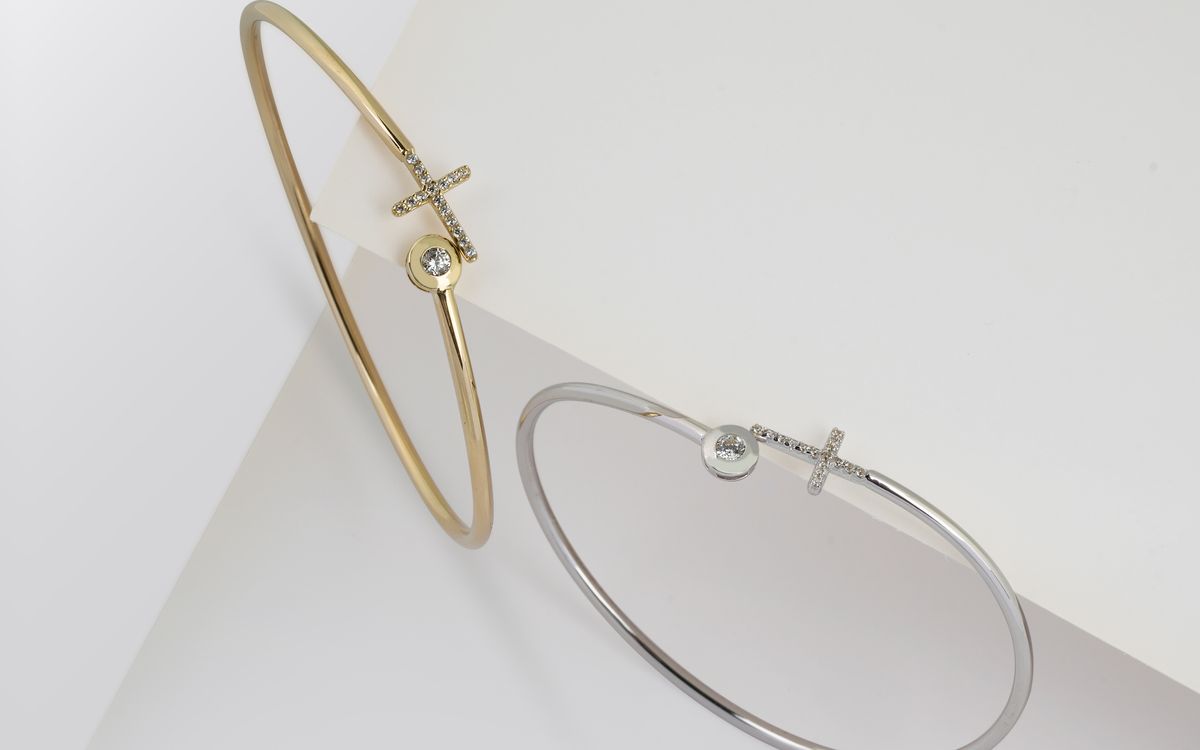
A white gold ring that looked bright and mirror-flat on the day of purchase does not stay that way by itself. Somewhere between the second and fourth year of daily wear, most owners notice a faint warmth creeping back into the metal — a yellow or grey-gold undertone at the bottom of the band that no polishing cloth removes. The metal is not tarnishing. What is happening is the rhodium layer, the thin coating that made the ring look white in the first place, is wearing through.
This page covers what that layer actually is, why the metal underneath was never white, how often re-plating happens, and what United States disclosure rules say about the coating that most listings never mention.
Why white gold turns yellow in the first place
The name is the first misdirection in jewelry retail. White gold is gold — usually 14k or 18k yellow gold whose alloying metals have been swapped to whiten it. Instead of copper and silver, the mix includes whitening metals such as palladium, nickel, or silver. The result is a metal with a legal gold content and a color that is best described as warm off-white, sometimes closer to pale straw than to the bright silvery-white buyers expect from a product photo.
The photos are accurate and so is the metal; the gap between them is the rhodium. Almost all commercially sold white gold is finished with a thin electroplated layer of rhodium, a bright silvery-white metal that covers the underlying alloy completely. When that layer wears off — fastest on the inside of a ring shank, where skin and desks do the most rubbing — the original color of the alloy returns. Owners often describe the ring as “turning yellow,” but the metal has not changed. The coating has simply left.
What rhodium plating is, and why the trade uses it
Rhodium belongs to the platinum group of metals. In jewelry use it contributes three things: a cold, reflective white that flatters diamonds, a hard surface that resists scratching better than the alloy beneath, and corrosion resistance. It is applied by electroplating — the ring is cleaned, polished, and immersed in a rhodium bath, and a thin deposit builds up on exposed metal. The layer is measured in microns, which is why the finish is so bright and why it is also finite.
The trade plating white gold in rhodium is a convention so old that most buyers have never been told about it. That silence is not always honest, which is why the federal guides have something to say on the subject.

What United States disclosure rules actually say
The rhodium rule itself
The Federal Trade Commission’s Guides for the Jewelry Industry, published as 16 CFR Part 23, address rhodium coatings directly. Section 23.7, “Disclosure of surface-layer application of rhodium,” reads in full: “It is unfair or deceptive to fail to disclose a surface-layer application of rhodium on products marked or described as precious metal.”
That sentence is short but it does real work. A seller who marks a product “white gold” — a precious metal description — while leaving out that the white appearance comes from a rhodium surface layer, is failing to disclose exactly what the guides require. Section 23.6 reinforces the point from another direction: rhodium is listed among the platinum group metals, and it is unfair or deceptive to use the names of those metals in a way that misrepresents a product’s true composition. Calling a plated piece “rhodium” as though it were solid rhodium metal would fail that test; the guides recognize “Rhod.” or “Rh.” as qualified abbreviations for a rhodium plating.
What it means for listings
In practice, the rule sets a floor rather than a standard of virtue. It does not require a minimum coating thickness the way the vermeil rule fixes a gold layer at 2.5 microns; it only requires that the existence of the coating be disclosed. So when a listing says nothing at all about rhodium on a white gold piece, the cautious reading is not that the piece lacks plating — most white gold has it — but that the seller has not met the disclosure the guides call for. Makers who publish a plating thickness or a re-plating policy are going one step beyond the legal floor, and that step is worth something when you are comparing two similar rings.
How often re-plating happens, and what it costs
Frequency depends on wear, not on the calendar. A ring worn every day, exposed to hand washing, desks, and gym equipment, commonly needs attention within a few years; a ring worn occasionally can hold its finish much longer. Thin original plating wears through sooner than a heavier deposit, which is one more reason the thickness a maker publishes matters.
The work itself is a bench service: the piece is cleaned, polished to remove scratches, and re-plated in a rhodium bath. Cost scales with the piece — a simple band is the cheapest case, and heavier or intricately finished pieces cost more because of the polish work that precedes the plating. Jewellers’ quoted prices vary by region and by piece, so treat any specific number you read online as a range at best. What does not vary: re-plating is routine, inexpensive relative to replacing the piece, and repeatable for the life of the ring.
Making the plating last longer
The coating wears by abrasion, so the care advice follows the physics. Remove white gold rings before weightlifting, gardening, and other grip-heavy work. Keep them off during swimming pool sessions, since chlorine is unkind to gold alloys and their coatings alike. Apply hand lotions before putting the ring on, not after, because residue builds up in the crevices of the plating. And clean the piece gently — warm water, a drop of dish soap, a soft brush — rather than with abrasive pastes, which micro-scratch the surface and dull the reflectivity that rhodium provides.
None of this stops the underlying reality that the layer is thin and will eventually wear. It only moves the deadline.
Rhodium-plated silver: the other piece in your drawer
White gold is not the only precious metal that arrives wearing rhodium. A large share of modern sterling silver jewelry — chains, earring hooks, the settings on inexpensive gemstone pieces — is rhodium-plated too, for the same reasons: the plating slows tarnish and gives the piece a whiter, harder surface than bare silver. The same FTC section applies, since sterling is a precious metal and the coating must be disclosed.
The practical difference is in what happens as the layer wears. On sterling, the alloy underneath is 92.5 percent silver, so a worn-through spot shows grey-black tarnish rather than yellow gold. That makes plated silver easier to misread: owners see dark marks and assume the plating failed, when what they are seeing is the silver doing what silver does. If you are weighing plated silver against vermeil, our guide to vermeil, gold-filled, and plated constructions covers how each base metal behaves once the coating goes.
What to check before you buy
Three questions sort a well-documented white gold listing from an evasive one. First: does the listing acknowledge rhodium plating at all — and ideally, does it state a thickness? Second: does the maker publish a re-plating service or policy, which signals they expect the piece to be maintained rather than replaced? Third: does the care page match reality, warning about abrasion and chlorine rather than promising permanent shine?
A listing that fails all three is not necessarily a bad ring. But the difference between a maker who discloses the coating and one who leaves you to discover the yellowing yourself is the difference between buying a maintenance schedule and buying a surprise. The rest of what the metal words mean — karat, vermeil, plating — lives in our metals and stones guide.
Frequently asked
How often does a white gold ring need re-plating?
Rings worn every day commonly show yellowing within a few years, and jewellers typically suggest checking the plating annually. Frequency depends on the thickness of the original layer, how much the ring is worn, and how often it rubs against skin, desks, and other hard surfaces.
Is rhodium plating required to be disclosed in the United States?
Yes, when the product is described as a precious metal. The Federal Trade Commission's Guides for the Jewelry Industry state that it is unfair or deceptive to fail to disclose a surface-layer application of rhodium on products marked or described as precious metal.
Can you re-plate white gold at home?
No. Rhodium is applied by electroplating in a controlled bath, and consumer products sold online for restoring shine only polish the existing surface. A worn ring needs a professional clean and polish before it goes into a plating bath.